
Written by Sanderstead Osteopaths. Clinically reviewed by Judith Tardif, Registered Osteopath.
One of the most common questions about postnatal recovery is when to book a Mummy MOT after giving birth.
The answer is not simply a particular number of weeks.
At Sanderstead Osteopaths, we ask you to complete your postnatal medical review first. For many women with an uncomplicated recovery, a Mummy MOT may then be appropriate from around six weeks after a vaginal birth or around eight weeks after a C-section, provided your medical review has taken place and you have been advised that it is appropriate to proceed.
Your individual recovery matters more than the number on the calendar.
Some women book a Mummy MOT in Sanderstead relatively early because they want guidance before increasing exercise or activity.
Others become aware of symptoms several months later, when their baby becomes heavier, they return to running or the gym, or they realise that leaking, abdominal doming, back pain or pelvic discomfort has not settled.
A Mummy MOT can also be useful much later. If an aspect of your postnatal recovery still affects movement, exercise or confidence, there is no rule saying you have missed your opportunity to have it assessed.
Your Postnatal GP Check Should Come First
Before considering a Mummy MOT, your medical postnatal recovery should be reviewed.
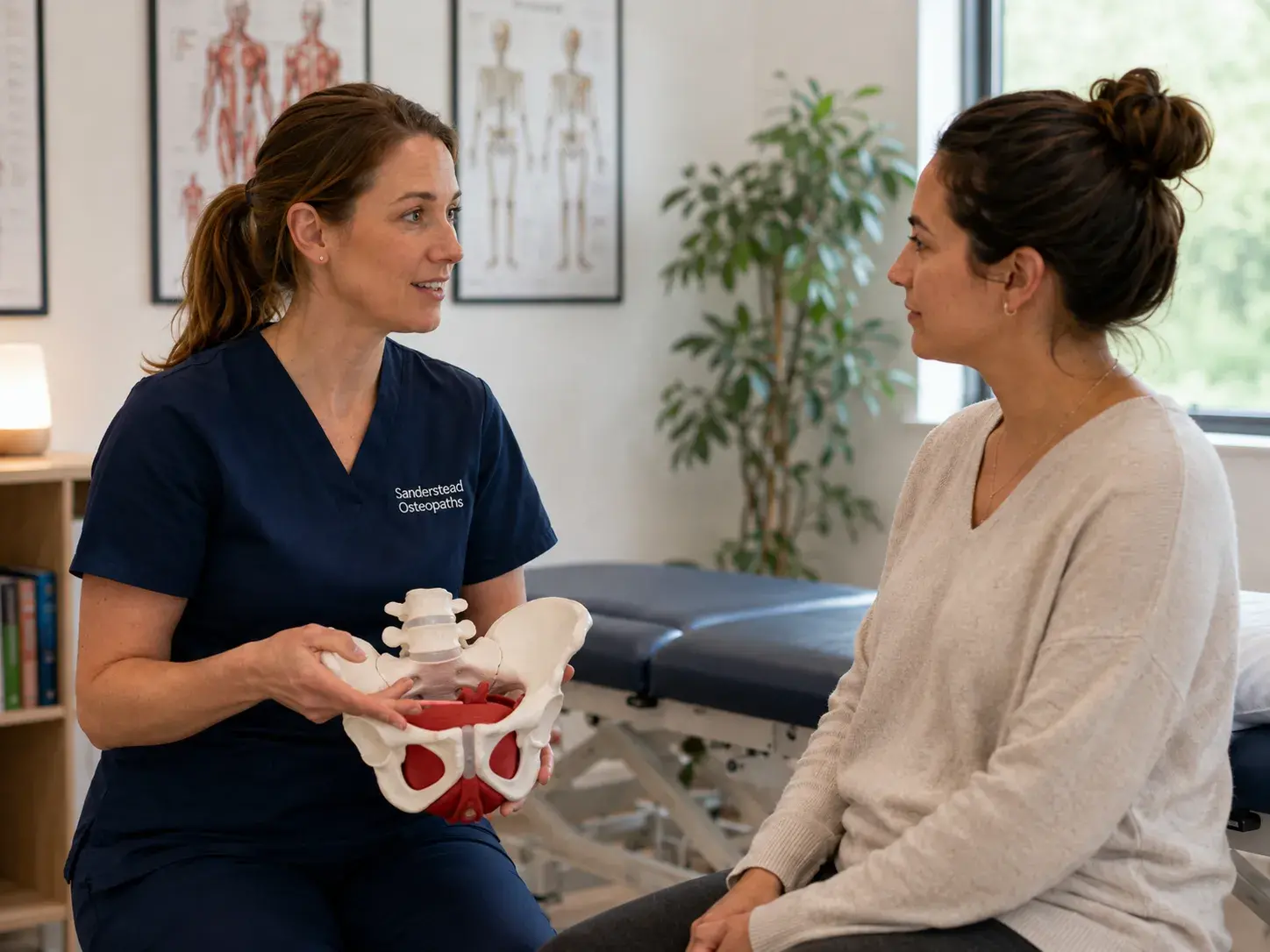
The maternal postnatal GP check usually takes place around 6 to 8 weeks after birth. It provides an opportunity to discuss your physical and emotional recovery and identify symptoms that may require medical investigation, treatment or referral.
A Mummy MOT does not replace this appointment.
At Sanderstead Osteopaths, we ask patients to have completed their appropriate postnatal medical review and to have been advised that it is appropriate to proceed before attending.
The distinction is important.
Your GP review is a medical assessment.
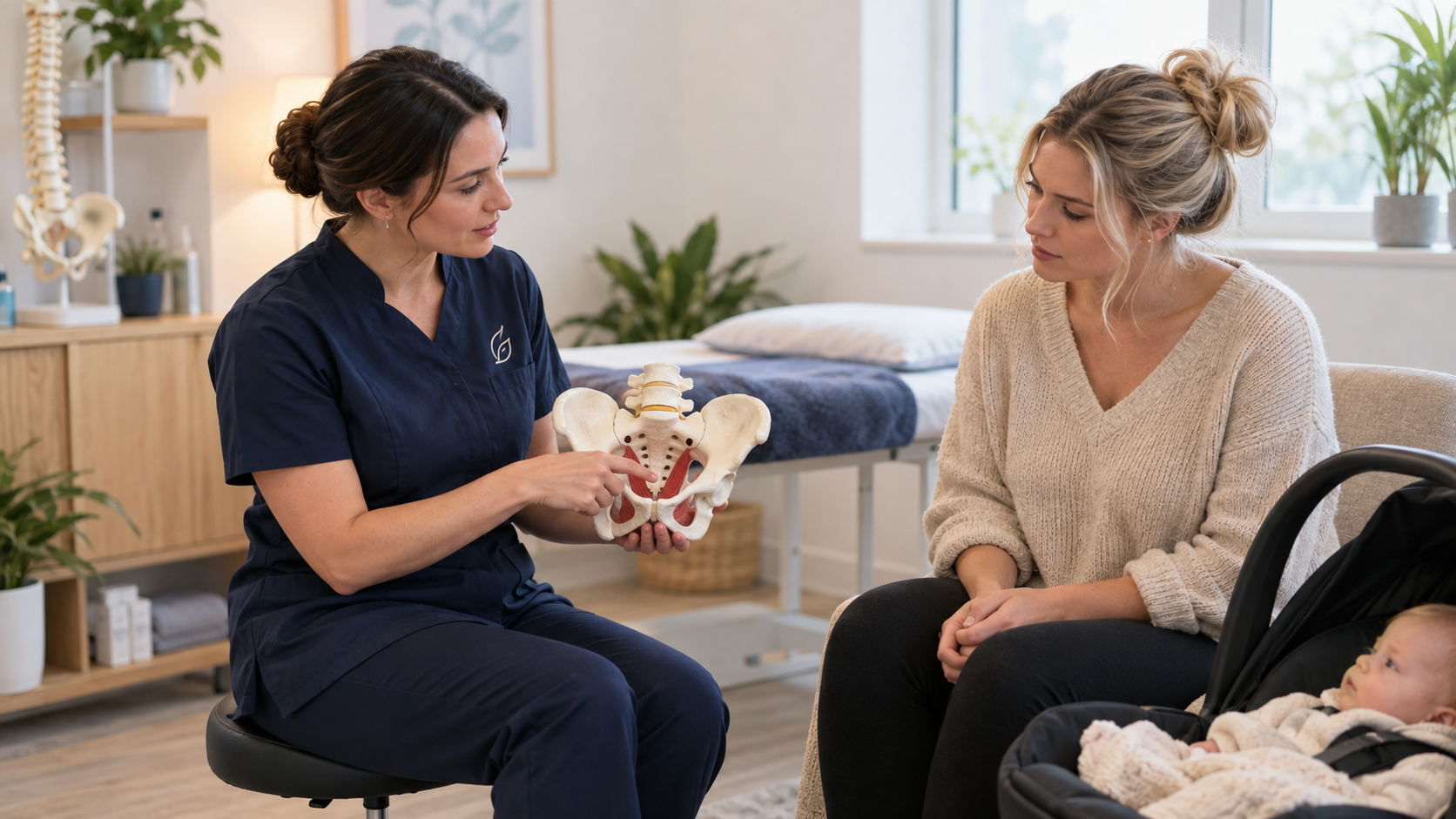
A Mummy MOT looks more specifically at the functional and musculoskeletal side of recovery: how your abdominal wall, pelvic floor, breathing, pelvis, spine and movement patterns are working together after pregnancy and birth.
If you want a fuller explanation of the difference, our guide to Mummy MOT vs 6-week postnatal check explains the two appointments in detail.
Medical Recovery and Functional Recovery Are Not Identical
Being medically well is reassuring, but it does not necessarily mean every aspect of physical function has returned to its previous level.
Your wound may have healed while your abdomen still feels weak or guarded.
You may have no serious pelvic health problem but still leak when running.
Your spine may be healthy but your lower back may hurt every time you lift your baby.
You may have completed the early healing period but still feel unsure about returning to exercise.
A Mummy MOT assessment looks at these functional questions after the appropriate medical review has taken place.
Thanks to Tom for treating me before and after my Marathon last year – I literally would not have been able to do it without him. He also treated me for a pulled shoulder and neck pain. I'll definitely use Sanderstead Osteopaths again – highly recommend! 👍
August 28, 2023
When Can You Have a Mummy MOT After a Vaginal Birth?
Following an uncomplicated vaginal birth, some gentle movement may feel comfortable before the postnatal GP review.
A full Mummy MOT at Sanderstead Osteopaths should come after your medical postnatal check.
For many women with an uncomplicated recovery, this may mean assessment from around six weeks onwards where the GP review has already taken place and there are no reasons to delay.
However, six weeks is not a deadline.
Recovery following vaginal birth can vary considerably, particularly if you experienced significant tearing, an assisted delivery, pelvic pain, ongoing bleeding or another complication.
If you are still healing or have been advised to wait, your individual recovery should take priority over reaching a particular week.
Reasons to Consider an Assessment After Vaginal Birth
Once your medical review has taken place, a Mummy MOT may be useful if you notice:
- Weak or disconnected core control
- Abdominal doming
- Diastasis recti concerns
- Bladder leakage
- Pelvic heaviness or pressure
- Lower back pain
- Pelvic discomfort
- Difficulty lifting your baby comfortably
- Reduced confidence exercising
- A feeling that your body is not moving as it did before pregnancy
You do not need to have all of these symptoms.
You also do not have to wait until something becomes severe. Some patients simply want to understand how their recovery is progressing before increasing activity.
Been seeing Paul for a couple of months now for my neck pain, had been using another fairly local osteopaths before and didn’t really seem to be making any progress, but since finding here it’s been much better. I suffer really badly with tension in my neck which leads to real bad headaches, and can highly recommend this place for anyone who suffers the same issue as Paul has helped me massively.
November 28, 2023
When Can You Have a Mummy MOT After a C-Section?
A C-section requires additional recovery because the body is recovering from pregnancy and abdominal surgery at the same time.
At Sanderstead Osteopaths, we ask patients following a C-section to complete their postnatal GP review and receive appropriate advice before attending.
For many women, a Mummy MOT may then be considered from around eight weeks onwards, depending on wound healing, symptoms and medical advice.
Again, eight weeks is not a target that everybody should try to meet.
A straightforward recovery and a recovery involving wound problems, infection, significant pain or other complications may require very different timelines.
Why C-Section Recovery Involves More Than the Scar
The visible incision is only one part of C-section recovery.
Before surgery takes place, pregnancy has already changed the abdominal wall, posture, pelvis, pelvic floor, spine and breathing mechanics.
Afterwards, some women notice:
- Tightness or pulling around the lower abdomen
- Numbness or sensitivity
- Guarding around the scar
- Reduced confidence using the abdominal wall
- Difficulty standing fully upright
- Lower back discomfort
- Core weakness
- Doming during movement
- Difficulty returning to exercise
A C-section Mummy MOT can look at how the scar area, abdominal wall, pelvis and wider movement system are functioning together.
Our guide to a Mummy MOT after a C-section explains core, scar and movement recovery in greater detail.
Very professional and friendly service from Paul.

October 28, 2023
Do You Need Symptoms Before Booking a Mummy MOT?
No.
Some women book because they have pain, leaking or another clear symptom.
Others feel relatively well but want to know whether their body is ready for the next stage of activity.
You may be planning to:
- Return to running
- Restart weight training
- Resume Pilates
- Return to sport
- Increase walking
- Go back to a physically demanding job
- Lift heavier weights
- Begin high-impact exercise
- Progress abdominal training
A Mummy MOT can help establish what your body is currently managing well and whether certain areas need further control, coordination or strength before you progress.
Confidence Can Be a Reason for Assessment Too
Postnatal recovery is not only about pain.
You may simply feel different.
Your abdomen may feel disconnected. Your pelvis may not feel as stable. You may hesitate before lifting something heavy or avoid running because you are unsure whether your pelvic floor is ready.
You may have noticed your abdomen dome during exercise and become uncertain about what you should do next.
The purpose of assessment is not to create concern.
It is to understand how your body is responding and give you clearer guidance about progression.
I took my newborn daughter to David due to her being very gassy and unsettled. Within the first week of David seeing her she was a lot more settled and was sleeping for a lot longer at night. I would highly recommend the treatment here with David for anyone with newborns with similar issues.
August 28, 2023
When Should You Book Before Returning to Exercise?
If returning to demanding exercise is one of your goals, a useful time to consider a Mummy MOT is before making a major increase in load or impact.
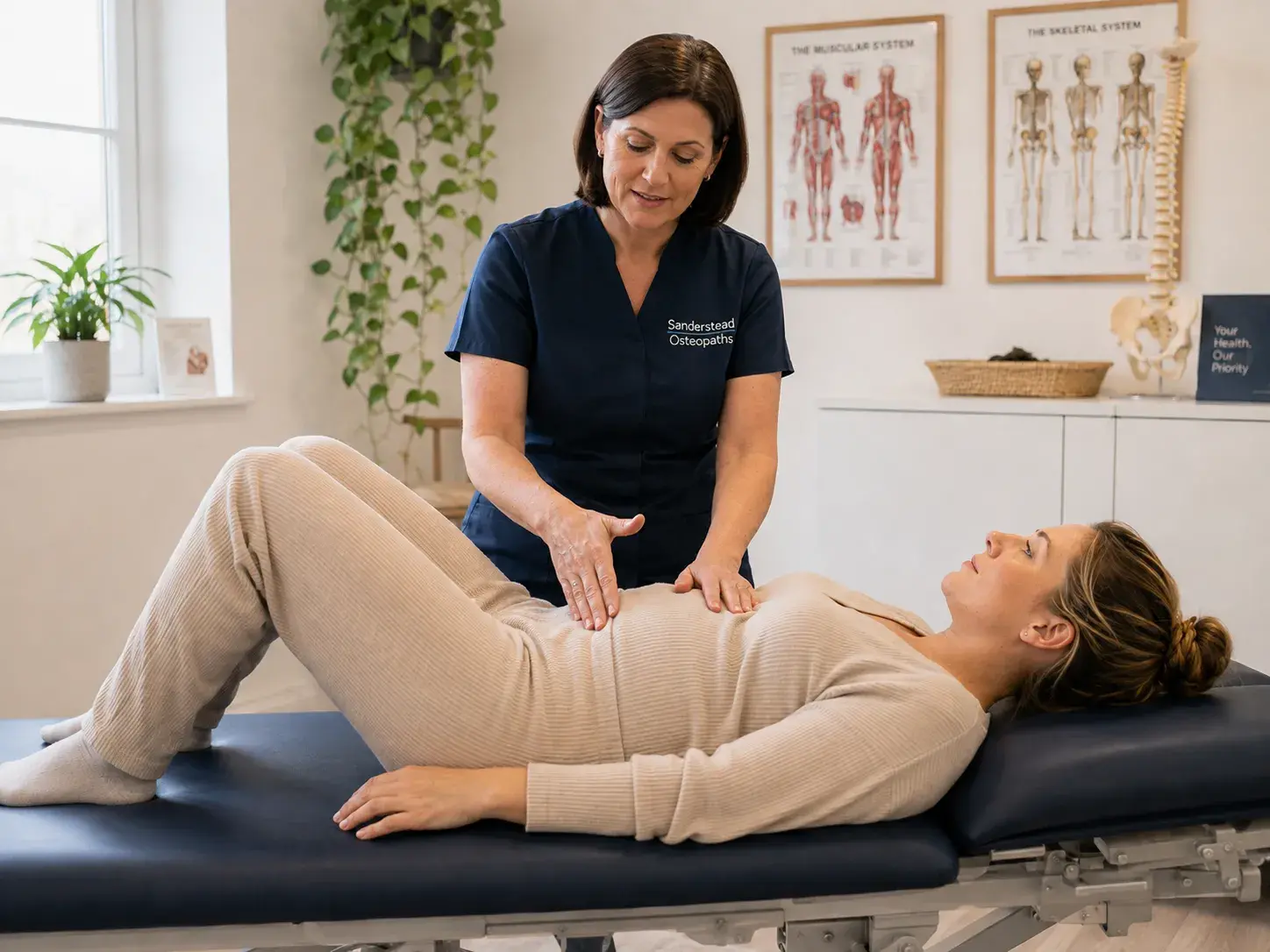
General movement and high-demand exercise are not the same thing.
Walking and gentle activity place very different demands on the body compared with:
- Running
- Jumping
- Burpees
- Heavy squats
- Deadlifts
- High-impact fitness classes
- Intense abdominal exercises
- Competitive sport
Before increasing to these activities, it can be useful to understand how your abdominal wall, pelvic floor, pelvis and wider movement system respond under load.
Time Since Birth Does Not Automatically Mean Exercise Readiness
Two women can both be 12 weeks postnatal and have very different levels of readiness.
One may have good abdominal control, no pelvic symptoms and be progressing comfortably.
Another may experience leaking, abdominal doming, heaviness or lower back pain during relatively simple exercise.
The number of weeks since birth does not explain that difference.
A functional assessment can consider:
- Core control
- Abdominal wall behaviour
- Pelvic floor symptoms
- Breathing
- Pressure management
- Pelvic control
- Balance
- Load tolerance
- Movement quality
- Pain
- Confidence
Where a more exercise-focused rehabilitation programme is appropriate, our osteopathy and Pilates treatment service can provide additional support.
Sanderstead Osteopath provide quality treatment & professional service, I've been using David Ayers Osteopath services for over a decade with no complaints.
August 28, 2023
When Leaking After Birth Is a Reason to Book an Assessment
Urinary leakage is one of the most common postnatal symptoms that can prompt assessment.
It may happen when:
- Coughing
- Sneezing
- Laughing
- Running
- Jumping
- Lifting
- Exercising
Although leaking after pregnancy is common, it does not mean you simply have to accept it.
Pelvic floor function involves more than strength. Timing, breathing, abdominal wall control and pressure management can all influence what happens when pressure suddenly increases.
If leaking continues, becomes more noticeable as activity increases or affects your confidence, our pelvic floor recovery after pregnancy service provides more focused support.
Our guide to leaking after birth and pelvic floor support also explains why symptoms may continue even when you are already doing pelvic floor exercises.
Pelvic Heaviness or Dragging Also Deserves Attention
Not every pelvic floor symptom involves leakage.
Some women notice:
- Heaviness
- Dragging
- Pelvic pressure
- Reduced support
- Symptoms after standing for long periods
- Symptoms that increase with walking or exercise
Persistent or worsening symptoms should be discussed with your GP or appropriate healthcare professional.
Once medical concerns have been considered, a functional assessment can look at how pelvic symptoms relate to breathing, pressure management, abdominal control and movement.
Always really happy with the knowledge and professionalism I receive.
August 28, 2023
When Abdominal Doming Suggests Your Core Needs Assessing
Many women first notice a postnatal core problem because the abdomen changes shape during movement.
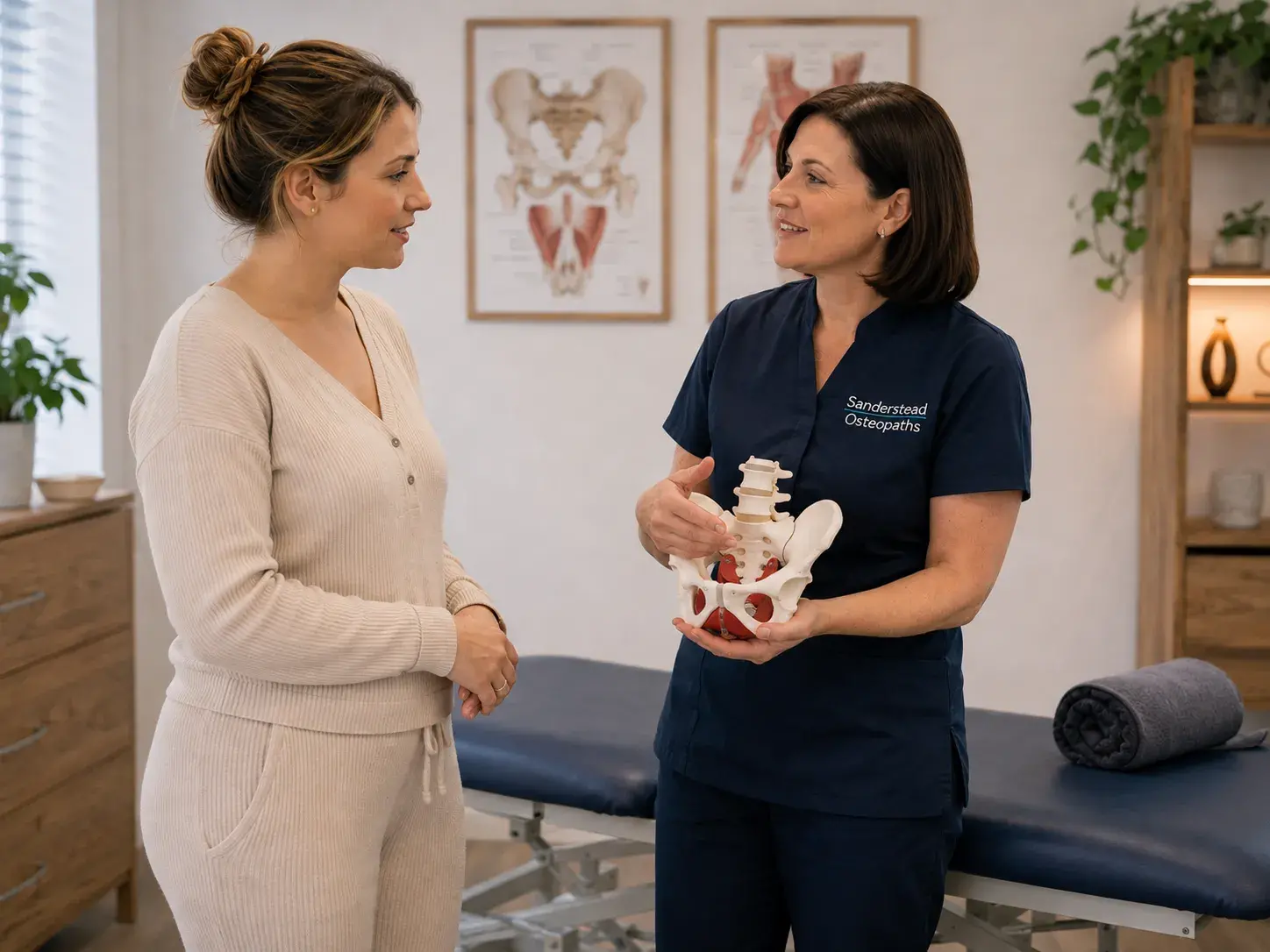
A ridge, cone or dome can appear when you:
- Sit up
- Get out of bed
- Lift your baby
- Perform a crunch
- Hold a plank
- Exercise
- Move under load
Doming can give useful information about how your abdominal wall is managing pressure during effort.
It does not automatically mean something serious is wrong.
However, if it continues, appears during simple everyday movements or becomes more obvious as exercise becomes harder, assessment can help establish why.
Our guide to why your stomach domes when you sit up after pregnancy explains abdominal doming in more detail.
When Diastasis Recti May Be Involved
Abdominal doming and diastasis recti are related, but they are not the same thing.
Diastasis recti refers to separation through the midline of the abdominal wall after it has stretched during pregnancy.
The width of that separation is only part of the picture.
Assessment may also consider:
- Depth
- Tissue tension
- Abdominal control
- Breathing
- Pressure management
- Doming under load
- Movement quality
If abdominal separation is your primary concern, our diastasis recti treatment in Sanderstead service provides more focused assessment and rehabilitation.
Iv used David for 12 years now. Always reliable and available when needed for emergency appointments. I am now taking my children here when needed.
August 28, 2023
When Lower Back Pain Continues After Birth
Lower back pain is another reason some women consider a postnatal assessment.
Pregnancy changes load distribution through the spine and pelvis.
After birth, you then begin repeatedly lifting, carrying, bending and feeding.
If core control, hip movement or pelvic mechanics are not contributing effectively, the lower back may begin taking more load.
You may notice:
- A recurring dull ache
- Pain after carrying your baby
- Discomfort bending into the cot
- Pain getting up from the floor
- Stiffness after feeding
- Symptoms when walking
- Pain when returning to exercise
If lower back pain is becoming the main concern, our postnatal back pain treatment in Sanderstead provides a more targeted assessment.
You can also read our guide to why lower back pain can continue months after pregnancy.
You Do Not Have to Wait Until Back Pain Becomes Severe
Persistent low-level discomfort can still be useful information.
If the same movement triggers your back every day, symptoms are gradually becoming more noticeable or you constantly change how you carry your baby to avoid pain, it may be worth understanding what is driving the repeated strain.
Assessment is not about assuming something serious is wrong.
It is about identifying whether a recurring movement or compensation pattern is keeping the area overloaded.
I took my newborn daughter to David due to her being very gassy and unsettled. Within the first week of David seeing her she was a lot more settled and was sleeping for a lot longer at night. I would highly recommend the treatment here with David for anyone with newborns with similar issues.
August 28, 2023
When Feeding and Carrying Cause Neck or Shoulder Pain
Some postnatal symptoms build gradually rather than appearing immediately after birth.
Feeding, carrying and repeatedly looking down at your baby can involve long periods in similar positions.
As your baby becomes heavier, the demand increases.
You may notice:
- Neck stiffness
- Shoulder tension
- Pain between the shoulder blades
- Difficulty turning your neck
- Pain while feeding
- Discomfort after carrying
- Headaches associated with upper-body tension
These symptoms can be part of the wider postnatal recovery picture even if your abdomen and pelvic floor feel comfortable.
For broader musculoskeletal symptoms after pregnancy, our pregnancy and postnatal osteopathy service looks at the physical demands of recovery, feeding, lifting and carrying.
What If Symptoms Start Several Months After Giving Birth?
The early postnatal period is not always when symptoms are most obvious.
Initially, your baby is lighter and you may be doing less exercise. You may also have more help from family or a partner.
Several months later, the situation can look very different.
Your baby is heavier. You are carrying more. You may have returned to work, resumed exercise or started lifting a car seat and buggy repeatedly.
The physical demand on your body can therefore increase even though more time has passed since birth.
If symptoms appear at this stage, it does not mean you have missed your opportunity to address them.
A Mummy MOT Can Still Be Useful Months or Years Later
A Mummy MOT is not restricted to the first few weeks of motherhood.
Assessment may still be useful if:
- Your core feels weak
- Your abdomen continues to dome
- You still leak
- Your pelvis feels heavy
- Back pain keeps returning
- Your C-section area feels restricted
- You feel unstable when lifting
- You cannot return comfortably to exercise
Some women adapt to these problems for years before deciding to have them assessed.
The relevant question is not how long ago you gave birth.
It is whether your current function is affecting what you want or need to do.
Sanderstead Osteopath provide quality treatment & professional service, I've been using David Ayers Osteopath services for over a decade with no complaints.
August 28, 2023
Should You Book a Mummy MOT Before Another Pregnancy?
For some women, this can be useful.
If you are considering another pregnancy and feel that your body never completely recovered from the previous one, you may want to understand those issues before additional pregnancy-related demands begin.
This may be particularly relevant if you still experience:
- Diastasis recti concerns
- Abdominal doming
- Pelvic floor symptoms
- Back pain
- Pelvic discomfort
- C-section scar restriction
- Weak core control
- Difficulty exercising
A further pregnancy will place new demands on the abdominal wall, pelvic floor, pelvis and spine.
For broader support around pregnancy and postnatal recovery, our pregnancy and postnatal osteopathy service may also be appropriate.
What Happens During a Mummy MOT?
A Mummy MOT begins with understanding your pregnancy, birth and recovery so far.
We may discuss:
- Your pregnancy
- The type of birth you had
- Any complications
- Your postnatal medical review
- Current symptoms
- Pelvic floor concerns
- Abdominal symptoms
- Back or pelvic pain
- C-section recovery where relevant
- Feeding and carrying
- Exercise
- Work
- Your recovery goals
The physical assessment is then tailored to you.
For a detailed explanation of the appointment itself, read our guide to what to expect during a Mummy MOT assessment.
Assessing Your Abdominal Wall and Core
We may look at how the abdominal wall responds during breathing and movement.
This can include movements such as:
- Lifting your head
- Rolling
- Sitting up
- Standing
- Bending
- Lifting
Where relevant, we may assess diastasis recti, abdominal tension, doming and pressure management.
The aim is not simply to measure a gap or judge how the abdomen looks.
We want to understand how well it functions.
Assessing Breathing and Pressure Management
Breathing, the abdominal wall and pelvic floor work together to manage pressure during movement.
We may consider whether you:
- Hold your breath during effort
- Brace excessively
- Push pressure forwards through the abdomen
- Direct pressure downwards
- Lose abdominal control as movement becomes harder
These patterns can help explain why symptoms occur during specific activities.
Assessing Pelvic Floor Coordination
At Sanderstead Osteopaths, pelvic floor assessment within a Mummy MOT is external.
We may consider your symptoms, breathing, abdominal movement, pelvic control and response to functional load.
The pelvic floor is assessed as part of the wider pressure-management system rather than as an isolated muscle.
Assessing Posture, Pelvis and Everyday Movement
We may also assess how your spine, pelvis and hips move and share load.
Depending on your concerns, this can include:
- Standing from sitting
- Bending
- Squatting
- Lifting
- Carrying
- Walking
- Balancing
- Getting up from the floor
These movements can reveal patterns that may not be obvious while lying still on a treatment table.
Lexi has been very helpful with pain in my back and the treatments have been very affective and she gives out great follow up exercises
February 28, 2024
What Happens After Your Mummy MOT?
After assessment, we explain what we have found and how it may relate to your symptoms or goals.
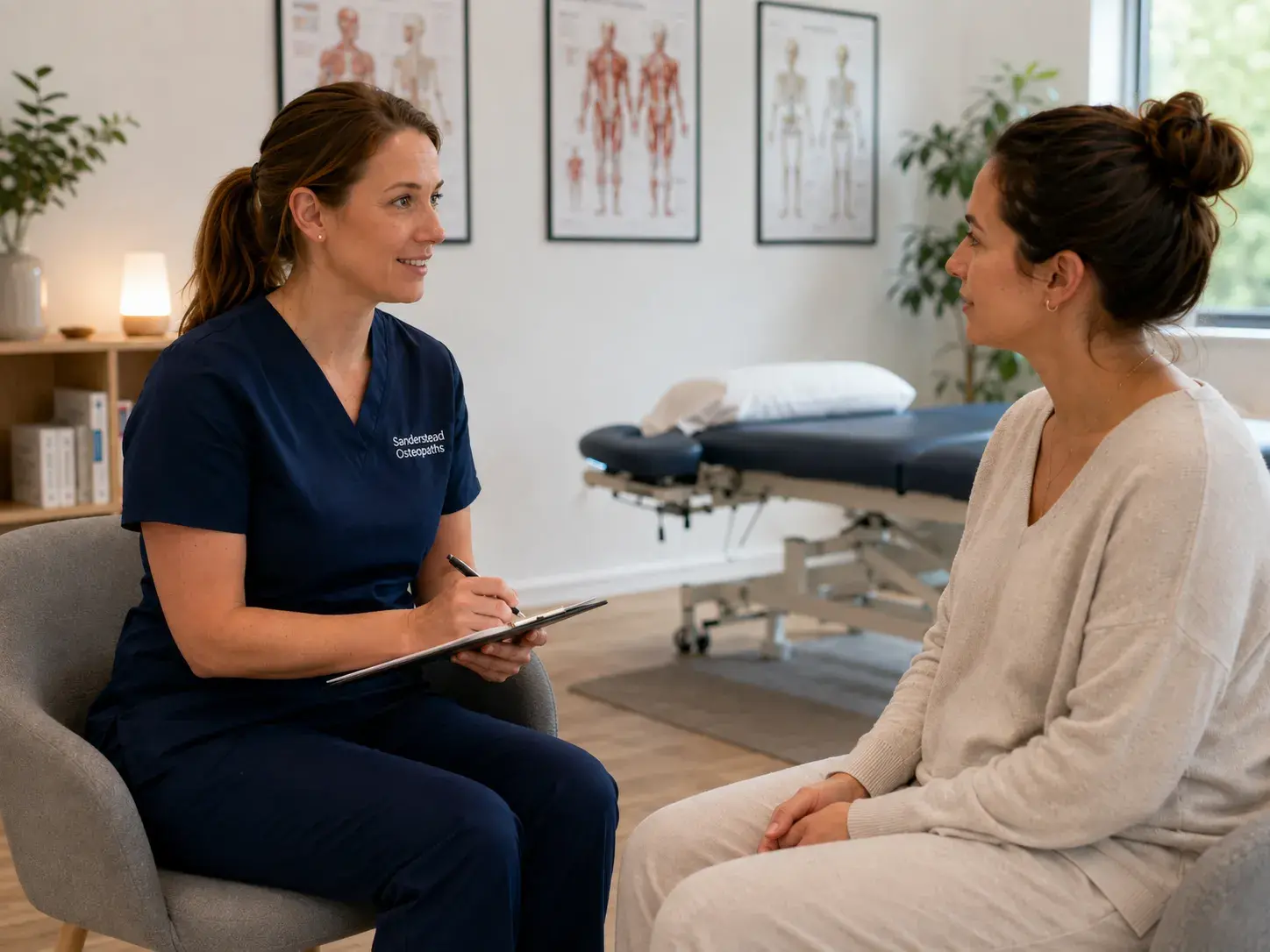
Your recovery plan may include:
- Core coordination
- Pelvic floor rehabilitation
- Breathing strategies
- Pressure-management advice
- Mobility work
- Posture guidance
- Lifting advice
- Exercise modification
- Progressive strengthening
- C-section scar support where appropriate
- Hands-on osteopathic treatment where appropriate
- Gradual return-to-exercise guidance
The aim is not to give every patient the same generic exercises.
Your recovery plan should reflect what your body is doing and what you want it to be able to do.
When Should You Seek Medical Advice Instead of Booking a Mummy MOT?
A Mummy MOT is intended for functional postnatal assessment and recovery.
It is not a replacement for medical care.
Seek appropriate medical advice if you experience symptoms such as:
- Fever or signs of infection
- Increasing wound redness or discharge
- Heavy or unusual bleeding
- Significant problems passing urine
- Blood in the urine
- Severe pelvic or abdominal pain
- Chest pain
- Shortness of breath
- Sudden swelling
- New weakness or numbness
- Sudden loss of bladder or bowel control
- Any symptom that feels sudden, severe or concerning
If you are uncertain whether your symptoms are appropriate for a Mummy MOT, contact the clinic and we can help guide you towards the most appropriate next step.
I’ve been attending Sanderstead Osteopaths to see David for a few years. The treatment is effective and the service professional.
August 28, 2023
When Is the Best Time to Book a Mummy MOT After Birth?
There is no single perfect week that applies to everybody.
A practical way to think about timing is:
After a vaginal birth, complete your postnatal medical review first. For many women with an uncomplicated recovery, a Mummy MOT may then be appropriate from around six weeks onwards where that review has taken place.
After a C-section, complete your postnatal medical review and follow the advice you have been given about surgical recovery. Assessment may commonly be considered from around eight weeks onwards where recovery is progressing appropriately.
If you have ongoing symptoms, consider assessment once you have been medically reviewed and those symptoms are appropriate for functional assessment.
If you are returning to demanding exercise, consider a Mummy MOT before making a major jump in impact, abdominal load or training intensity.
If you are months or years postnatal, you have not missed the opportunity. Persistent functional symptoms can still be assessed.
The best time is therefore when your medical recovery is sufficiently progressed and you want greater clarity about how your body is functioning.
Book a Mummy MOT in Sanderstead
If you have completed your postnatal medical review and want to understand how your body is recovering, a Mummy MOT at Sanderstead Osteopaths can provide a detailed functional assessment.
We look at how your abdominal wall, core, pelvic floor, breathing, spine, pelvis, posture and movement patterns are working together.
The assessment may be useful whether you are several weeks after birth, several months into recovery or dealing with an issue that has continued much longer.
The aim is to identify what has recovered well, what may still need support and what the next stage of your recovery should involve.
Sanderstead Osteopaths supports patients from Sanderstead and nearby areas including South Croydon, Purley, Warlingham, Kenley, Selsdon and Coulsdon.
To arrange your assessment, contact Sanderstead Osteopaths or book online.
I’ve visited Tom at Sanderstead Osteopaths since March for postnatal neck and back issues and then subsequent issues with my neck from looking after a baby (and now toddler) and he’s absolutely superb. I’d highly recommend him!
August 28, 2021
Frequently Asked Questions About When to Book a Mummy MOT
How Many Weeks After Giving Birth Can I Have a Mummy MOT?
A Mummy MOT should follow your appropriate postnatal medical review.
For many women following an uncomplicated vaginal birth, this may be from around six weeks onwards where the medical review has taken place.
Following a C-section, assessment may commonly be appropriate from around eight weeks onwards, depending on healing and medical advice.
Your individual recovery is more important than reaching a specific date.
Do I Need My GP Check Before a Mummy MOT?
Yes.
At Sanderstead Osteopaths, we ask you to complete your appropriate postnatal medical review before attending and to have been advised that it is appropriate to proceed.
A Mummy MOT does not replace medical postnatal care.
Can I Book a Mummy MOT After a C-Section?
Yes.
Once your medical review has taken place and it is appropriate to proceed, assessment can consider abdominal wall function, scar-related restriction, core control, breathing, pelvic floor function, posture and movement.
Our C-section Mummy MOT guide explains this in more detail.
Can I Book a Mummy MOT If I Do Not Have Pain?
Yes.
You may want reassurance about your recovery, a clearer understanding of your core or pelvic floor, or guidance before returning to more demanding exercise.
Pain is not required for a functional assessment.
Should I Have a Mummy MOT Before I Start Running Again?
It can be useful, particularly if you have leaking, pelvic heaviness, abdominal doming, back pain, core weakness or uncertainty about exercise readiness.
The assessment can look at how your body manages movement and load before you increase impact.
Is Six Months After Birth Too Late for a Mummy MOT?
No.
Some symptoms only become obvious as your baby becomes heavier or you return to exercise, work and higher levels of activity.
A functional assessment can still be useful at six months and beyond.
Can I Have a Mummy MOT a Year or More After Giving Birth?
Yes.
A Mummy MOT can remain relevant months or years after pregnancy if you have unresolved symptoms or want to understand how your body is functioning now.
Should I Wait to See If Leaking or Doming Improves on Its Own?
Some postnatal changes improve as recovery progresses.
However, if leaking, doming, heaviness, pain or instability continues, becomes more noticeable as activity increases or affects what you feel able to do, it is reasonable to have it assessed.
You do not need to wait until symptoms become severe.
What If I Am Unsure Whether I Am Ready for a Mummy MOT?
If you have completed your postnatal medical review but are unsure whether a functional assessment is appropriate, contact Sanderstead Osteopaths.
The team can help guide you towards a Mummy MOT, a more specific postnatal service or further medical review where appropriate.