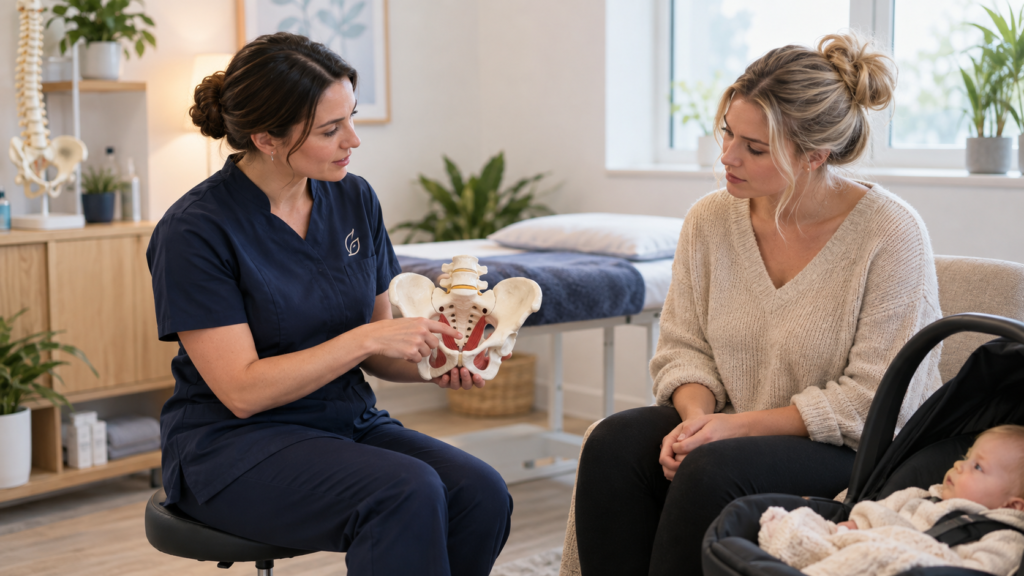

Pelvic girdle pain does not always disappear as soon as your baby is born.
You may have expected pain that started during pregnancy to settle after delivery, only to find that walking, climbing stairs, turning in bed, getting out of the car or carrying your baby still causes discomfort through the pelvis.
For some women, pelvic pain begins or becomes more noticeable after childbirth rather than during pregnancy.
Pregnancy changes the way load is distributed through the pelvis, hips, spine and abdominal wall. Birth is then followed immediately by a physically demanding period involving feeding, lifting, carrying, broken sleep and repeated movements that may challenge tissues that are still recovering.
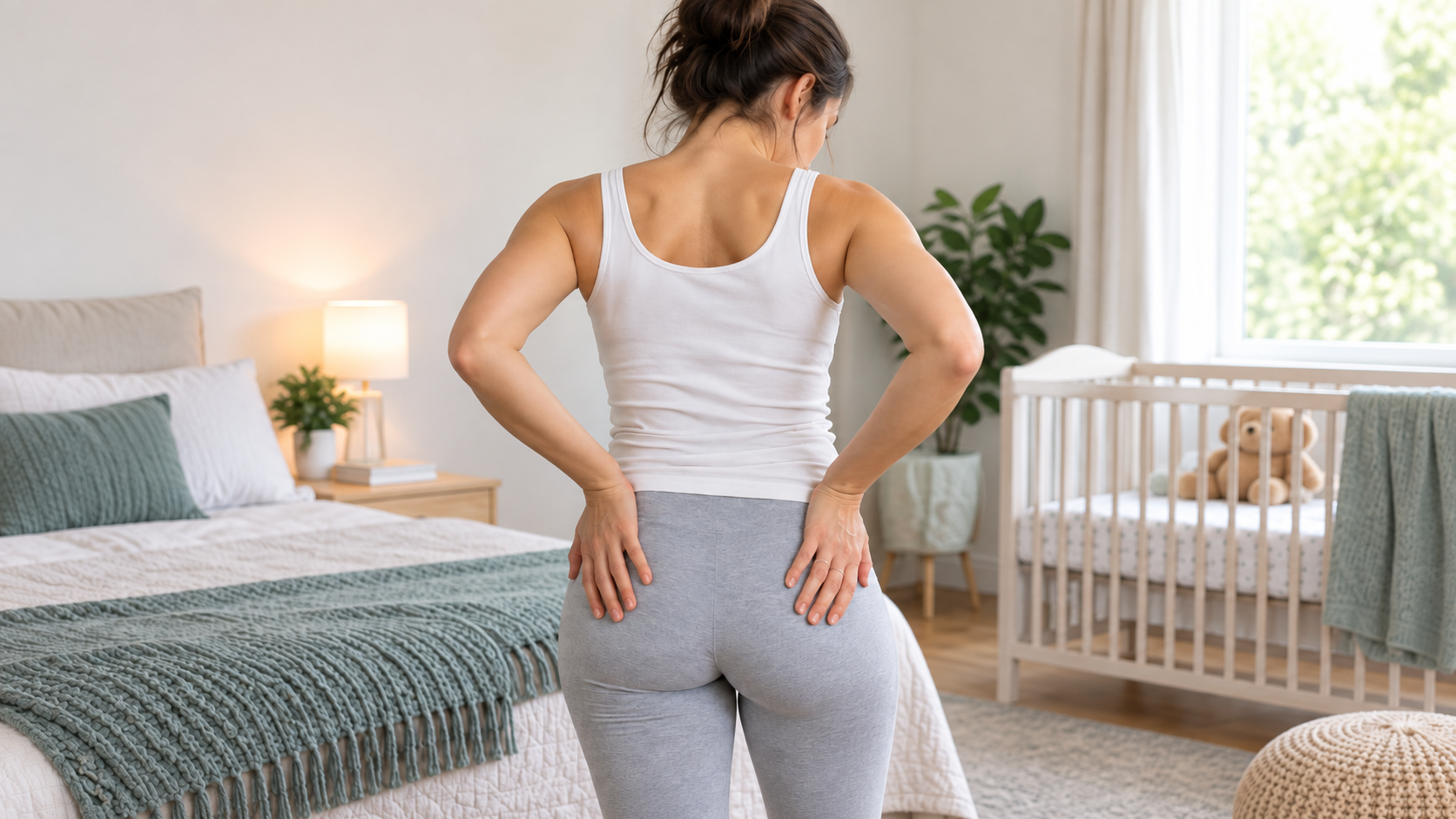
Pelvic girdle pain after birth can be felt around the back of the pelvis, buttocks, pubic area, groin or hips. It may affect one side more than the other and can sometimes occur alongside lower back pain.
Persistent pelvic pain does not necessarily mean that anything has been permanently damaged. However, pain that limits walking, baby care or normal daily activities deserves appropriate assessment.
This guide explains why pelvic girdle pain can continue after childbirth, the movements that commonly trigger it, how it differs from lower back pain and when osteopathic or medical assessment may be appropriate.
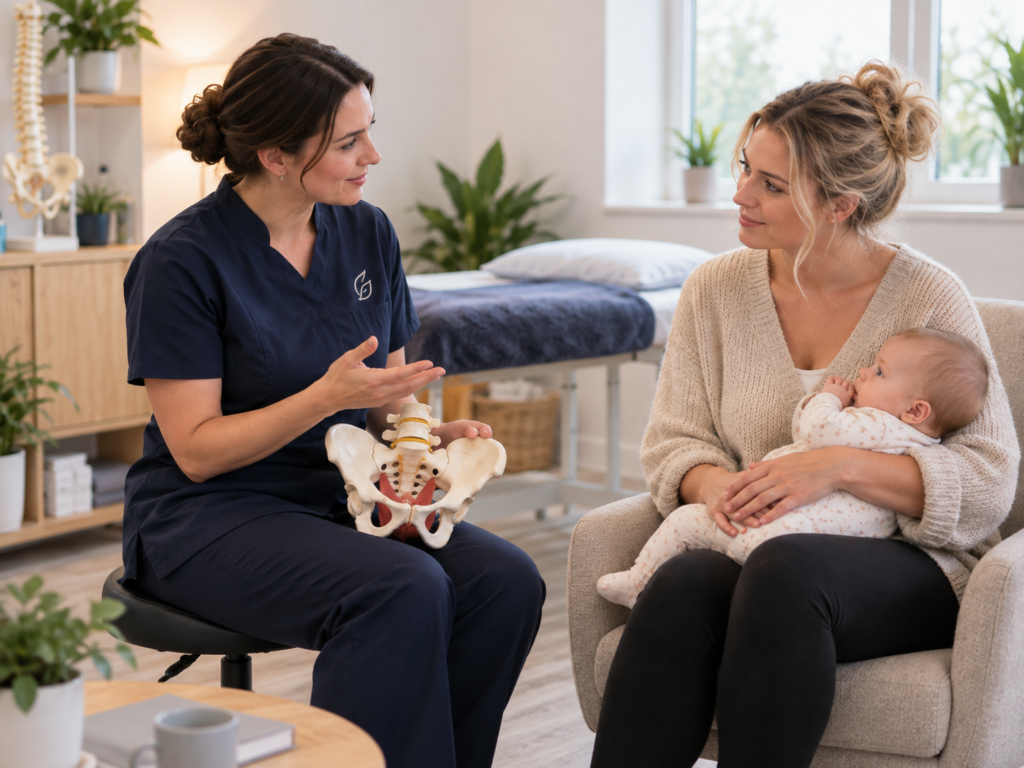
What Is Pelvic Girdle Pain After Birth?
Pelvic girdle pain is a term used to describe pain arising around the joints, muscles and tissues associated with the pelvis.
During pregnancy it is often referred to as pregnancy-related pelvic girdle pain or PGP.
Symptoms may improve after birth, but recovery varies.
The pelvis does not work as a completely separate structure. It transfers load between the trunk and legs and works closely with the hips, lower back, abdominal wall and surrounding muscles.
Pain can therefore be influenced by both local sensitivity around the pelvis and the way the body is managing movement and load.
Where Pelvic Girdle Pain Can Be Felt
Postnatal pelvic girdle pain may be felt in one or several areas.
Common locations include:
- Around one or both sacroiliac joints at the back of the pelvis
- Across the buttocks
- Around the pubic bone at the front of the pelvis
- Through the groin
- Around the outer hips
- Across the lower part of the pelvis
- Occasionally into the upper thighs
Some women describe a sharp pain during particular movements.
Others experience an ache that builds as they spend longer walking or standing.
You may also notice that pain changes sides depending on how you move or which leg is taking more load.
Pelvic Girdle Pain Versus Lower Back Pain
Pelvic girdle pain and lower back pain can feel similar because the painful areas sit close together.
Lower back pain is usually felt more centrally through the lumbar spine or surrounding muscles.
Pelvic girdle pain tends to be felt lower down, around the sacroiliac joints, buttocks, pubic area or groin.
However, the distinction is not always clear.
The pelvis and lower back work together whenever you walk, bend, lift or carry. It is therefore possible to experience both at the same time.
The exact label is often less important than understanding which movements trigger your symptoms and how your body is responding to load.
An excellent practice, with excellent therapists. I originally saw David with a bad lower back and got amazing results. Would recommend!

 P H
P HAugust 28, 2023
I’ve visited Tom at Sanderstead Osteopaths since March for postnatal neck and back issues and then subsequent issues with my neck from looking after a baby (and now toddler) and he’s absolutely superb. I’d highly recommend him!
 Louise May
August 28, 2021
I took my newborn daughter to David due to her being very gassy and unsettled. Within the first week of David seeing her she was a lot more settled and was sleeping for a lot longer at night. I would highly recommend the treatment here with David for anyone with newborns with similar issues.
 Elisabeth Cachia
August 28, 2023
Iv used David for 12 years now. Always reliable and available when needed for emergency appointments. I am now taking my children here when needed.
 George Laura
August 28, 2023
I took my newborn daughter to David due to her being very gassy and unsettled. Within the first week of David seeing her she was a lot more settled and was sleeping for a lot longer at night. I would highly recommend the treatment here with David for anyone with newborns with similar issues.
Elisabeth CachiaAugust 28, 2023
Can Core Weakness Contribute to Pelvic Pain After Birth?
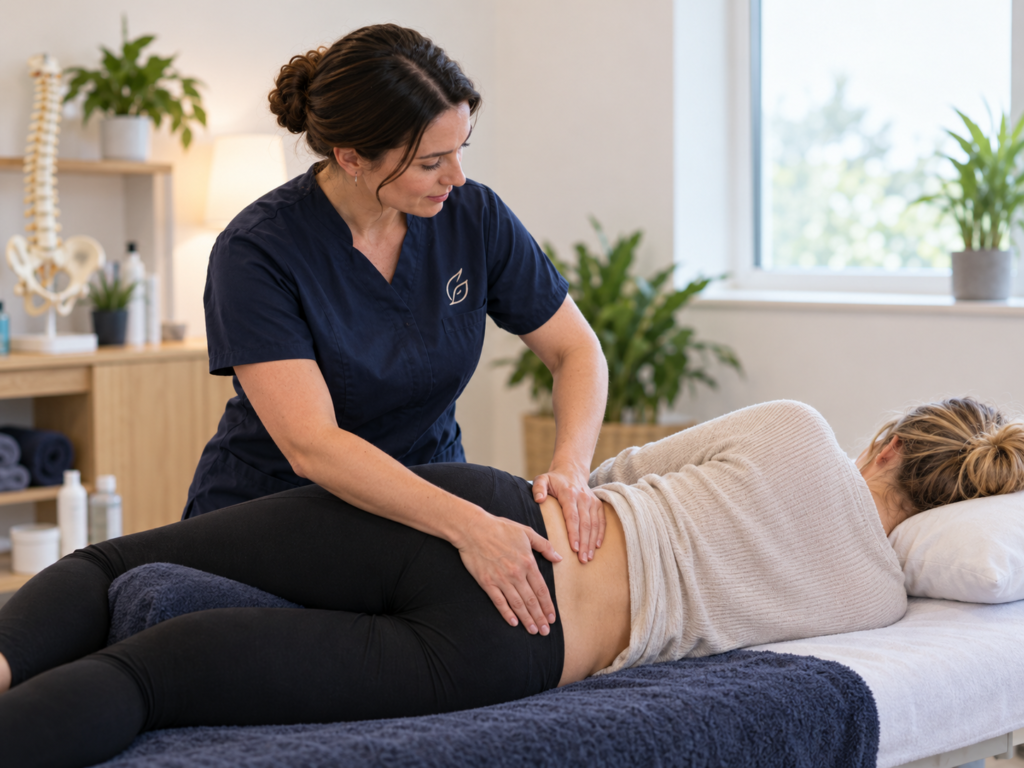
The abdominal wall changes significantly during pregnancy.
After birth, many women describe their core as feeling weaker or less connected.
Core function can be relevant to pelvic girdle pain, but it is important not to reduce every case of postnatal pelvic pain to “weak abs”.
Why Core Control Is Part of Load Sharing
The abdominal wall, back muscles, diaphragm, pelvic floor and muscles around the hips all contribute to controlling the trunk and pelvis during movement.
When you lift your baby, walk upstairs or stand on one leg, these areas work together.
If abdominal control has changed after pregnancy, your body may initially use different strategies to manage those tasks.
Improving strength and coordination can therefore form part of postnatal rehabilitation.
For some women, abdominal separation or doming may also be relevant, particularly if the abdominal wall feels unable to manage increasing load effectively.
Why Strength Alone Does Not Explain Pelvic Girdle Pain
Pain is more complex than weakness.
Someone can have strong muscles and still experience pelvic girdle pain.
Symptoms can also be influenced by:
- Tissue sensitivity
- Repeated loading
- Reduced activity tolerance
- Sleep disruption
- Previous pain during pregnancy
- Movement habits
- Fear of painful movement
- Recovery following childbirth or surgery
Strengthening may be helpful, but it should be progressed according to what you can tolerate.
The goal is usually to increase your ability to perform normal activities rather than to chase one particular strength measurement.
David has been treating my lower back pain. He provides a very professional service, and has a wealth of knowledge. Sanderstead Osteopath is a welcoming, cosy and clean clinic. On bad days when I have hardly been able to walk due to the pain, after David's treatment I feel I can do star jumps! The instant relief is noticeable. Parking is nearby which is very convenient. I highly recommend anyone to come here, you won't be disappointed.
 Tania Sang
August 28, 2023
Very knowledgeable, nice people
 Bernt Hellman
January 28, 2024
Pelvic Girdle Pain or Lower Back Pain: What Is the Difference?
Pelvic and lower back pain frequently overlap after pregnancy.
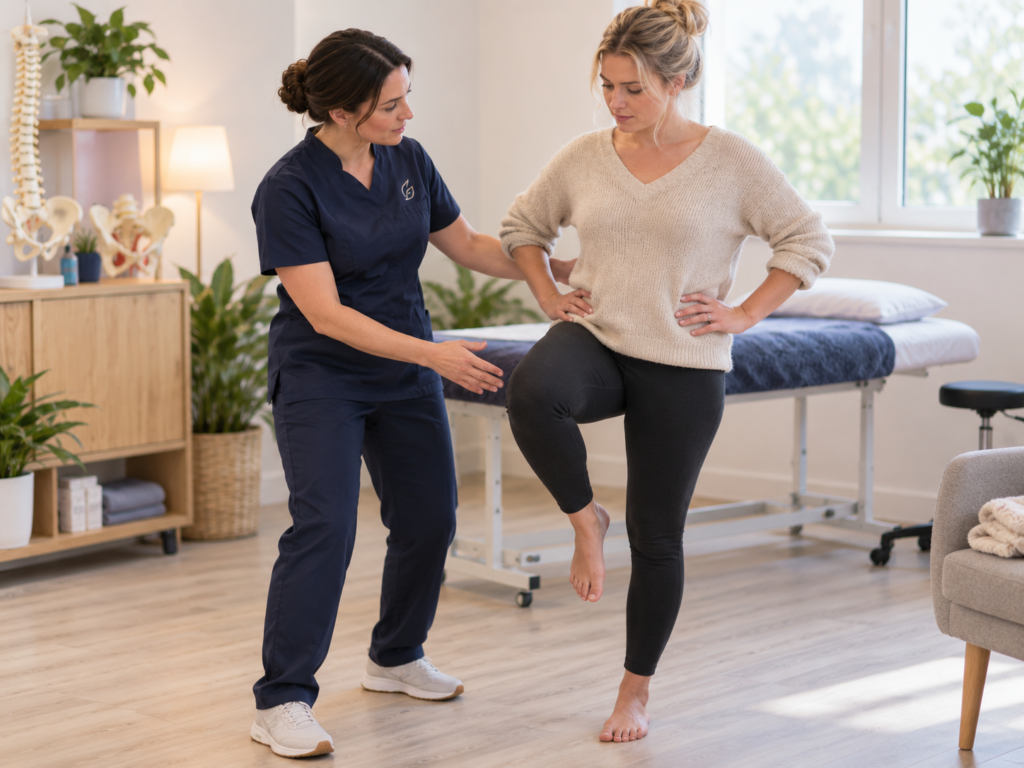
The distinction often comes from the location of the pain and the movements that reproduce it.
Our article on why lower back pain can continue months after pregnancy looks specifically at persistent postnatal lower back symptoms.
When the Pelvis Is the Main Source of Symptoms
Pelvic girdle pain may be more likely when symptoms are concentrated around:
- The sacroiliac region
- One or both buttocks
- The pubic bone
- The groin
- The sides of the pelvis
It may also be strongly triggered by:
- Walking
- Stairs
- Single-leg movements
- Rolling in bed
- Getting in and out of the car
These patterns can differ from more central lower back pain.
However, assessment is often more useful than trying to diagnose the exact structure yourself.
Why Back and Pelvic Pain Can Occur Together
The lower back and pelvis are mechanically connected.
Muscles cross between them, and every time you walk or lift, load moves through both regions.
If you have altered the way you move because of pelvic pain, your lower back may also become more sensitive.
Likewise, lower back stiffness can influence how the pelvis and hips move.
Treatment and rehabilitation therefore often consider both areas rather than viewing them as completely separate problems.
What Can Help Pelvic Girdle Pain After Birth?
Most postnatal pelvic girdle rehabilitation aims to improve comfortable movement and gradually rebuild tolerance to everyday load.
There is rarely one single exercise or treatment that is appropriate for everyone.
The most useful approach depends on what triggers your symptoms.
Reducing Irritating Load and Improving Movement
In the early stages, it can help to identify movements that repeatedly flare your symptoms.
That may mean temporarily:
- Shortening long walks
- Taking stairs more slowly
- Avoiding prolonged standing on one leg
- Alternating which side you carry your baby
- Changing how you get in and out of the car
- Breaking larger tasks into smaller periods
This does not mean avoiding movement indefinitely.
The intention is to reduce repeated irritation while your capacity improves.
Small practical changes can sometimes make everyday life considerably easier.
Gradually Rebuilding Strength and Confidence
Once symptoms are manageable, rehabilitation may gradually expose the pelvis to increasing levels of load.
That might include:
- Walking progression
- Squats
- Hip strengthening
- Bridge variations
- Controlled single-leg work
- Lifting practice
- Resistance exercises
- Gradual return to more demanding exercise
Progress should be based on your response.
An exercise causing mild awareness is different from one that produces escalating pain and leaves you significantly worse afterwards.
The aim is to help your body become more capable rather than repeatedly provoking it.
When Osteopathic Treatment May Be Appropriate
Osteopathic treatment may be considered where pelvic girdle pain is associated with musculoskeletal restriction, sensitivity or difficulty moving comfortably.
Depending on the assessment, treatment may involve gentle techniques directed towards areas such as the pelvis, hips, lower back and surrounding soft tissues.
Treatment is generally most useful when combined with practical advice and appropriate rehabilitation rather than used as a stand-alone attempt to “put the pelvis back”.
Our pregnancy and postnatal osteopathy service provides more information about osteopathic care during postnatal recovery.
When Should Postnatal Pelvic Pain Be Assessed?
Pelvic pain does not have to be severe before you ask for help.
If it is repeatedly affecting walking, sleep, childcare or your ability to return to normal activity, assessment may be worthwhile.
If Walking, Stairs or Baby Care Are Becoming Difficult
Consider assessment if pelvic pain:
- Makes walking increasingly difficult
- Limits how far you can walk
- Causes significant pain on stairs
- Makes turning in bed difficult
- Interferes with getting in or out of the car
- Makes lifting your baby painful
- Is stopping you exercising
- Is becoming more noticeable rather than settling
You may not need complete rest.
Often the aim is to find a level of activity you can tolerate and gradually build from there.
When Medical Assessment Should Come First
Some symptoms require medical assessment rather than routine musculoskeletal treatment.
Seek prompt medical advice if pelvic or back pain is accompanied by symptoms such as:
- Fever or feeling significantly unwell
- New bowel or bladder control changes
- Difficulty passing urine
- New numbness around the groin or saddle area
- Significant or progressive weakness
- Severe unexplained abdominal or pelvic pain
- Heavy or unusual bleeding
- Calf swelling, redness or significant tenderness
- Chest pain or sudden shortness of breath
- A C-section wound that appears infected or is opening
- Pain following significant trauma
Postnatal women also have specific medical risks that should not be assumed to be musculoskeletal simply because pain is felt around the pelvis or back.
If you are uncertain about severe, new or unusual symptoms, contact your GP, maternity service, NHS 111 or emergency services as appropriate.
Pelvic Girdle Pain Treatment in Croydon and Sanderstead
Sanderstead Osteopaths supports women experiencing pelvic girdle pain after pregnancy and childbirth from across Croydon and the surrounding areas.
Patients attend from Sanderstead, South Croydon, Purley, Selsdon, Warlingham, Kenley, Coulsdon and elsewhere across Croydon.
Assessment may consider:
- Where your pain is located
- When symptoms began
- Whether you had pelvic girdle pain during pregnancy
- Walking and standing tolerance
- Stair climbing
- Single-leg movements
- Hip movement
- Lower back movement
- Abdominal wall function
- Lifting and carrying
- C-section recovery where relevant
- Your current level of exercise
The purpose is not simply to identify a painful area.
We want to understand which movements and loads are currently difficult and what may help you regain confidence in them.
Where appropriate, care may include osteopathic treatment, movement advice, graded strengthening and practical changes to the activities that currently aggravate your symptoms.
If pelvic pain is one part of a broader postnatal recovery picture involving the abdominal wall, pelvic floor or return to exercise, a Mummy MOT may also be appropriate.
Great experience with Sanderstead Osteopaths. I began treatment due to a sports injury in my leg which greatly reduced my mobility. In all honesty, I just looked up osteopaths near me and these lads came up. Couldn’t be more happy with their work. My progress to recovery has taken time and obviously money to get to where I am now (back to 95%) but I couldn’t be more pleased. All of my treatment was by Paul Harmes. If you need something to be looked at, consider these guys. C
 Charles Thakker
December 28, 2023