Why Lower Back Pain Can Continue Months After Pregnancy

Written by Sanderstead Osteopaths. Clinically reviewed by Judith Tardif, Registered Osteopath.

Lower back pain months after pregnancy can be frustrating, especially when you expected your body to feel more settled by now.

You may have assumed the discomfort would ease once the pregnancy was over, once you were moving more normally, or once the early postnatal weeks had passed. Instead, the pain may still appear when lifting your baby, feeding, carrying, walking, getting out of bed, pushing the buggy, returning to exercise or standing for long periods.

Postnatal back pain is not always caused by one isolated problem in the lower back. It can be linked to how your spine, pelvis, abdominal wall, pelvic floor, breathing and movement patterns are working together after pregnancy and birth.

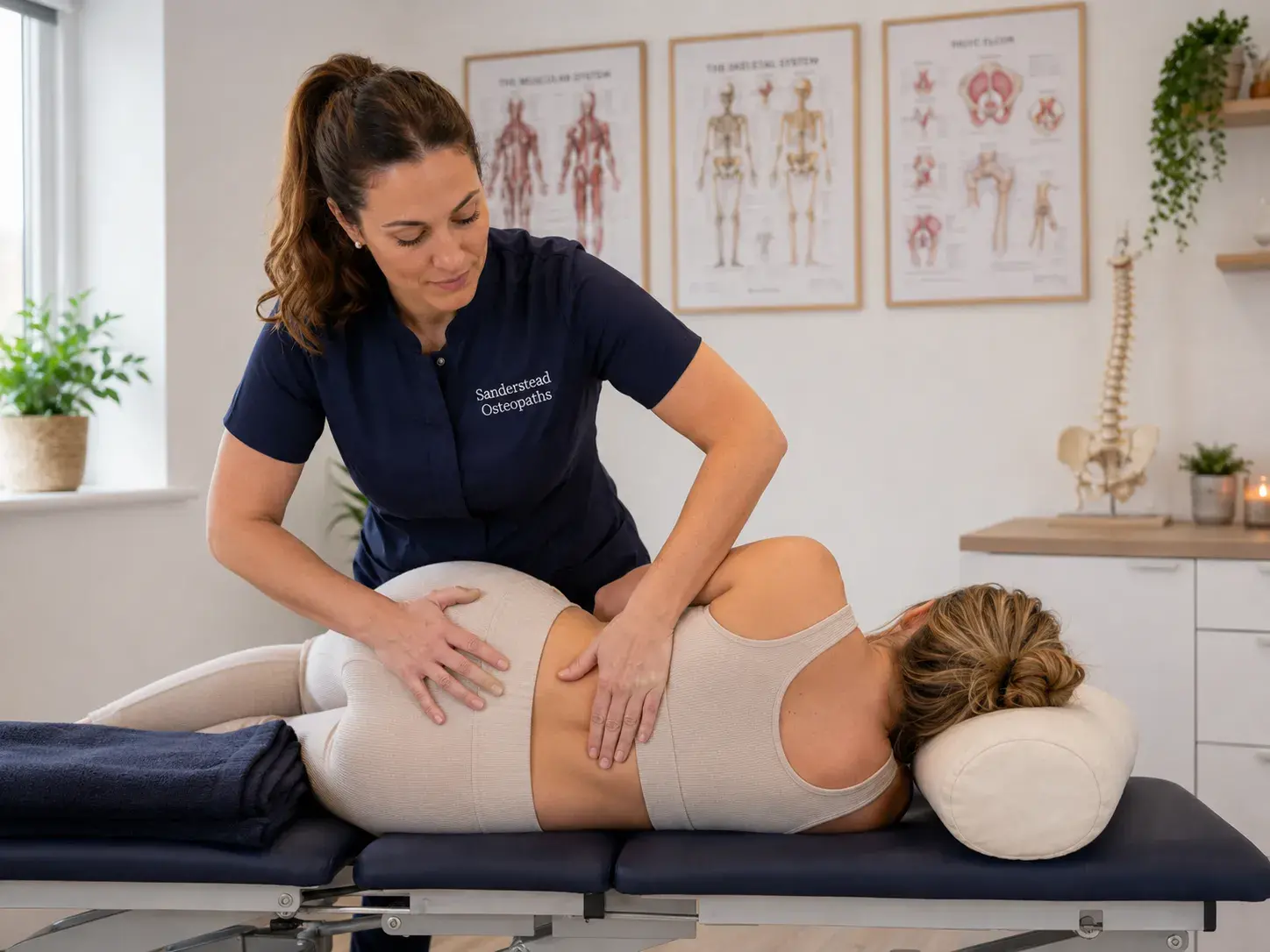
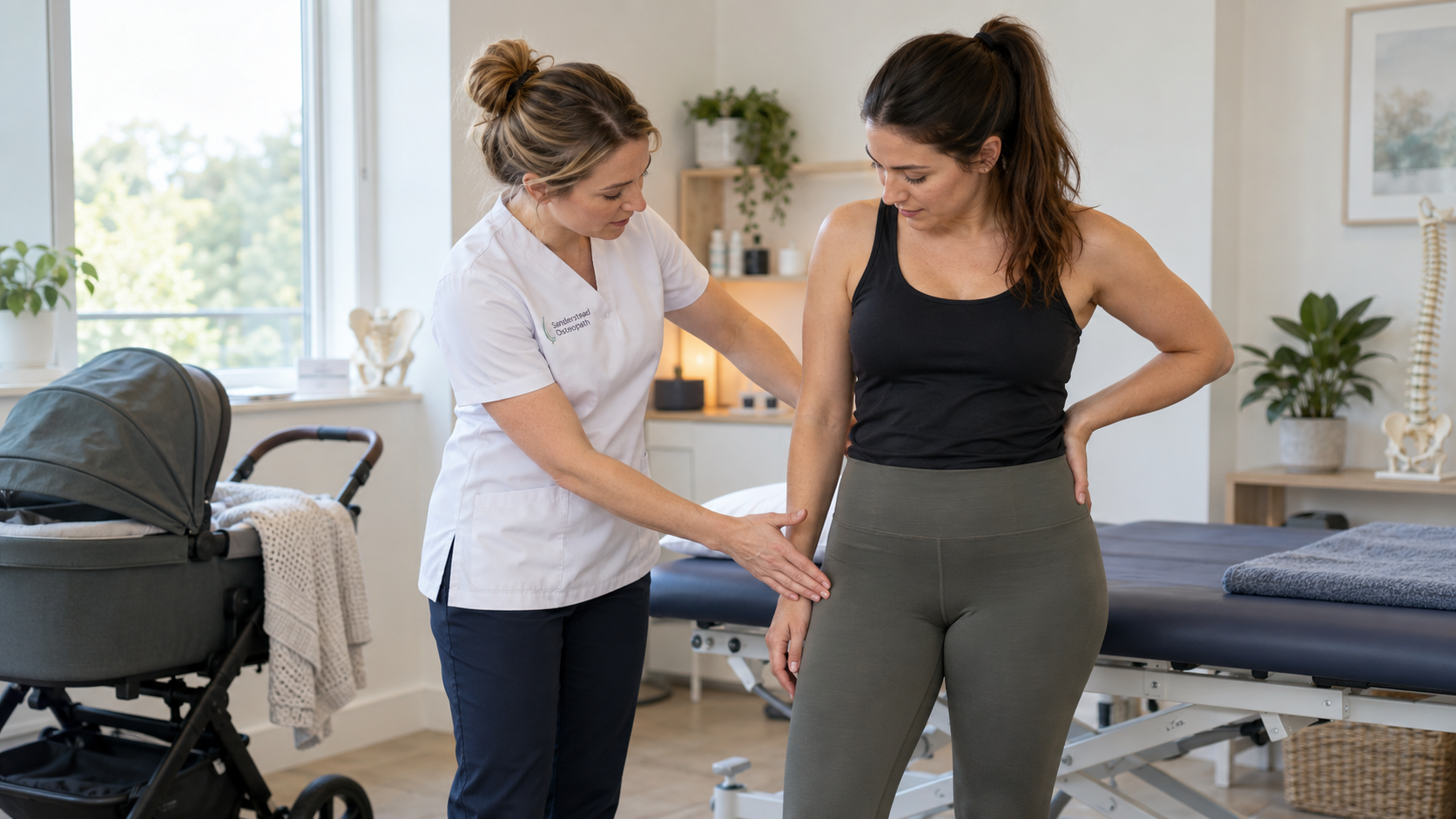
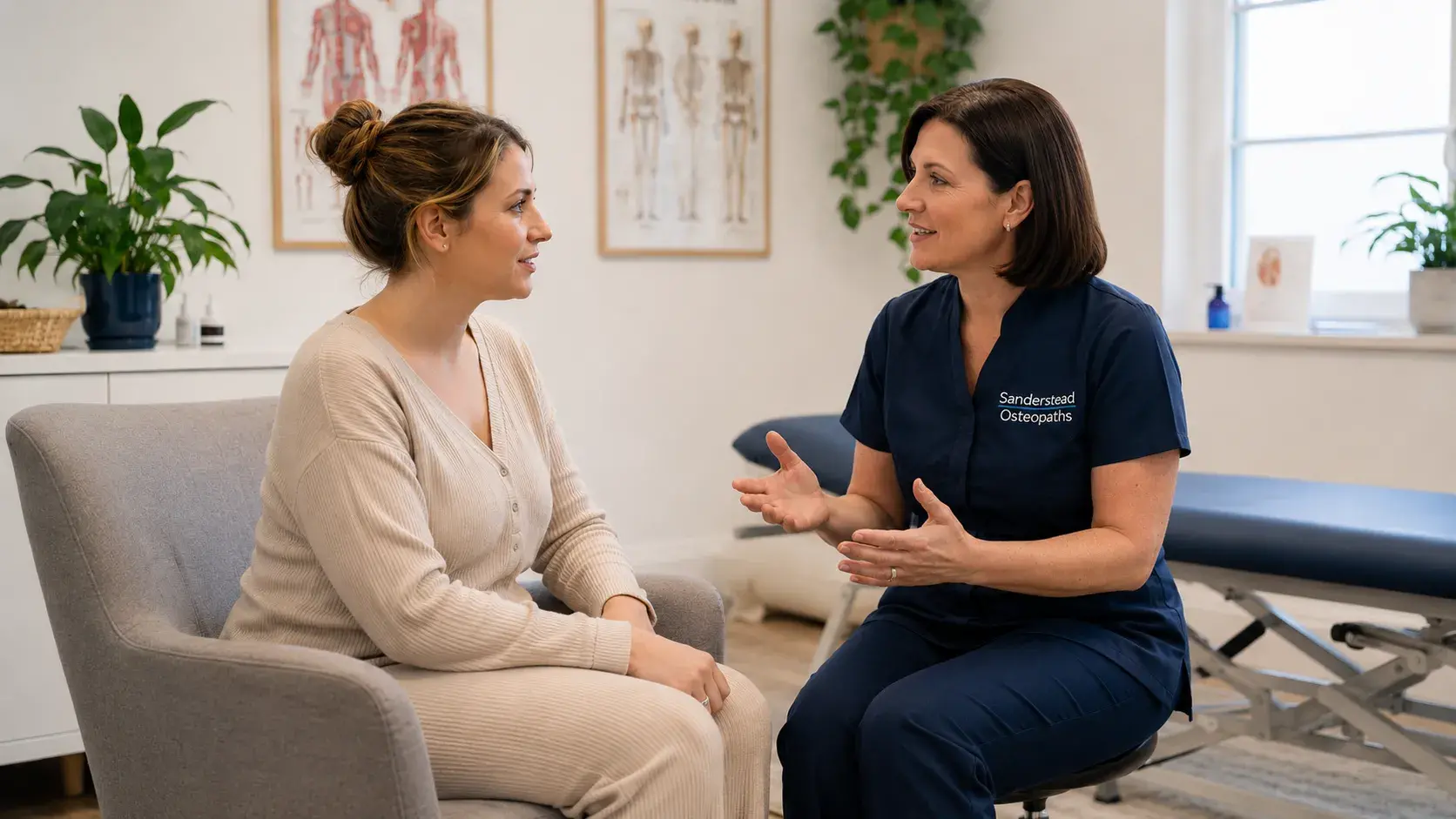
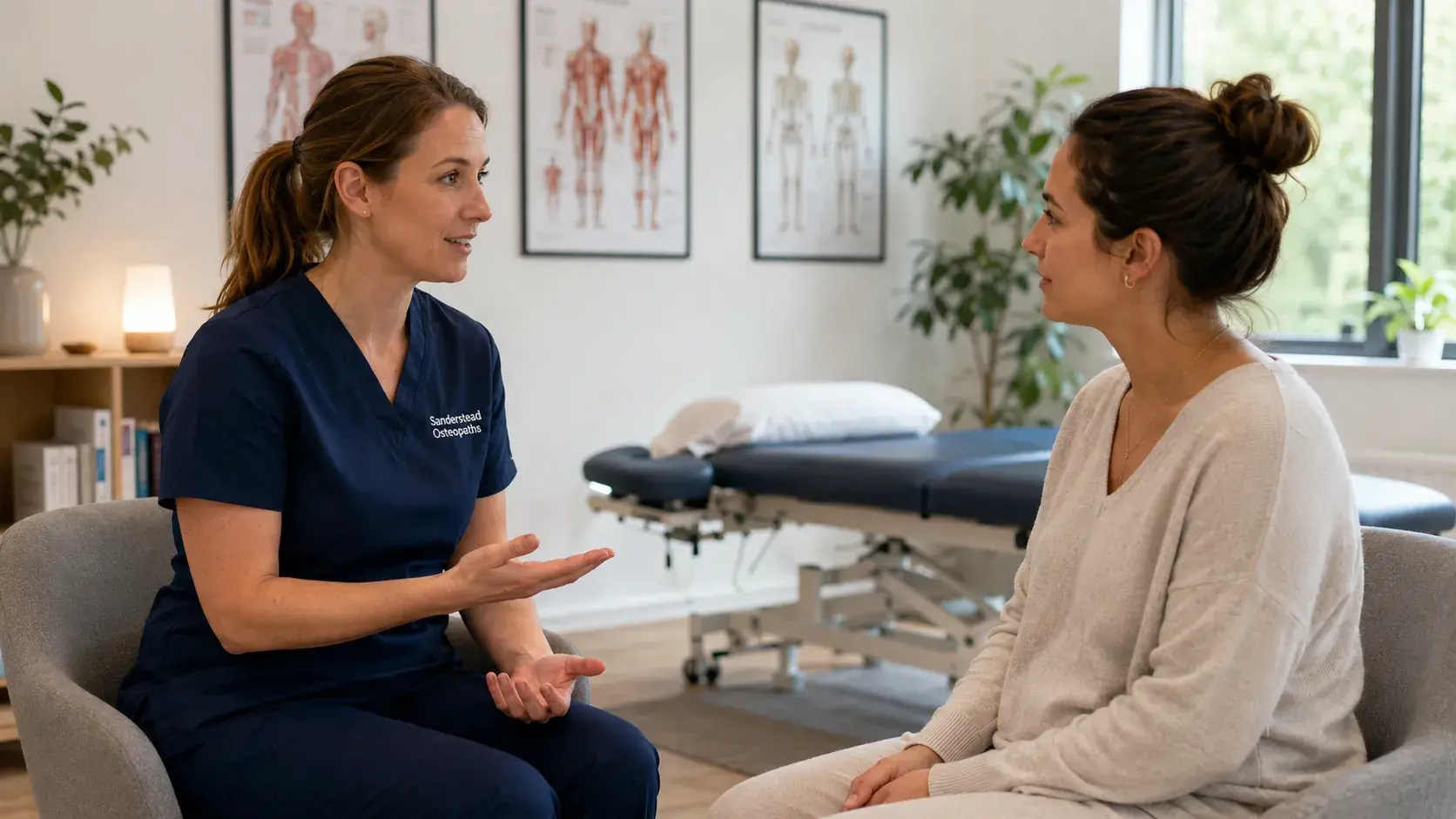
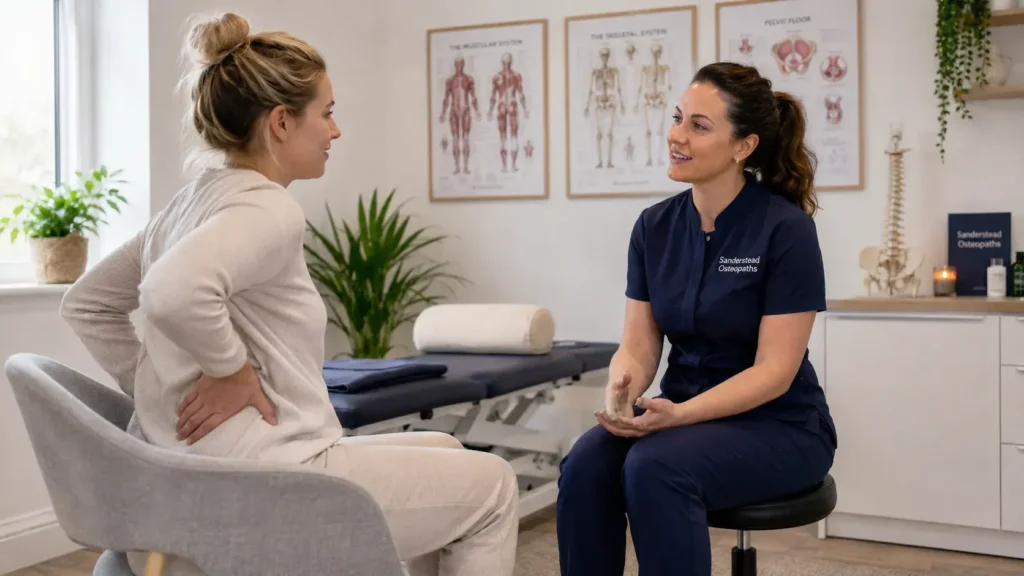
At Sanderstead Osteopaths, we assess postnatal lower back pain by looking beyond the area that hurts. We want to understand how your body is managing load, whether your core is supporting movement effectively, whether your pelvis is compensating, and whether daily baby care is reinforcing the same strain again and again.


Clinical note: A postnatal assessment is not a replacement for GP care, midwife advice or urgent medical assessment. Before attending a Mummy MOT, you should have had your postnatal GP check and been advised that it is appropriate to proceed. This is usually from 6 weeks after a natural birth and 8 weeks after a C-section.

An excellent practice, with excellent therapists. I originally saw David with a bad lower back and got amazing results. Would recommend!

P H Avatar P H
August 28, 2023

Why Back Pain Can Persist After Pregnancy

Lower back pain can continue after pregnancy because the body does not always return to its previous movement patterns automatically.

During pregnancy, your posture, centre of gravity, abdominal wall, pelvic position and load distribution all change. After birth, those changes do not simply switch off overnight. At the same time, you are usually doing more lifting, carrying, feeding and bending than ever before.

This means your lower back may still be working hard even after the pregnancy itself has ended.

Some patients describe a dull ache across the lower back. Others feel sharper pain when lifting, stiffness when standing, discomfort when walking, or a sense that the pelvis and lower back do not feel as stable as they used to.

The important question is not only where the pain is felt. It is why the lower back is being asked to take so much load.

Why Time Alone Does Not Always Restore Function

Time allows tissues to heal, but it does not always restore strength, coordination or movement confidence.

If the abdominal wall is not supporting well, if the pelvis is moving differently, if you are bracing through the lower back, or if baby care is repeatedly loading the same area, back pain may continue for months.

This does not mean your body has failed to recover. It means the body may have adapted in a way that now needs assessing and guiding.


For some patients, the pain is not caused by doing one big thing wrong. It is the result of many small daily movements adding up over time.

Very knowledgeable, nice people

Bernt Hellman Avatar Bernt Hellman
January 28, 2024

How Pregnancy Can Change the Way Your Back Works

Pregnancy changes how the body balances and moves.

As the baby grows, the abdominal wall stretches, the pelvis adapts, the ribcage and breathing mechanics may change, and the lower back often takes on more work. These changes are normal during pregnancy, but they can leave behind movement habits that continue into the postnatal period.

After birth, you may still stand with more load through the lower back. You may brace when lifting. You may avoid using your abdominal wall fully. You may move cautiously if you had pain during pregnancy, a difficult recovery or a C-section.

Over time, these patterns can keep the lower back irritated.

Changes in Posture, Load and Movement

Posture is not about standing perfectly straight. It is about how your body distributes load.

If your abdominal wall is not contributing effectively, your lower back may take more strain. If your hips are stiff, your back may compensate when bending. If your pelvis feels unstable, your spinal muscles may grip to create a sense of control.

This can create a cycle where the lower back becomes the area doing more than its fair share.

Pregnancy-related changes in load can also affect how you walk, sit, feed, lift and exercise. Even subtle changes can become significant when repeated many times each day.


That is why postnatal back pain is often a functional issue, not simply a local back issue.

Have used this osteopath for years and always had great service

Bill Burton Avatar Bill Burton
August 28, 2023

The Link Between Core Recovery & Lower Back Pain

Core recovery is a major part of postnatal back pain.

The abdominal wall helps support the spine, manage pressure and transfer load through the body. After pregnancy, the abdominal wall may be stretched, weakened, poorly coordinated or slow to respond during movement.

This can affect how the lower back feels during everyday tasks.

Core recovery is not just about strength. A strong muscle that activates too late, braces too hard or fails to coordinate with breathing and the pelvic floor may still leave the lower back overloaded.

How Abdominal Doming or Diastasis Recti May Affect Support

Abdominal doming and diastasis recti can both be relevant when assessing lower back pain after pregnancy.

If the abdominal wall domes, bulges or struggles to create tension during movement, the lower back may compensate. This can make lifting, standing, walking or returning to exercise feel harder than expected.

Diastasis recti is not only about the width of a gap. The more important question is whether the abdominal wall can generate tension, manage pressure and support movement.

If abdominal separation, doming or weak core control are present alongside back pain, we may need to assess how the abdominal wall and spine are working together rather than treating the lower back in isolation.

If abdominal separation is a main concern, our diastasis recti treatment page explains this area in more detail.

If your stomach domes, bulges or rises into a ridge when you sit up, our abdominal doming after pregnancy guide may also be useful.

Why Pressure Management Matters

Pressure management is the way your body controls internal pressure during effort.

When you lift your baby, stand up from the floor, cough, carry a car seat or exercise, pressure increases through the trunk. The abdominal wall, pelvic floor, diaphragm and spine need to coordinate to manage that pressure.

If you hold your breath, brace heavily, push pressure downwards or rely on your lower back for stability, discomfort may continue.

This is why some patients feel back pain during lifting or exercise even though the back itself is not the only issue.

A useful recovery plan should consider how the body manages pressure, not just whether the lower back is tight.

Have seen both David and Clare on and off over the last 4 years with lower back pain/stiffness. They really know their stuff and have always provided me with solutions to my lower back. My job is quite demanding and doesn't help the pain (lots of driving and lifting) but knowing David and Clare will always be there to help at Sanderstead Osteopaths it puts my mind at rest. I started going weekly and with the regular treatments it's eased the pain so now I am going every 2-4 weeks. I would highly recommend either of these guys!

James McClelland Avatar James McClelland
August 28, 2023

How Lifting, Feeding and Carrying Can Keep Back Pain Going

Baby care is physically repetitive.

You may lift your baby from the cot, lean over the changing table, twist while carrying, feed in awkward positions, carry the baby on one hip, push a buggy, lift a car seat, and get up from the floor several times a day.

Each movement may seem small, but repeated over weeks and months, they can place a significant demand on the lower back.

This is one reason back pain often becomes more noticeable as activity increases. The early postnatal period may be quieter in some ways, but as your baby grows heavier and daily demands increase, your body may have to manage more load.

Repeated Daily Movements That Add Up

Lower back pain after pregnancy is often aggravated by repeated patterns rather than one single injury.

Common triggers include lifting from a cot, carrying the baby on one side, feeding while rounded through the spine, sitting without support, twisting while holding the baby, lifting a pram or car seat, and bending repeatedly through the lower back instead of sharing movement through the hips and legs.

These movements are part of normal life with a baby, so the answer is not simply to avoid them. The aim is to help your body tolerate them better.

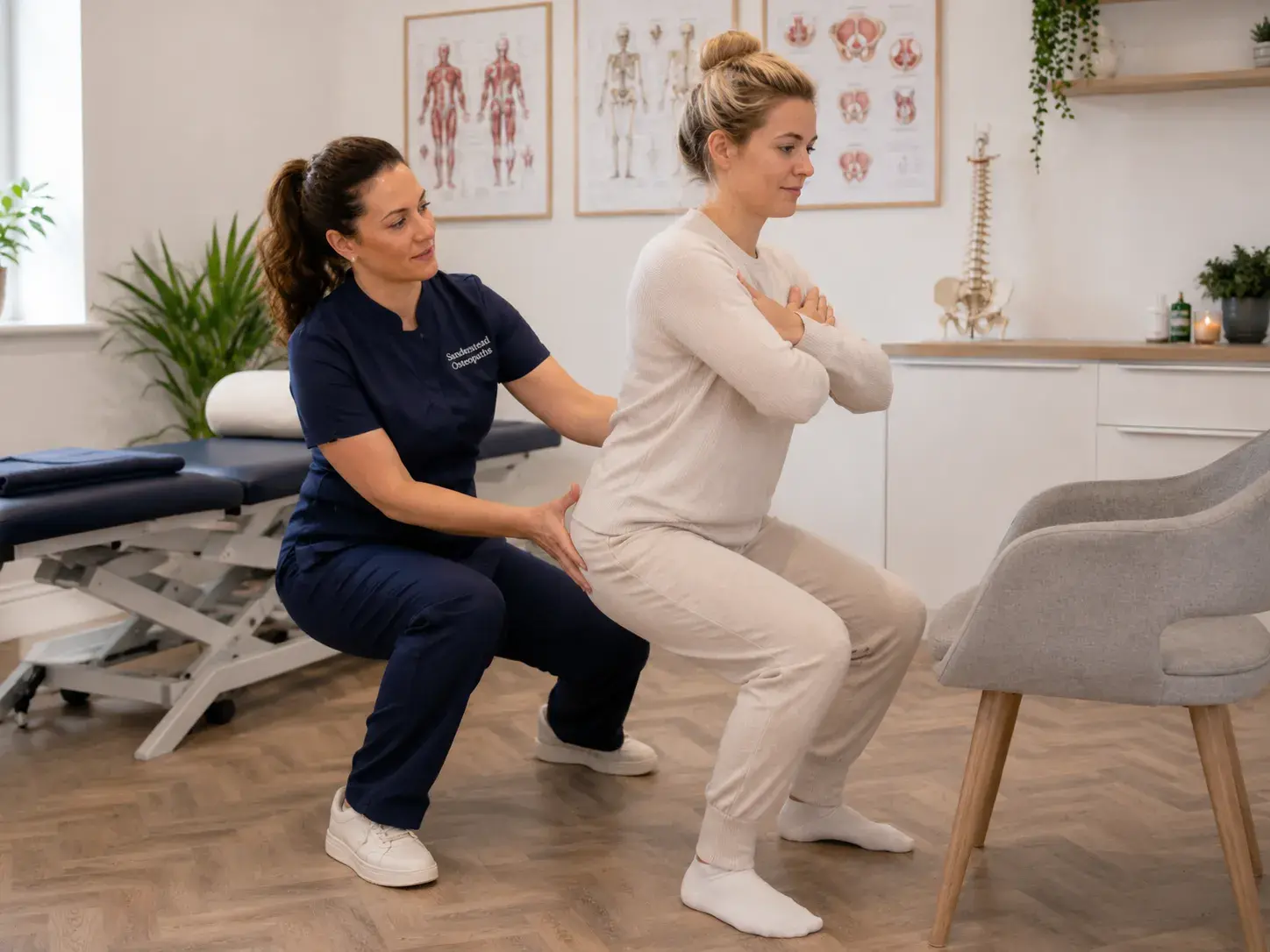
During assessment, we may look at how you lift, bend, stand, move through your hips, control your pelvis and use your core during effort.

Small changes can make daily movement less irritating for the lower back.

Lexi has been very helpful with pain in my back and the treatments have been very affective and she gives out great follow up exercises

Max Bullock Avatar Max Bullock
February 28, 2024

When Pelvic Floor or Pelvic Symptoms Are Also Involved

Lower back pain after pregnancy can overlap with pelvic floor or pelvic symptoms.

This is because the lower back, pelvis, abdominal wall, pelvic floor and breathing system all work together. If one part of the system is not coordinating well, another area may take more strain.

Some patients with lower back pain also notice leaking, heaviness, pelvic pressure, dragging, abdominal doming or a feeling of reduced pelvic support.

These symptoms help us understand whether the issue is wider than the lower back alone.

Back Pain With Leaking, Heaviness or Pelvic Pressure

Back pain with leaking, heaviness or pelvic pressure may suggest that the body is not managing load and pressure effectively.

If pressure is not controlled well through the abdominal wall and pelvic floor, symptoms can appear in different places. You may feel discomfort in the lower back, but also notice pelvic heaviness, bladder leakage or reduced confidence during movement.

This does not mean all symptoms have the same cause. It means they may be part of the same functional picture.

In these cases, assessment should consider the core, pelvic floor, pelvis and movement patterns together.

At Sanderstead Osteopaths, our pelvic floor assessment is external. We look at breathing, pressure management, abdominal movement, pelvic control and functional movement rather than treating the pelvic floor as an isolated muscle.


If these symptoms are present, our pelvic floor recovery after pregnancy page explains how pelvic floor coordination, breathing and pressure management may be involved.

Iv used David for 12 years now. Always reliable and available when needed for emergency appointments. I am now taking my children here when needed.

George Laura Avatar George Laura
August 28, 2023

Why Back Pain Can Continue After a C-Section

Lower back pain can continue after a C-section because the body is recovering from pregnancy and abdominal surgery at the same time.

A C-section scar may heal well on the surface, but some patients still feel tightness, guarding, sensitivity, numbness or reduced confidence using the lower abdomen.

If you are protecting the scar area without realising, your lower back may compensate. You may avoid standing fully upright, hold your breath when lifting, brace differently, move cautiously or rely more heavily on your back and hips.

These protective patterns are understandable early on, but if they continue, they can affect recovery.

Scar Tightness, Guarding and Abdominal Wall Recovery

The abdominal wall plays an important role in supporting the lower back.

After a C-section, the abdominal wall has been stretched by pregnancy and then affected by surgery. Even once the incision has healed, the area may not feel fully connected, confident or coordinated.

If the lower abdomen feels weak, tight or guarded, the back may become the area that works harder during lifting, bending, walking or exercise.

This is why C-section recovery should not only focus on the scar itself. It should also consider how the scar area, abdominal wall, pelvis and spine are functioning together.


If you have had a C-section, our Mummy MOT after a C-section article explains core, scar and movement recovery in more detail.

Been seeing Paul for a couple of months now for my neck pain, had been using another fairly local osteopaths before and didn’t really seem to be making any progress, but since finding here it’s been much better. I suffer really badly with tension in my neck which leads to real bad headaches, and can highly recommend this place for anyone who suffers the same issue as Paul has helped me massively.

Dan Avatar Dan
November 28, 2023

How We Assess Postnatal Lower Back Pain

At Sanderstead Osteopaths, we assess postnatal lower back pain by looking at the wider recovery picture.

The painful area matters, but it is not always the whole story. We may assess the lower back, pelvis, hips, abdominal wall, breathing, posture and movement patterns to understand why the pain is continuing.

We also discuss when the pain appears. For example, whether it is worse during lifting, feeding, walking, standing, sitting, exercising, getting out of bed or carrying your baby.

The timing of symptoms often tells us a lot about the underlying load pattern.

Looking Beyond the Area That Hurts

Back pain after pregnancy may be linked to stiffness in the lower back, but it may also be linked to reduced core support, altered pelvic movement, hip restriction, poor pressure management, scar-related guarding, feeding posture or repeated lifting habits.

This is why we do not only assess the back.

We want to understand what the lower back is compensating for. If the back is taking on work that should be shared by the abdominal wall, hips, pelvis or legs, treatment needs to address more than the painful area.

A local approach may give short-term relief, but a functional approach aims to reduce the reasons the strain keeps returning.

Assessing Core Control, Pelvic Movement & Load Transfer

During assessment, we may look at how your abdominal wall engages, how your pelvis moves, how your spine responds to load, and how your body performs simple tasks such as standing from sitting, bending, lifting or balancing.

We may also assess whether your breathing and core control change during effort.

If you hold your breath, brace through the lower back, shift weight unevenly or struggle to control the pelvis, those patterns may be contributing to symptoms.

This helps us build a recovery plan that reflects what your body actually needs to do every day.

Always really happy with the knowledge and professionalism I receive.

Daniel Djadali Avatar Daniel Djadali
August 28, 2023

What Can Help Lower Back Pain After Pregnancy

Improving postnatal lower back pain usually involves reducing irritation, restoring movement and rebuilding control.

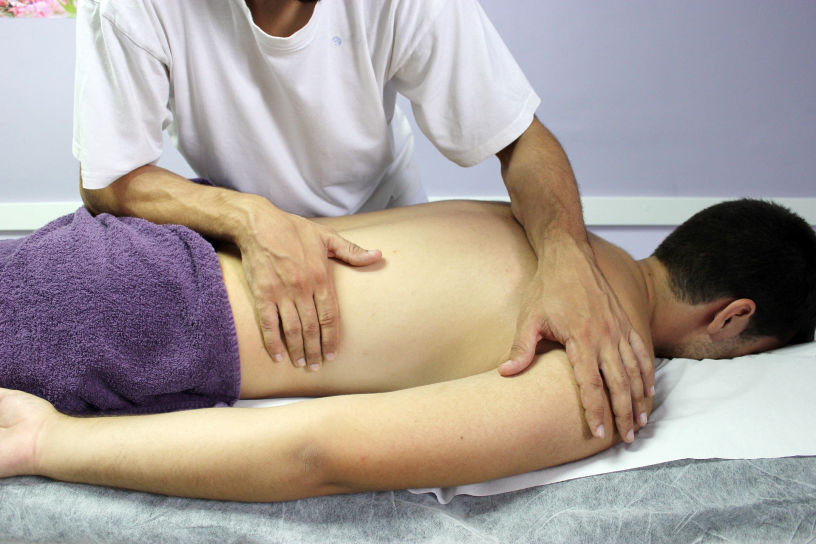
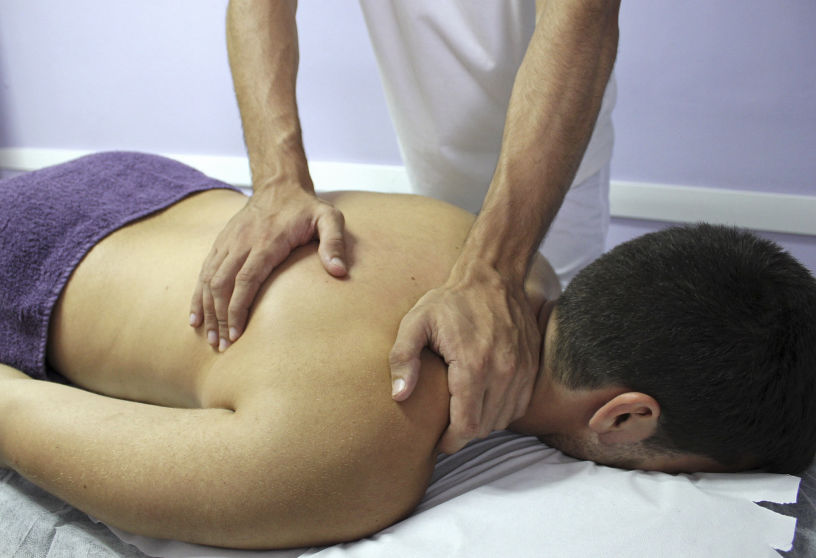
For some patients, hands-on osteopathic treatment may help reduce stiffness, improve mobility and calm areas that are overloaded. For others, rehabilitation and movement advice may be the most important part of recovery.

Often, the best approach is a combination.

The aim is not just to make the back feel better temporarily. The aim is to help the body manage load more effectively so pain is less likely to keep returning.

Rebuilding Control Before Increasing Strength

Strength is useful, but control usually comes first.

If your body is bracing, holding breath, doming through the abdomen or overusing the lower back, adding harder exercises may reinforce the same pattern.

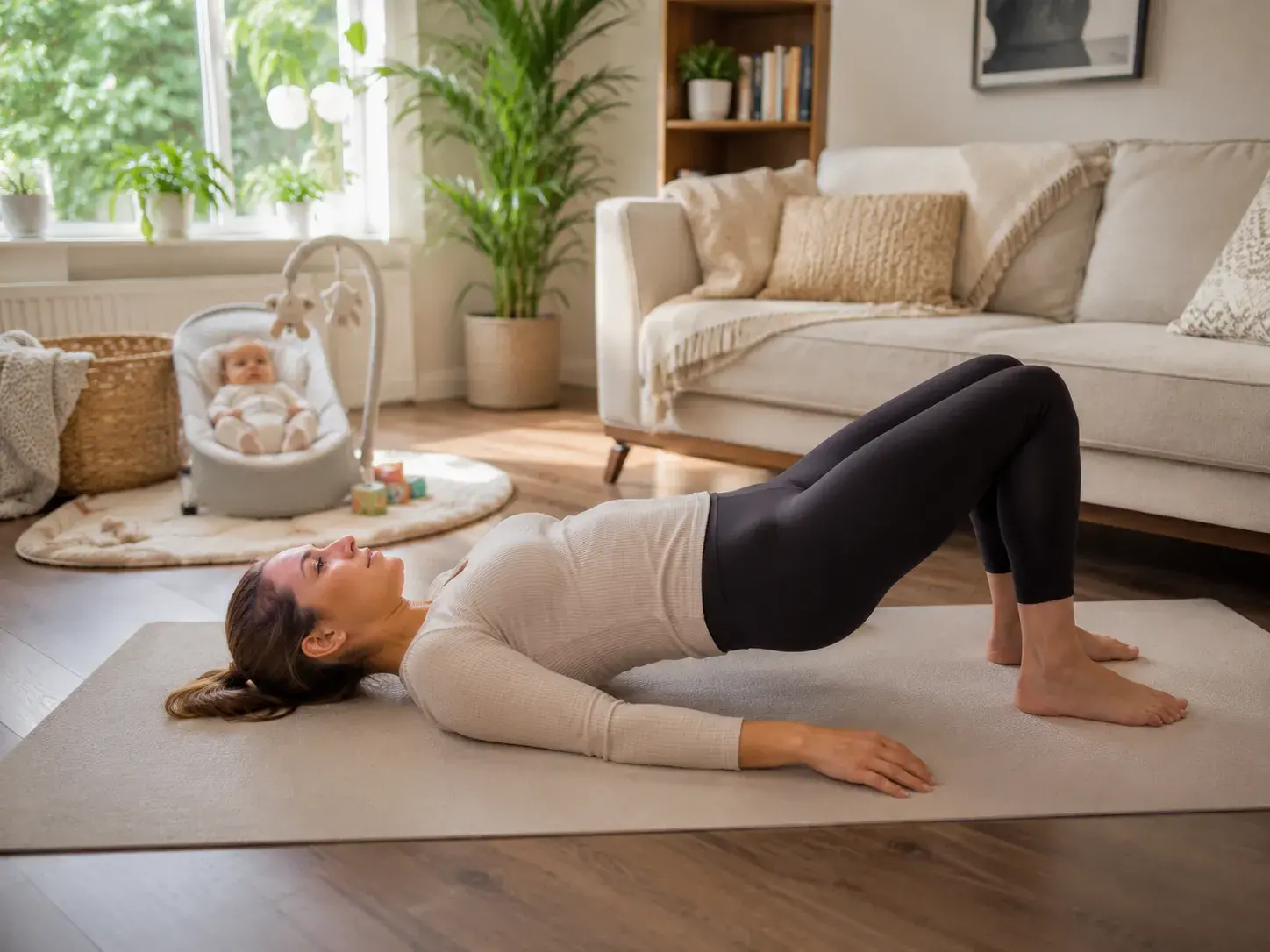
Early rehabilitation may focus on breathing, abdominal wall coordination, pelvic control, hip mobility, gentle strengthening and movement strategies for lifting and carrying.

As your body becomes more controlled, exercise can be progressed gradually.

The right plan should feel specific to your symptoms, your stage of recovery and the activities you want to return to.

Improving Movement Habits Around Baby Care

Small changes to daily movement can make a real difference.

We may look at how you lift your baby, feed, carry, stand from the floor, bend into a cot, load the car, push the buggy or carry bags.

The goal is not to make every movement perfect. That would be unrealistic. The goal is to reduce repeated strain and help your body share load more efficiently.

For example, using the hips and legs more during lifting, changing feeding positions, alternating carrying sides, avoiding repeated twisting under load, and exhaling during effort may all help reduce stress on the lower back.


These strategies are most useful when they are matched to your assessment findings.

Thanks to Tom for treating me before and after my Marathon last year – I literally would not have been able to do it without him. He also treated me for a pulled shoulder and neck pain. I'll definitely use Sanderstead Osteopaths again – highly recommend! 👍

Richard Belton Avatar Richard Belton
August 28, 2023

When to Book a Postnatal Back Pain Assessment

A postnatal back pain assessment may be useful if pain continues, keeps returning or affects what you feel able to do.

You do not need to wait until pain becomes severe. Persistent discomfort is enough reason to ask why your body is struggling.

Back pain is worth assessing if it affects lifting, walking, feeding, carrying, exercise, sleep, work or your confidence with daily movement.

If Pain Continues Months After Birth

Pain that continues months after birth may suggest the body is still compensating.

Time alone does not always restore core control, pelvic movement, pressure management or strength. If the same pain keeps appearing during similar tasks, the underlying movement pattern may still need support.

Assessment can help identify whether the pain is mainly linked to the lower back itself, or whether core function, pelvic mechanics, abdominal wall recovery, scar guarding, feeding posture or daily lifting habits are contributing.

If Pain Appears During Lifting, Walking or Exercise

Pain during lifting, walking or exercise is useful information.

It tells us the body may be struggling under load rather than at rest. This may involve how your back moves, how your pelvis transfers load, how your abdominal wall engages or how your body prepares for effort.

If pain appears when lifting your baby, pushing the buggy, getting up from the floor, returning to the gym or increasing activity, assessment can help you understand what your body is ready for and what needs rebuilding first.

Absolutely brilliant. Lexi is a miracle worker, i always come away feeling back on track and realigned. I honestly dont know what i would do without her regular resets! She is lovely and the practice is always, welcoming, warm and quiet.

Vicky Avatar Vicky
February 28, 2024

Postnatal Back Pain Support at Sanderstead Osteopaths

At Sanderstead Osteopaths, we support patients with lower back pain after pregnancy by looking at the whole postnatal recovery picture.

We regularly see patients from Sanderstead and nearby areas including South Croydon, Purley, Warlingham, Kenley, Selsdon and Coulsdon.

Our postnatal back pain treatment approach looks at how your lower back, pelvis, abdominal wall, breathing, posture and movement patterns are working together. This helps us understand whether your pain is linked to stiffness, weakness, compensation, repeated baby-care demands or wider postnatal recovery.

Where appropriate, treatment may include hands-on osteopathic care, movement advice, rehabilitation exercises, core coordination work, posture guidance and strategies for lifting, feeding and carrying.

When a Mummy MOT May Be Recommended

A Mummy MOT may be recommended if lower back pain is part of a wider postnatal recovery pattern.

For example, you may also have abdominal doming, diastasis recti concerns, pelvic floor symptoms, pelvic heaviness, C-section scar tightness, neck and shoulder tension, or difficulty returning to exercise.

In these cases, a full Mummy MOT assessment in Sanderstead can help assess how your posture, spine, pelvis, abdominal wall, pelvic floor and movement patterns are working together.

Arranging an Appointment

To arrange a postnatal back pain assessment or Mummy MOT, contact Sanderstead Osteopaths or book online.

Before attending a Mummy MOT, please make sure you have had your postnatal GP check and have been advised that it is appropriate to proceed.

If you are unsure whether an assessment is suitable, our team can help guide you.

David Ayres was brilliant with my back issues, as were his 2 colleagues I saw when he wasn't available. Professional and knowledgeable, would recommend 👌

Jane welch Avatar Jane welch
August 28, 2023

Frequently Asked Questions About Lower Back Pain After Pregnancy

Is lower back pain common after pregnancy?

Lower back pain after pregnancy is common, but it should not be ignored if it continues, worsens or affects your daily life. Persistent pain may be linked to core recovery, pelvic movement, posture, lifting habits, pressure management or compensation patterns.

Your back may still hurt months after giving birth because your body is continuing to manage postnatal changes, repeated lifting, feeding positions, core weakness, pelvic load or altered movement habits. Time alone does not always restore function.

A weak or poorly coordinated core can contribute to lower back pain after pregnancy. The abdominal wall helps support the spine and manage pressure. If it is not working well with the pelvis, pelvic floor and breathing system, the lower back may take more strain.

Yes. Back pain can continue after a C-section because the body is recovering from pregnancy and abdominal surgery. Scar tightness, guarding, reduced abdominal wall confidence and altered movement patterns may all affect how the lower back is loaded.

You should consider assessment if back pain continues beyond the early postnatal stage, affects lifting or carrying, appears during exercise, keeps returning, or is linked with pelvic symptoms, abdominal doming, scar tightness or reduced confidence moving.

Useful External References

For general postnatal health information, patients may also find NHS post-pregnancy body guidance, NHS postnatal check guidance, NHS back pain guidance, NICE pelvic floor dysfunction guidance and official Mummy MOT information useful. These resources are for general information only and do not replace individual medical advice.

I took my newborn daughter to David due to her being very gassy and unsettled. Within the first week of David seeing her she was a lot more settled and was sleeping for a lot longer at night. I would highly recommend the treatment here with David for anyone with newborns with similar issues.

Elisabeth Cachia Avatar Elisabeth Cachia
August 28, 2023

Latest Posts

Why Your Stomach Domes When You Sit Up After Pregnancy

Mummy MOT After a C-Section: Core, Scar and Movement Recovery

Leaking After Birth: When It May Be a Sign Your Pelvic Floor Needs Support

Our Services

Sports Injury Treatment Clinic

Sports Injury

The use of sport’s osteopathy is an effective treatment that assists in detecting, treating and preventing a number of health problems. Our treatments include the moving, stretching and massaging of muscles and joints within the body.
Neck, Back & Shoulder Treatment Clinic

Neck Pain

Our osteopathic treatments will reduce your shoulder pain, improve your flexibility and insure a speedy recovery. Our osteopathic treatments may include soft tissue massage, mobilisation and strengthening work to your effected area be that the shoulder, neck or back.
Headaches & Migraines Treatment Clinic

Headaches & Migraines

The majority of headaches are found to be caused by musculoskeletal tension and/or postural issues and can be successfully treated by our osteopath practitioners at our Sanderstead based osteopathy clinic.
Pregnancy & Post Natal Treatment Clinic

Pregnancy & Post Natal

Postpartum osteopathy is osteopathic treatment that focuses on treatments effective the birth of a child. Postpartum osteopathy is an alternative treatment whereby our osteopath practitioners detect, treat and prevents future health issues by means of stretching and massaging the muscles, joints and connective tissues.
Children & Baby Treatment Clinic

Children & Teenager Treatment

Our osteopaths practitioners are highly qualified & experienced when treating children & babies. We utilise a range of techniques that includes physical manipulation, stretching and massage. We also offer more gentle techniques such as cranial osteopathy renowned for being safe safe and non-manipulative.
Chronic Pain Treatment Clinic

Chronic Pain Treatment

Our osteopathy team utilise manipulative treatment in order to alleviate somatic dysfunction. Our treatments apply manually guided forces to improve overall physiologic function and support homeostasis.

Our Services

Sanderstead Osteopaths Clinic

Sports Injury

The use of sport’s osteopathy is an effective treatment that assists in detecting, treating and preventing a number of health problems. Our treatments include the moving, stretching and massaging of muscles and joints within the body.
Neck, Back & Shoulder Treatment Clinic

Neck Pain

Our osteopathic treatments will reduce your shoulder pain, improve your flexibility and insure a speedy recovery. Our osteopathic treatments may include soft tissue massage, mobilisation and strengthening work to your effected area be that the shoulder, neck or back.
Headaches & Migraines Treatment Clinic

Headaches & Migraines

The majority of headaches are found to be caused by musculoskeletal tension and/or postural issues and can be successfully treated by our osteopath practitioners at our Sanderstead based osteopathy clinic.
Pregnancy & Post Natal Treatment Clinic

Pregnancy & Post Natal

Postpartum osteopathy is osteopathic treatment that focuses on treatments effective the birth of a child. Postpartum osteopathy is an alternative treatment whereby our osteopath practitioners detect, treat and prevents future health issues by means of stretching and massaging the muscles, joints and connective tissues.
Children & Baby Treatment Clinic

Children & Teenager Treatment

Our osteopaths practitioners are highly qualified & experienced when treating children & babies. We utilise a range of techniques that includes physical manipulation, stretching and massage. We also offer more gentle techniques such as cranial osteopathy renowned for being safe safe and non-manipulative.
Chronic Pain Treatment Clinic

Chronic Pain Treatment

Our osteopathy team utilise manipulative treatment in order to alleviate somatic dysfunction. Our treatments apply manually guided forces to improve overall physiologic function and support homeostasis.

Areas our Osteopathy Treatment Covers

Sanderstead, CR2

Purley, CR8

Kenley, CR8

Selsdon, CR2

New Addington, CR0

South Croydon, CR2

Hamsey Green, CR6

Croydon, CR0

Coulsdon, CR5

Caterham, CR3

Warlingham, CR6

Osteopathy Coverage

David Ayres Osteopath

About the Clinical Director

David Ayres is the Founder and Clinical Director of Sanderstead Osteopaths, providing clinical guidance and oversight across all treatment and content.

David Ayres

Clinical Director & Founder, Sanderstead Osteopaths

David Ayres is the founder and Clinical Director of Sanderstead Osteopaths, with over 25 years of experience in osteopathic care, clinical education, and practitioner development.

He qualified from the British School of Osteopathy in 2000 and went on to spend a decade lecturing at the institution between 2002 and 2012. During this time, he taught final-year students advanced osteopathic techniques and manipulation, while also working as a clinical tutor overseeing and mentoring students in the treatment of their own patients.

Throughout his clinical career, David developed particular expertise in the treatment of neck injuries, spinal conditions, and joint-related issues affecting the shoulders and knees. He also worked with newborn babies using cranial osteopathic approaches, supporting early-stage musculoskeletal development.

David’s role within Sanderstead Osteopaths is focused on clinical leadership, mentoring, and maintaining high standards of care across the team.

He works closely with practitioners within the clinic to guide treatment approaches, support clinical decision-making, and ensure patients receive structured, evidence-informed care tailored to their individual needs.

Under his direction, Sanderstead Osteopaths has built a strong reputation across Sanderstead, Croydon and the surrounding areas for delivering professional, patient-focused treatment for a wide range of musculoskeletal conditions.

Scroll to Top