Mummy MOT After a C-Section: Core, Scar and Movement Recovery

Written by Sanderstead Osteopaths. Clinically reviewed by Judith Tardif, Registered Osteopath.

A C-section is major abdominal surgery, and recovery is not only about the scar healing on the surface.

After a C-section, the body has to recover from pregnancy, birth, abdominal surgery, changes in posture, altered core function and the daily physical demands of looking after a baby. Even when the scar looks well healed, you may still feel tight, weak, guarded, disconnected from your core, uncomfortable when lifting, or unsure about returning to exercise.

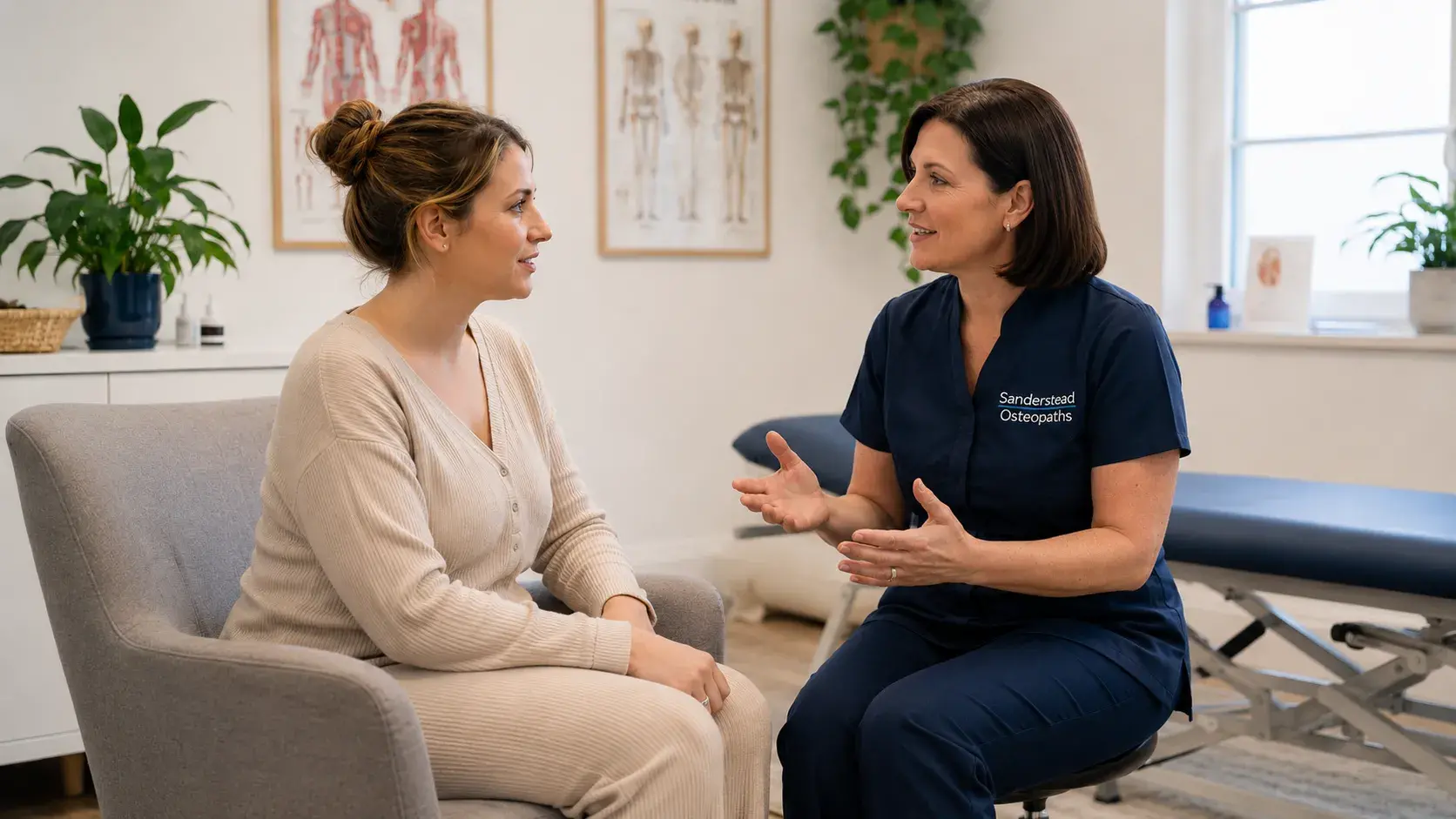
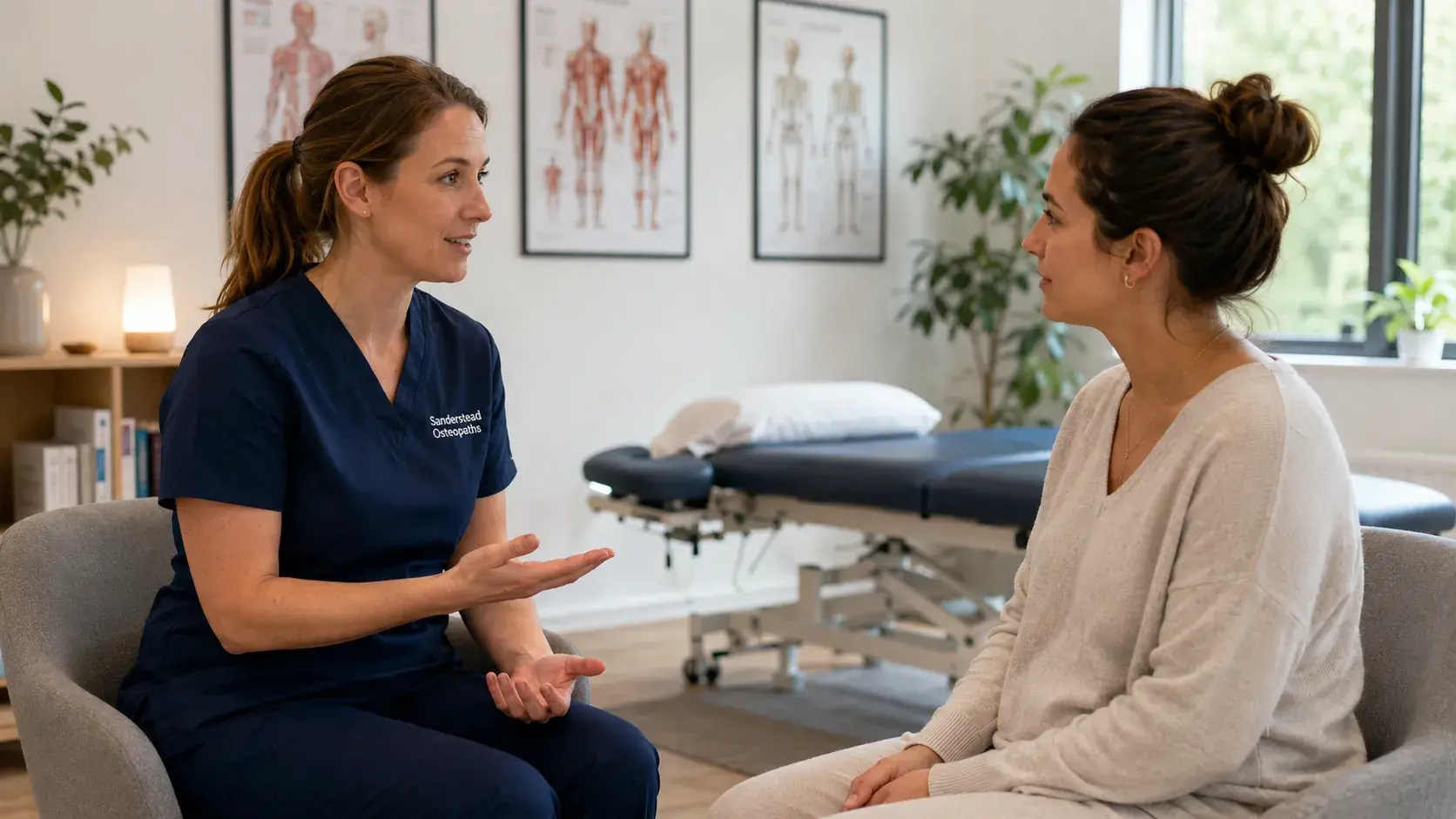
A Mummy MOT after a C-section focuses on how your body is functioning after that recovery period. At Sanderstead Osteopaths, we assess how your core, abdominal wall, scar area, pelvis, posture, breathing, pressure management and movement patterns are working together.

Before attending a Mummy MOT after a C-section, you should have had your postnatal GP check, usually around 8 weeks after birth, and been advised that it is appropriate to proceed. A Mummy MOT is not a replacement for your GP check, medical review or urgent postnatal care.

Many patients try to manage the problem by avoiding movement, avoiding exercise or repeatedly doing pelvic floor exercises without knowing whether they are activating correctly. That can sometimes help, but if the issue is timing, coordination or pressure management, strengthening alone may not resolve it.

A structured assessment helps identify what is actually happening.

Have seen both David and Clare on and off over the last 4 years with lower back pain/stiffness. They really know their stuff and have always provided me with solutions to my lower back. My job is quite demanding and doesn't help the pain (lots of driving and lifting) but knowing David and Clare will always be there to help at Sanderstead Osteopaths it puts my mind at rest. I started going weekly and with the regular treatments it's eased the pain so now I am going every 2-4 weeks. I would highly recommend either of these guys!

James McClelland Avatar James McClelland
August 28, 2023

A C-Section Recovery Assessment After Your GP Check

A Mummy MOT after a C-section should happen after your medical postnatal review, not instead of it.

Your GP check is there to review medical recovery and identify whether there are any concerns that need medical input. A Mummy MOT has a different purpose. Once you have been medically cleared, we can assess how your body is moving, stabilising and managing day-to-day load after pregnancy and surgery.

This distinction matters. If you have not had your GP check, or if your GP has raised concerns that need medical follow-up, the Mummy MOT may not be appropriate yet.
Why the 8-Week GP Check Should Come First

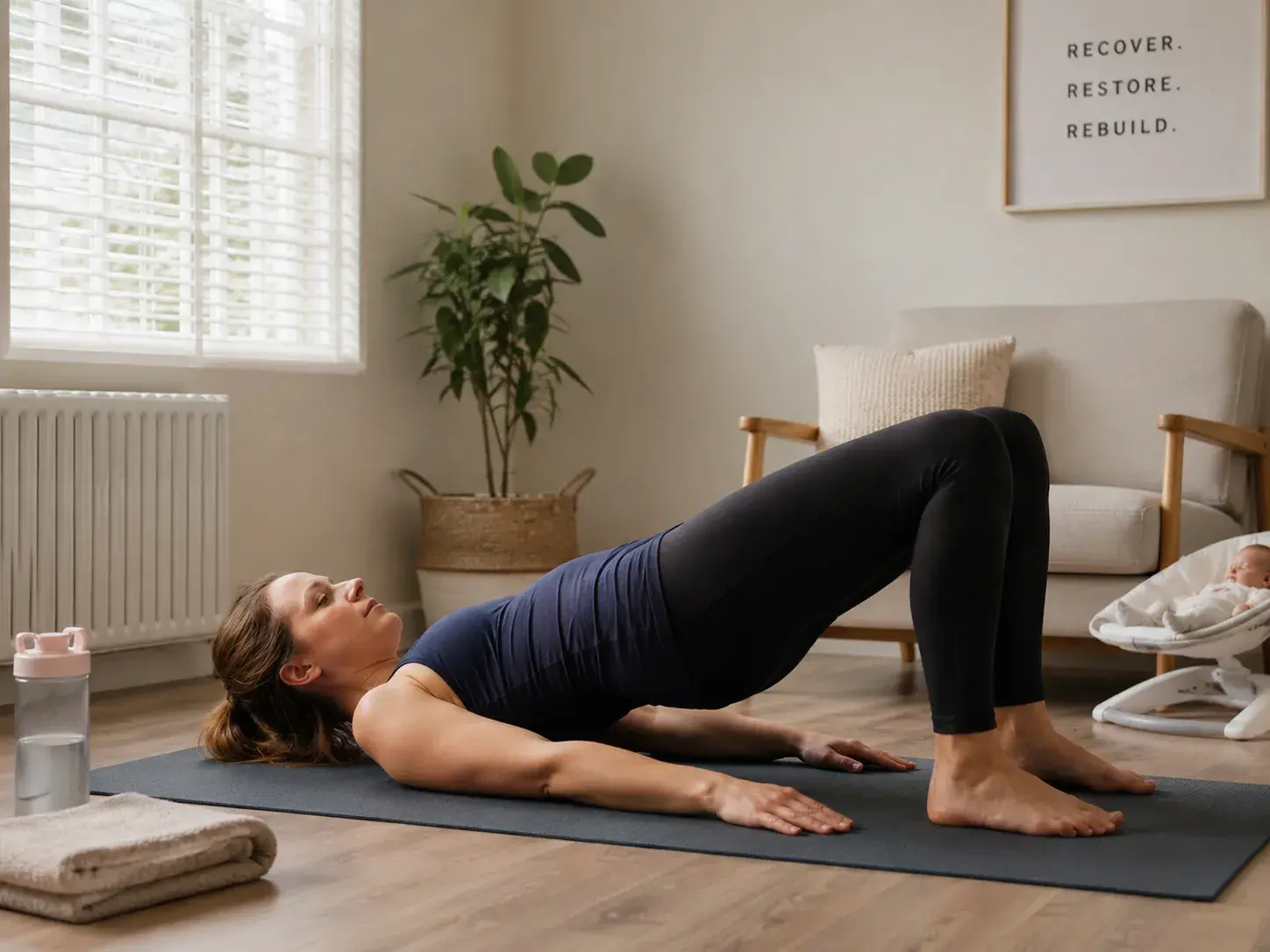
After a C-section, the postnatal GP check is usually around 8 weeks after birth. This should happen before attending a Mummy MOT.

This is important because a C-section involves surgical healing. Before we assess movement, scar-related restriction, core engagement or postnatal function, we need to know that your GP has reviewed your postnatal recovery and that it is appropriate for you to proceed.

If you have symptoms such as fever, increasing redness around the scar, discharge, severe pain, heavy bleeding, sudden swelling, chest pain, shortness of breath, new numbness or weakness, or loss of bladder or bowel control, you should seek medical advice urgently rather than booking a Mummy MOT.

How a Mummy MOT Supports Functional Recovery After That

Once your GP check has taken place and you have been advised that it is appropriate to proceed, a Mummy MOT can help you understand how your body is functioning after a C-section.

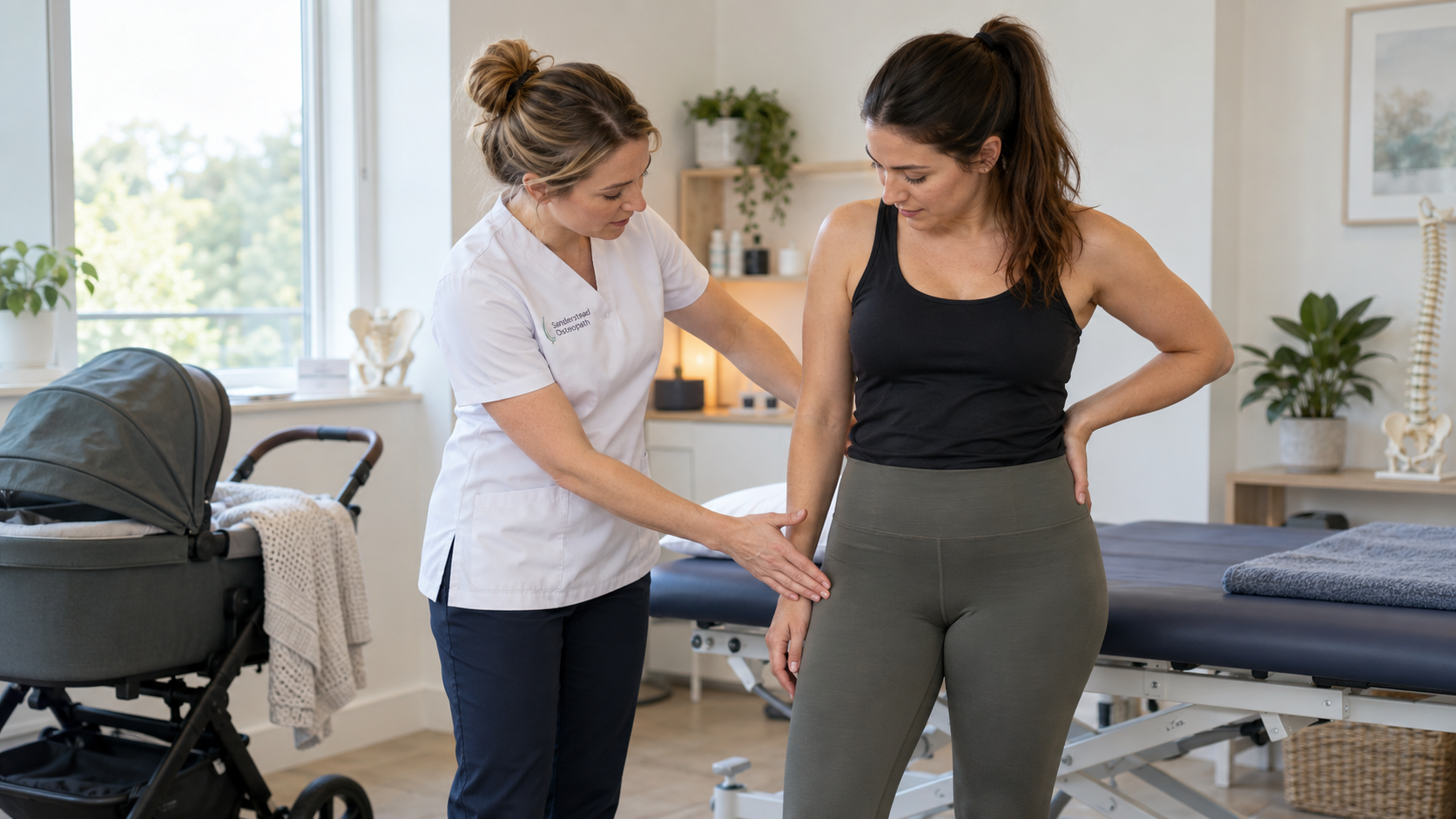
We may assess how your abdominal wall is engaging, whether scar-related tightness is affecting movement, how your pelvis and lower back are managing load, whether your breathing and pressure control are coordinated, and whether your body is compensating during everyday movements.
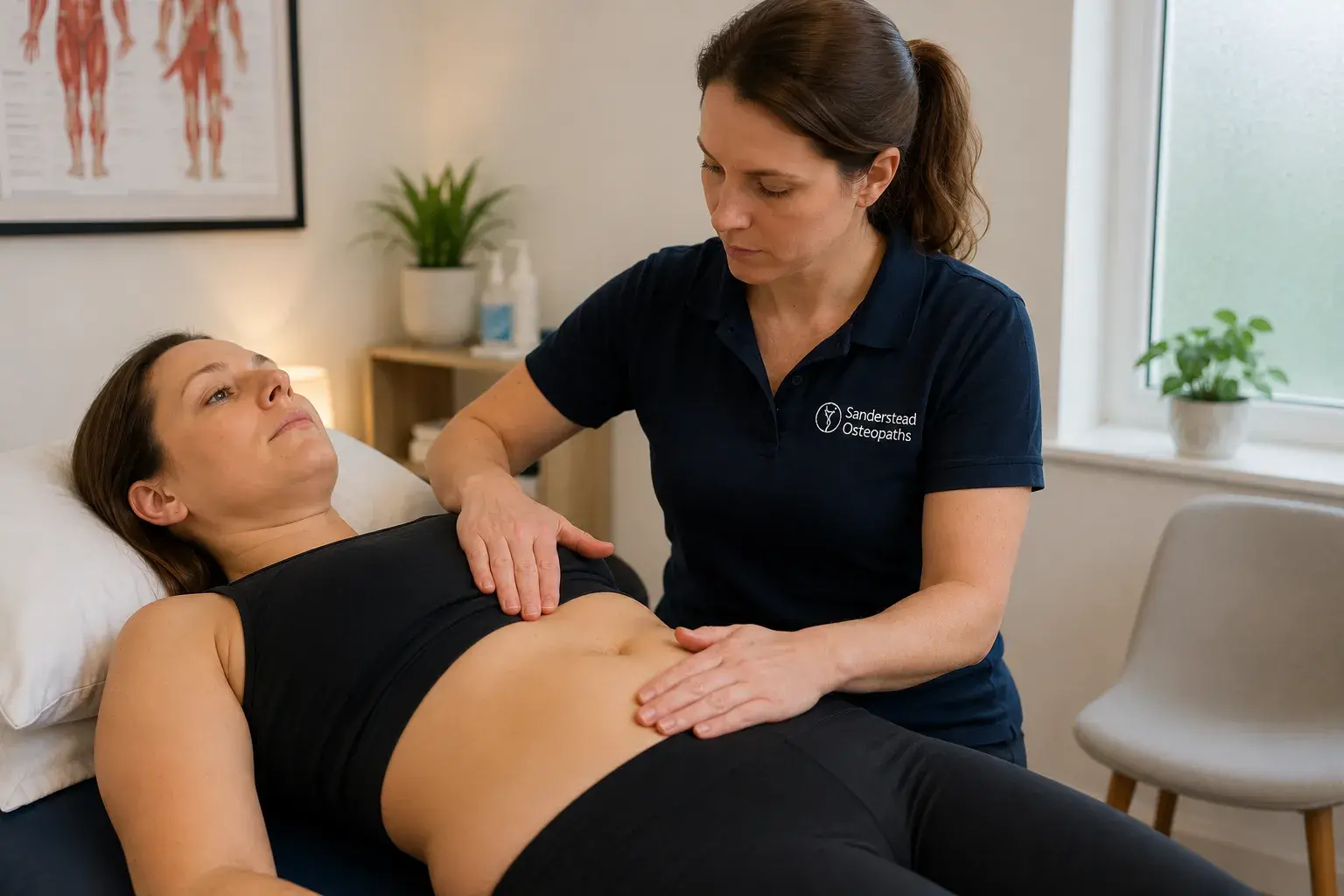
The aim is to identify what may still need support, then create a recovery plan based on your body, your symptoms and your goals.

During assessment, we look at how breathing, abdominal wall function, posture and movement affect pressure control. This gives a clearer picture of why symptoms are happening.

Thanks to Tom for treating me before and after my Marathon last year – I literally would not have been able to do it without him. He also treated me for a pulled shoulder and neck pain. I'll definitely use Sanderstead Osteopaths again – highly recommend! 👍

Richard Belton Avatar Richard Belton
August 28, 2023

Why C-Section Recovery Is About More Than the Scar

Many people focus on whether the scar looks healed. That matters, but it is only one part of recovery.

A C-section can affect how the abdominal wall moves, how comfortable you feel using your core, how you lift, how you stand, how you breathe under effort, and how confident you feel returning to activity.

Even when the skin has healed, deeper tissues may still feel tight, sensitive or restricted. Some patients also describe feeling disconnected from their lower abdomen or unsure how to engage their core safely.

How Abdominal Surgery Can Affect Movement and Confidence

After abdominal surgery, it is common to protect the area without realising.

You may avoid standing fully upright, hesitate when lifting, brace differently, hold your breath during effort, or move more cautiously through the lower back and pelvis. These strategies are understandable early on, but if they remain for too long, they can alter how your body moves.

Over time, protective movement can contribute to stiffness, weakness, tension or reduced confidence.

A C-section Mummy MOT allows us to assess whether those protective patterns are still present and whether they are affecting your recovery.

Why Core Function Matters After a C-Section

The abdominal wall has been stretched during pregnancy and then affected by surgery. This can change how the core supports the spine, manages pressure and contributes to movement.

Core recovery after a C-section is not simply about strengthening the stomach muscles. It is about restoring coordination, control, timing and confidence.

If the abdominal wall is not responding well, other areas may compensate. The lower back may take more strain, the pelvis may feel less stable, and movements such as lifting, standing from sitting or returning to exercise may feel harder than expected.

How Compensation Can Develop During Recovery

Compensation happens when one area of the body works harder because another area is not contributing effectively.

After a C-section, compensation may show up as lower back tightness, hip stiffness, neck and shoulder tension, pelvic discomfort, weak core control, abdominal doming or reduced confidence with movement.

These symptoms do not always mean something is seriously wrong. They often mean the body has adapted and may need help restoring better movement and control.

At Sanderstead Osteopaths, we look at how the pelvic floor appears to work within the wider body system, so advice can be tailored to what your body is actually doing.

An excellent practice, with excellent therapists. I originally saw David with a bad lower back and got amazing results. Would recommend!

P H Avatar P H
August 28, 2023

What We Discuss Before the Assessment

Before assessing movement or scar-related restriction, we take time to understand your pregnancy, birth, recovery and current concerns.

This helps us adapt the assessment to your stage of recovery and avoid treating your symptoms as isolated issues.

Your Pregnancy, Birth and C-Section Recovery History

We may ask about your pregnancy, whether your C-section was planned or emergency, how your early recovery felt, whether you had any complications, and whether your GP has completed your postnatal check.

We may also ask about your scar, abdominal comfort, core strength, pelvic symptoms, back pain, neck and shoulder pain, exercise goals and confidence with lifting or carrying.

This gives us the background we need to assess your body properly.

Scar Sensitivity, Tightness and Movement Concerns

C-section scars can feel different from person to person.

Some patients feel tightness or pulling. Others notice numbness, sensitivity, tenderness, itching, discomfort with clothing, or a sense that the lower abdomen does not move naturally.

We may ask when you notice these sensations. For example, they may appear when standing tall, twisting, lifting, stretching, exercising, getting out of bed or carrying your baby.

This helps us understand whether scar-related restriction may be influencing movement.

Lifting, Feeding, Carrying and Returning to Exercise

C-section recovery happens alongside the physical demands of caring for a baby.

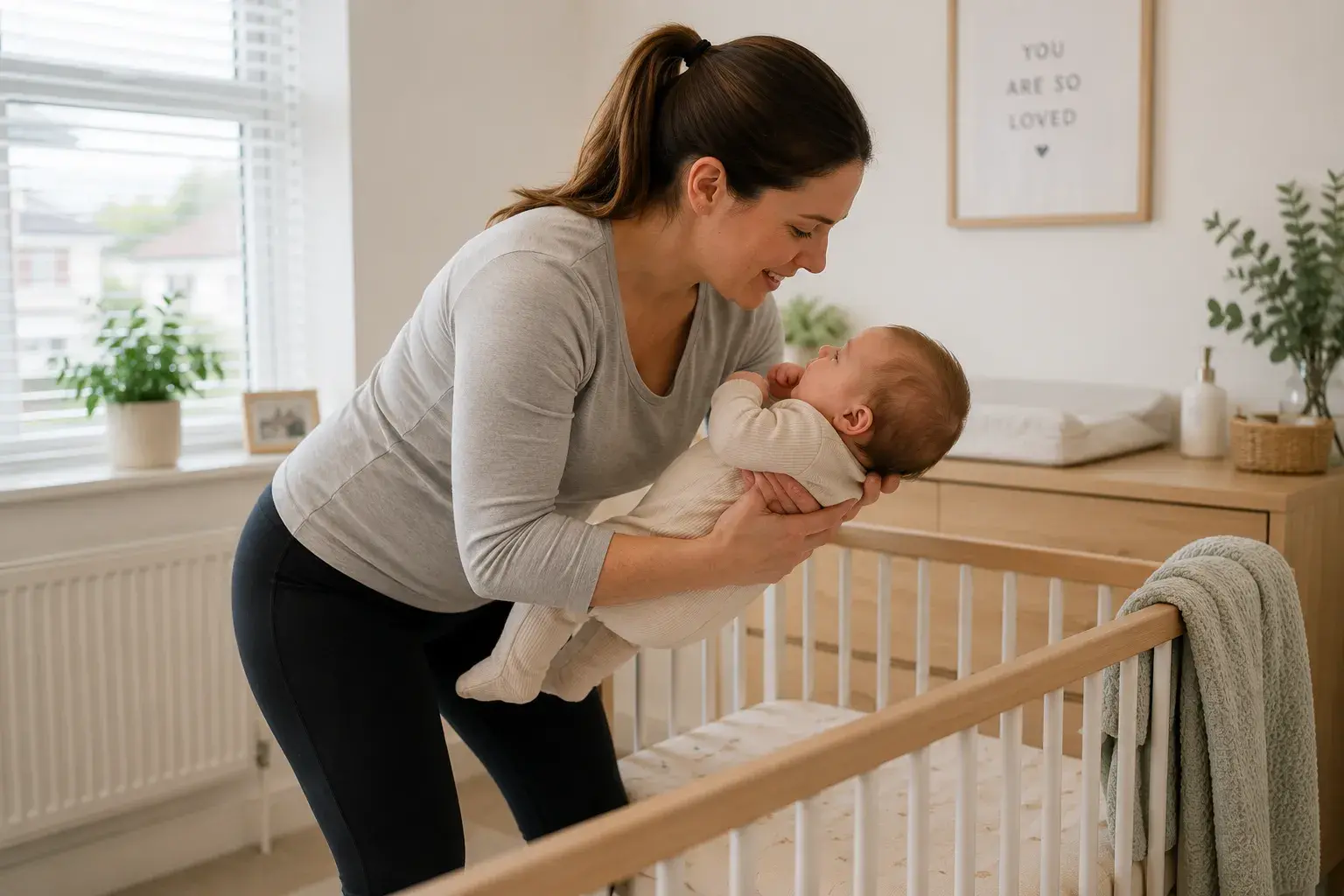
You may be lifting from awkward positions, feeding for long periods, carrying your baby on one side, getting up at night, bending into a cot or car seat, and trying to move carefully around the scar area.

We discuss these daily demands because they often explain why symptoms continue.

We also discuss your goals. You may want to return to walking, Pilates, gym training, running, work, sport or simply feel more comfortable and confident moving again.

If symptoms feel sudden, severe or concerning, you should speak to a GP or appropriate medical professional.

I took my newborn daughter to David due to her being very gassy and unsettled. Within the first week of David seeing her she was a lot more settled and was sleeping for a lot longer at night. I would highly recommend the treatment here with David for anyone with newborns with similar issues.

Elisabeth Cachia Avatar Elisabeth Cachia
August 28, 2023

Core and Abdominal Wall Assessment After a C-Section

The core and abdominal wall are central to C-section recovery.

During the assessment, we look at how the abdominal wall is functioning, how it manages pressure, and whether it is coordinating with breathing, pelvic floor function and movement.

Checking How the Abdominal Wall Is Functioning

We may assess how the abdominal wall responds when you breathe, engage your core, move from lying to sitting, stand, bend or lift.

We are looking at whether the area can generate useful tension, whether it feels guarded, whether movement feels restricted, and whether pressure is being managed effectively.

Some patients feel that their lower abdomen is weak or disconnected after a C-section. Others notice that they hold tension around the scar or avoid using the area fully.

These patterns can influence how the rest of the body moves.

Assessing Diastasis Recti and Core Control

Diastasis recti can still be relevant after a C-section because abdominal separation is linked to pregnancy, not only the type of birth.

During the assessment, we may check whether separation is present, where it is located, how the tissue behaves under light load, and whether doming or bulging appears during movement.

The aim is not just to measure a gap. We want to understand how the abdominal wall is functioning and whether it can support movement effectively.

If diastasis recti is a main concern, our diastasis recti treatment page explains this in more detail.

Why Strength Alone Does Not Tell the Full Story

Core recovery after a C-section is not just about becoming stronger.

A muscle can be strong but poorly timed. It can activate too late, brace too hard, fail to relax properly, or work without coordinating with breathing and the pelvic floor.

This is why we assess control, pressure management and movement quality, not just strength.

The goal is to help your core work as part of a coordinated system again.

A functional assessment helps identify whether leaking is part of a wider recovery pattern rather than an isolated issue.

David has been treating my lower back pain. He provides a very professional service, and has a wealth of knowledge. Sanderstead Osteopath is a welcoming, cosy and clean clinic. On bad days when I have hardly been able to walk due to the pain, after David's treatment I feel I can do star jumps! The instant relief is noticeable. Parking is nearby which is very convenient. I highly recommend anyone to come here, you won't be disappointed.

Tania Sang Avatar Tania Sang
August 28, 2023

Scar Tissue and Movement Assessment

The scar itself may be healed, but the surrounding tissues can still influence comfort and movement.

Scar tissue does not need to be painful to be relevant. Sometimes it feels tight, numb, sensitive or restricted. Sometimes patients simply feel less confident using the lower abdomen.

How Scar Tissue May Affect Comfort and Mobility

Scar-related restriction may affect how comfortably the abdomen, pelvis and lower back move.

Some patients notice pulling or tightness when standing upright, reaching overhead, twisting, walking quickly, exercising or lying on their front. Others notice that they avoid stretching or loading the area.

This can gradually influence posture and movement.

A Mummy MOT allows us to assess whether the scar area may be contributing to protective movement, reduced mobility or discomfort.

What We Look for Around the Abdomen, Pelvis and Lower Back

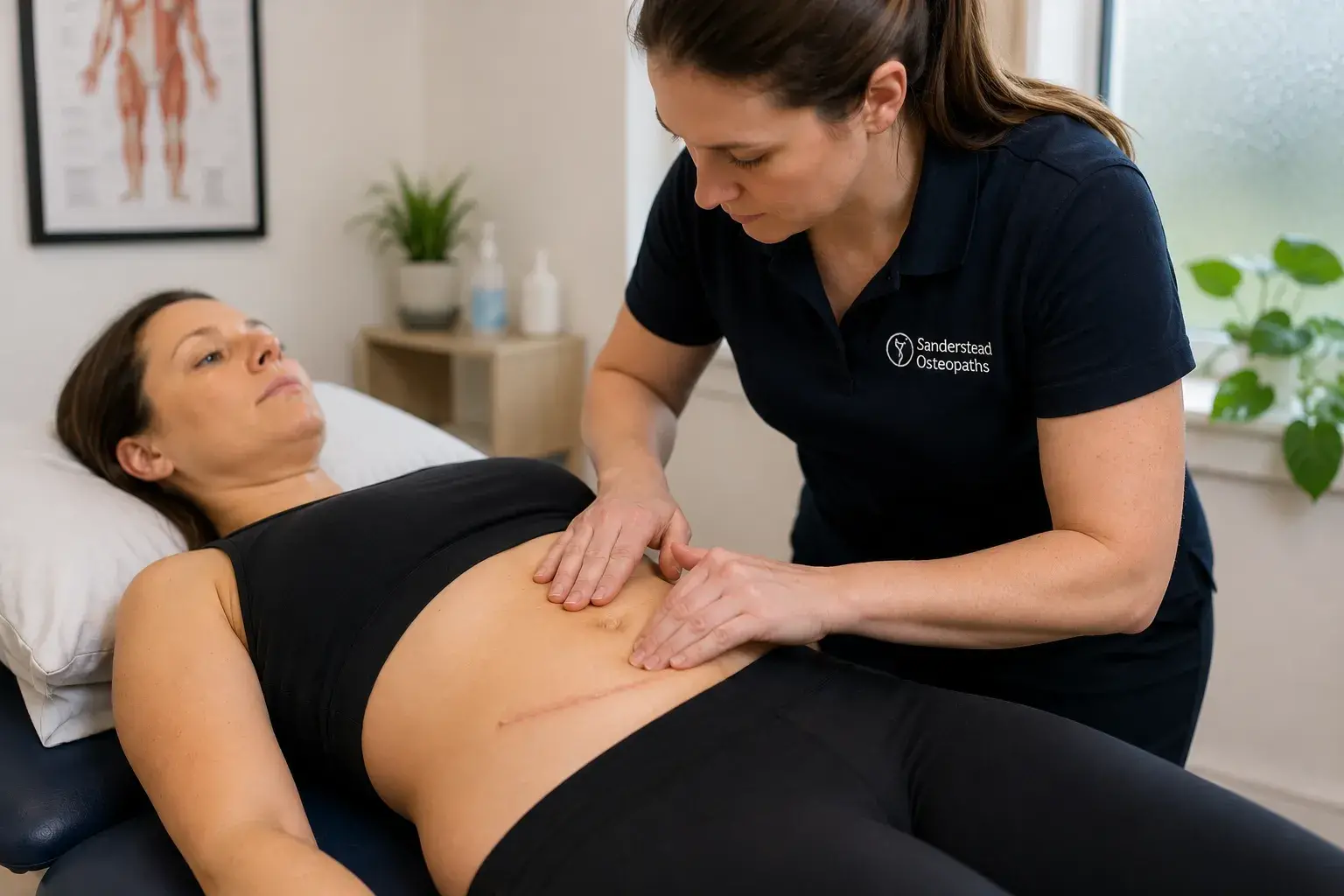
We may assess the scar area, abdominal wall, pelvis, lower back, hips and surrounding soft tissues.

The aim is to understand whether there is restriction, sensitivity, altered movement or guarding that may be affecting recovery.

We also look at how the scar area behaves during movement. For example, whether you hold your breath, brace excessively, avoid certain positions or shift load into the lower back.

This gives us a clearer picture of how the scar area is functioning as part of the whole body.

When Scar Tissue Support May Be Recommended

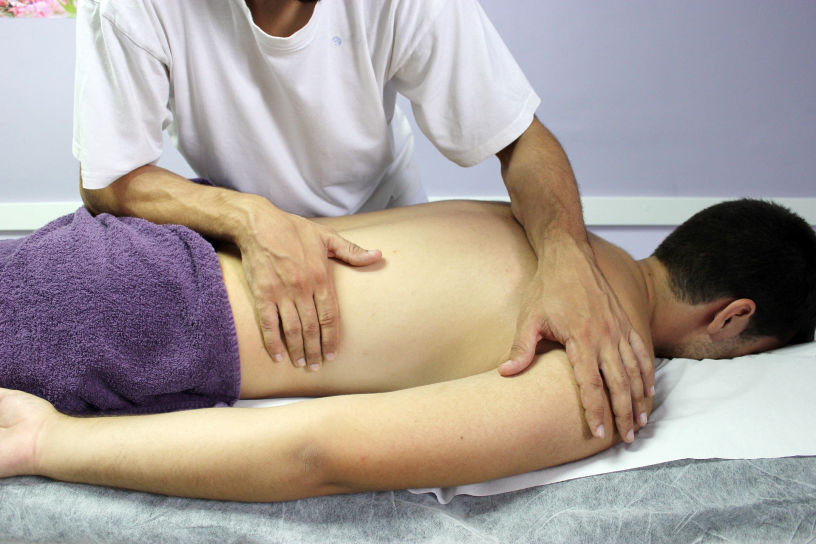
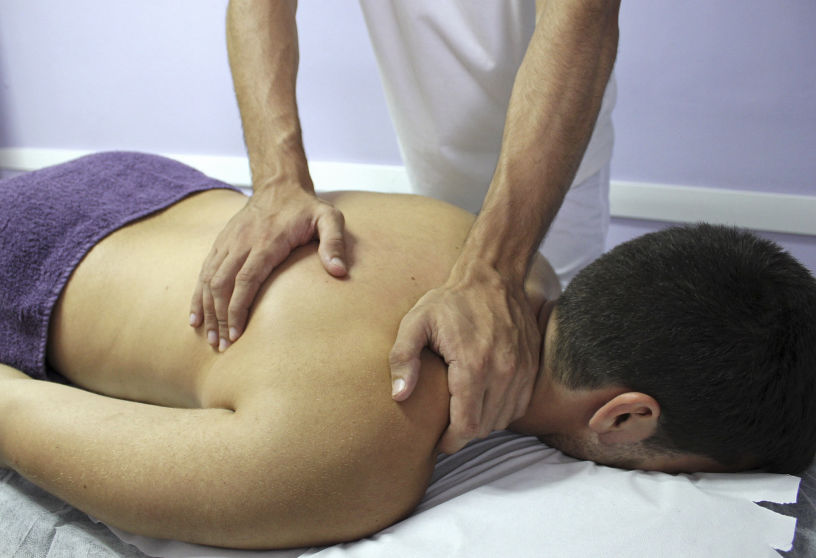
If appropriate, we may recommend gentle scar tissue support, hands-on treatment, mobility work or specific home advice.

This is always based on your stage of healing, comfort and assessment findings.

We do not force treatment into an area that is not ready or appropriate. The aim is to support movement and comfort gradually, not to rush recovery.

That may include pelvic floor coordination, breathing work, core rehabilitation, posture advice, lifting strategies, movement retraining or a gradual return-to-exercise plan.

Been seeing Paul for a couple of months now for my neck pain, had been using another fairly local osteopaths before and didn’t really seem to be making any progress, but since finding here it’s been much better. I suffer really badly with tension in my neck which leads to real bad headaches, and can highly recommend this place for anyone who suffers the same issue as Paul has helped me massively.

Dan Avatar Dan
November 28, 2023

Pelvic Floor and Pressure Management After a C-Section

Many patients assume the pelvic floor is only affected by vaginal birth. In reality, the pelvic floor can still be affected by pregnancy, pressure, posture and changes in core function.

This means pelvic floor assessment can still be relevant after a C-section.

Why the Pelvic Floor Still Matters After a C-Section

During pregnancy, the pelvic floor supports increased load for many months. It also works with the abdominal wall and diaphragm to manage pressure.

After a C-section, pelvic floor symptoms can still occur. These may include leaking, heaviness, reduced control, pressure during movement or reduced confidence returning to exercise.

These symptoms are not always about weakness alone. They may relate to timing, coordination, pressure management or how the pelvic floor is working with the core.

How We Assess Pressure, Breathing and Core Coordination

At Sanderstead Osteopaths, our pelvic floor assessment is external.

We look at breathing, abdominal movement, pelvic movement, pressure management, core engagement, movement control and symptoms during functional tasks.

This helps us understand whether the pelvic floor and abdominal wall are coordinating effectively.

If pressure is not managed well, symptoms may appear during coughing, laughing, lifting, getting up from a chair, exercising or carrying your baby.

Symptoms That May Suggest the System Needs Support

Symptoms that may suggest pelvic floor or pressure-management issues include leaking, heaviness, dragging, doming, pressure during lifting, lower back strain, pelvic discomfort or feeling unstable through the core.

If pelvic floor symptoms are your main concern, our pelvic floor recovery page explains this area in more detail.

A pelvic floor or Mummy MOT assessment can support functional recovery, but it is not a replacement for medical assessment where medical symptoms are present.

I have been using Sanderstead Osteopaths for many years David has been treating my ongoing back and neck issues and wouldn’t go anywhere else. I would highly recommend.

Allison Stagg Avatar Allison Stagg
August 28, 2023

Posture, Pelvis and Lower Back Recovery

After a C-section, it is common to move more cautiously around the abdomen. This can affect posture, pelvic movement and lower back loading.

At the same time, the demands of feeding, carrying and lifting can increase strain through the spine and pelvis.

How Pregnancy and Surgery Can Affect Load Distribution

Pregnancy changes posture and load distribution. Surgery can then add another layer of guarding or restriction.

You may stand slightly flexed, avoid extending through the front of the body, hold your breath during effort, or use the lower back more than the abdominal wall.

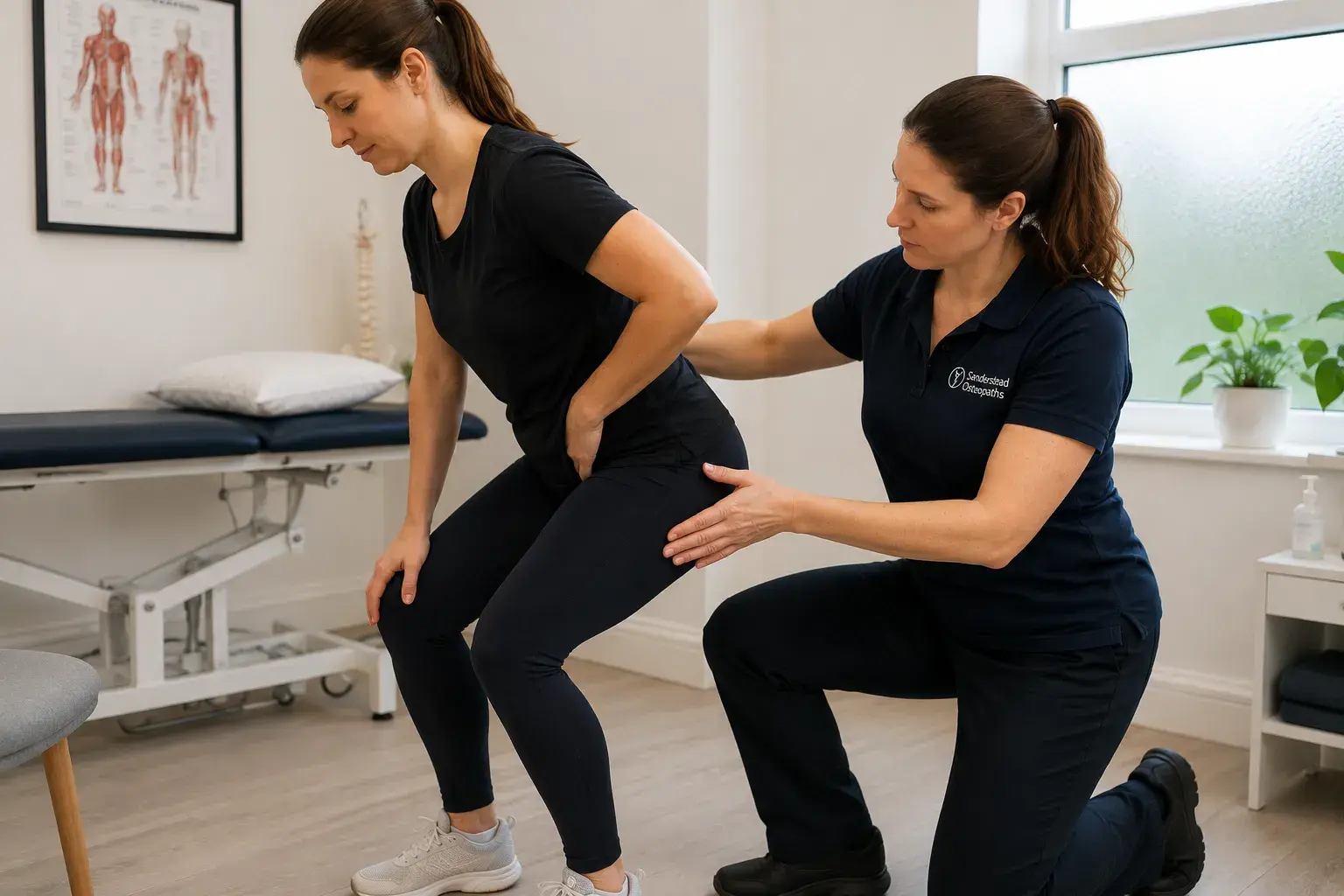
During the assessment, we look at how your spine, pelvis, hips and abdominal wall are sharing load. The aim is to identify whether your body is moving efficiently or relying on compensation.

Why Lower Back or Pelvic Discomfort Can Continue

Lower back or pelvic discomfort after a C-section may be linked to reduced core support, altered posture, hip stiffness, pelvic compensation or protective movement around the scar.

This does not mean the scar is the only issue. It means the body may be distributing load inefficiently.

A Mummy MOT helps identify whether your back or pelvic symptoms are linked to abdominal wall function, scar-related restriction, movement habits or wider postnatal recovery.

How We Assess Movement Under Everyday Load

We may look at everyday movements such as standing from sitting, bending, lifting, walking, balancing, twisting or engaging the core during effort.

These movements help us see whether your body is using efficient strategies or relying on compensation.

The aim is to understand what your body can currently manage and what needs to be rebuilt gradually.

In these cases, a full Mummy MOT can help assess how your posture, core, pelvic floor, spine, pelvis and movement patterns are working together.

Sanderstead Osteopath provide quality treatment & professional service, I've been using David Ayers Osteopath services for over a decade with no complaints.

Mike McFarlane Avatar Mike McFarlane
August 28, 2023

Returning to Movement and Exercise After a C-Section

Returning to exercise after a C-section should be based on function, not only time.

Even if enough weeks have passed, the body may not yet be ready for higher load, impact or intense abdominal work.

Why Readiness Is About Function, Not Just Time

Time allows healing, but it does not automatically restore strength, coordination or confidence.

Before progressing exercise, it is useful to understand how your core, pelvic floor, scar area, posture and movement are functioning together.

This is especially important if you are returning to running, gym training, Pilates, impact exercise, heavy lifting or demanding work.

Signs Your Core or Pelvic Floor May Not Be Ready Yet

Signs that your body may need more support before progressing include doming, leaking, heaviness, scar pulling, lower back pain, pelvic discomfort, difficulty controlling your core, pain during exercise, or feeling unstable when lifting.

These signs do not mean exercise is impossible. They simply suggest that your recovery plan may need to be adjusted.

How a Recovery Plan Can Support Safer Progression

After assessment, we may recommend a gradual plan to rebuild strength, movement control and confidence.

This may include breathing work, core coordination, pelvic floor integration, scar mobility support, posture advice, lifting guidance, mobility exercises and progressive strengthening.

The aim is to help you return to activity in a way that reflects your body’s current stage of recovery.

In these cases, a full Mummy MOT can help assess how your posture, core, pelvic floor, spine, pelvis and movement patterns are working together.

Have seen both David and Clare on and off over the last 4 years with lower back pain/stiffness. They really know their stuff and have always provided me with solutions to my lower back. My job is quite demanding and doesn't help the pain (lots of driving and lifting) but knowing David and Clare will always be there to help at Sanderstead Osteopaths it puts my mind at rest. I started going weekly and with the regular treatments it's eased the pain so now I am going every 2-4 weeks. I would highly recommend either of these guys!

James McClelland Avatar James McClelland
August 28, 2023

What Happens After Your C-Section Mummy MOT

After the assessment, we explain what we have found and what it may mean for your recovery.

You should leave with a clearer understanding of what is working well, what may need support and what the next step should be.

Explaining What We Find

We may explain how your abdominal wall is functioning, whether scar-related restriction may be relevant, how your pelvis and lower back are moving, whether pressure management is effective, and whether movement patterns are contributing to symptoms.

The aim is to make the findings understandable and practical.

Creating a Personalised Recovery Plan

Your recovery plan will depend on your assessment.

It may include core rehabilitation, scar tissue support, pelvic floor coordination, breathing and pressure-management work, posture advice, lifting guidance, mobility exercises, strengthening or follow-up osteopathic treatment.

We will adapt advice to your stage of recovery, symptoms and goals.

When Hands-On Treatment or Rehabilitation May Help

Hands-on treatment may be recommended if we identify areas of restriction, stiffness, tension or altered movement that are contributing to your symptoms.

Rehabilitation may also be recommended to help restore strength, control and confidence.

In many cases, the best approach is a combination of hands-on treatment, movement advice and progressive rehabilitation. This is particularly important after a C-section because recovery often involves both the scar area and the wider movement system around it.

In these cases, a full Mummy MOT can help assess how your posture, core, pelvic floor, spine, pelvis and movement patterns are working together.

Very professional and friendly service from Paul.

Julia Callan Avatar Julia Callan
October 28, 2023

Book a Mummy MOT After a C-Section in Sanderstead

If you have had a C-section and feel unsure about your core, scar, posture, pelvic floor, movement or return to exercise, a Mummy MOT can help you understand how your body is functioning.

At Sanderstead Osteopaths, we assess C-section recovery from a whole-body perspective, looking at how the abdominal wall, scar area, pelvis, spine, core, pelvic floor and movement patterns are working together.

We support patients from Sanderstead and nearby areas including South Croydon, Purley, Warlingham, Kenley, Selsdon and Coulsdon.

Postnatal Support From Our Osteopaths

Our osteopaths provide postnatal support based on assessment, function and your individual recovery.

We do not treat C-section recovery as only a scar issue. We look at how the scar area, abdominal wall, pelvis, posture and movement are affecting the way your body feels and performs.

Where appropriate, we may use hands-on osteopathic treatment, scar tissue support, movement advice and rehabilitation exercises.

How to Arrange Your Appointment

To arrange your C-section Mummy MOT, contact Sanderstead Osteopaths or book online.

Before attending, please make sure you have had your 8-week postnatal GP check and have been advised that it is appropriate to proceed.

If you are unsure whether the assessment is suitable for you, our team can help guide you.

In these cases, a full Mummy MOT can help assess how your posture, core, pelvic floor, spine, pelvis and movement patterns are working together.

David Ayres was brilliant with my back issues, as were his 2 colleagues I saw when he wasn't available. Professional and knowledgeable, would recommend 👌

Jane welch Avatar Jane welch
August 28, 2023

Frequently Asked Questions About Mummy MOTs After a C-Section

When can I have a Mummy MOT after a C-section?

You should usually wait until after your 8-week postnatal GP check and only attend once you have been advised that it is appropriate to proceed.

Yes. A Mummy MOT is not a replacement for your GP check. After a C-section, you should have had your 8-week postnatal GP check before attending.

A Mummy MOT can assess whether scar-related tightness, sensitivity or restriction may be affecting movement, posture, core function or comfort. If appropriate, we may recommend scar tissue support, treatment or home advice.

Yes, it may still be relevant. Pregnancy itself places demand on the pelvic floor, and pelvic floor function is closely linked with breathing, pressure management and core control.

Yes. A Mummy MOT can still be useful months or years after a C-section if you have ongoing symptoms, reduced confidence, scar tightness, core weakness, lower back pain, pelvic symptoms or difficulty returning to exercise.

Useful External References

For general postnatal health information, patients may also find NHS post-pregnancy body guidance, NICE pelvic floor dysfunction guidance and official Mummy MOT information useful. These resources are for general information only and do not replace individual medical advice.

I’ve visited Tom at Sanderstead Osteopaths since March for postnatal neck and back issues and then subsequent issues with my neck from looking after a baby (and now toddler) and he’s absolutely superb. I’d highly recommend him!

Louise May Avatar Louise May
August 28, 2021

Latest Posts

Leaking After Birth: When It May Be a Sign Your Pelvic Floor Needs Support

What to Expect During a Mummy MOT Assessment

Easing Pregnancy Aches with Osteopathy

Our Services

Sports Injury Treatment Clinic

Sports Injury

The use of sport’s osteopathy is an effective treatment that assists in detecting, treating and preventing a number of health problems. Our treatments include the moving, stretching and massaging of muscles and joints within the body.
Neck, Back & Shoulder Treatment Clinic

Neck Pain

Our osteopathic treatments will reduce your shoulder pain, improve your flexibility and insure a speedy recovery. Our osteopathic treatments may include soft tissue massage, mobilisation and strengthening work to your effected area be that the shoulder, neck or back.
Headaches & Migraines Treatment Clinic

Headaches & Migraines

The majority of headaches are found to be caused by musculoskeletal tension and/or postural issues and can be successfully treated by our osteopath practitioners at our Sanderstead based osteopathy clinic.
Pregnancy & Post Natal Treatment Clinic

Pregnancy & Post Natal

Postpartum osteopathy is osteopathic treatment that focuses on treatments effective the birth of a child. Postpartum osteopathy is an alternative treatment whereby our osteopath practitioners detect, treat and prevents future health issues by means of stretching and massaging the muscles, joints and connective tissues.
Children & Baby Treatment Clinic

Children & Teenager Treatment

Our osteopaths practitioners are highly qualified & experienced when treating children & babies. We utilise a range of techniques that includes physical manipulation, stretching and massage. We also offer more gentle techniques such as cranial osteopathy renowned for being safe safe and non-manipulative.
Chronic Pain Treatment Clinic

Chronic Pain Treatment

Our osteopathy team utilise manipulative treatment in order to alleviate somatic dysfunction. Our treatments apply manually guided forces to improve overall physiologic function and support homeostasis.

Our Services

Sanderstead Osteopaths Clinic

Sports Injury

The use of sport’s osteopathy is an effective treatment that assists in detecting, treating and preventing a number of health problems. Our treatments include the moving, stretching and massaging of muscles and joints within the body.
Neck, Back & Shoulder Treatment Clinic

Neck Pain

Our osteopathic treatments will reduce your shoulder pain, improve your flexibility and insure a speedy recovery. Our osteopathic treatments may include soft tissue massage, mobilisation and strengthening work to your effected area be that the shoulder, neck or back.
Headaches & Migraines Treatment Clinic

Headaches & Migraines

The majority of headaches are found to be caused by musculoskeletal tension and/or postural issues and can be successfully treated by our osteopath practitioners at our Sanderstead based osteopathy clinic.
Pregnancy & Post Natal Treatment Clinic

Pregnancy & Post Natal

Postpartum osteopathy is osteopathic treatment that focuses on treatments effective the birth of a child. Postpartum osteopathy is an alternative treatment whereby our osteopath practitioners detect, treat and prevents future health issues by means of stretching and massaging the muscles, joints and connective tissues.
Children & Baby Treatment Clinic

Children & Teenager Treatment

Our osteopaths practitioners are highly qualified & experienced when treating children & babies. We utilise a range of techniques that includes physical manipulation, stretching and massage. We also offer more gentle techniques such as cranial osteopathy renowned for being safe safe and non-manipulative.
Chronic Pain Treatment Clinic

Chronic Pain Treatment

Our osteopathy team utilise manipulative treatment in order to alleviate somatic dysfunction. Our treatments apply manually guided forces to improve overall physiologic function and support homeostasis.

Areas our Osteopathy Treatment Covers

Sanderstead, CR2

Purley, CR8

Kenley, CR8

Selsdon, CR2

New Addington, CR0

South Croydon, CR2

Hamsey Green, CR6

Croydon, CR0

Coulsdon, CR5

Caterham, CR3

Warlingham, CR6

Osteopathy Coverage

David Ayres Osteopath

About the Clinical Director

David Ayres is the Founder and Clinical Director of Sanderstead Osteopaths, providing clinical guidance and oversight across all treatment and content.

David Ayres

Clinical Director & Founder, Sanderstead Osteopaths

David Ayres is the founder and Clinical Director of Sanderstead Osteopaths, with over 25 years of experience in osteopathic care, clinical education, and practitioner development.

He qualified from the British School of Osteopathy in 2000 and went on to spend a decade lecturing at the institution between 2002 and 2012. During this time, he taught final-year students advanced osteopathic techniques and manipulation, while also working as a clinical tutor overseeing and mentoring students in the treatment of their own patients.

Throughout his clinical career, David developed particular expertise in the treatment of neck injuries, spinal conditions, and joint-related issues affecting the shoulders and knees. He also worked with newborn babies using cranial osteopathic approaches, supporting early-stage musculoskeletal development.

David’s role within Sanderstead Osteopaths is focused on clinical leadership, mentoring, and maintaining high standards of care across the team.

He works closely with practitioners within the clinic to guide treatment approaches, support clinical decision-making, and ensure patients receive structured, evidence-informed care tailored to their individual needs.

Under his direction, Sanderstead Osteopaths has built a strong reputation across Sanderstead, Croydon and the surrounding areas for delivering professional, patient-focused treatment for a wide range of musculoskeletal conditions.

Scroll to Top