Why Your Stomach Domes When You Sit Up After Pregnancy

Written by Sanderstead Osteopaths. Clinically reviewed by Judith Tardif, Registered Osteopath.

Written by Sanderstead Osteopaths. Clinically reviewed by Judith Tardif, Registered Osteopath.

A stomach that domes, bulges or rises into a ridge when you sit up after pregnancy can feel worrying.

You may notice it when getting out of bed, sitting up from the sofa, doing a crunch, lifting your baby, exercising or trying to return to core work. The abdomen may push outwards along the midline, sometimes in a shape that looks like a ridge or cone.

This usually happens when pressure inside the abdomen is not being managed well. It may be linked to diastasis recti, abdominal wall weakness, poor core coordination, breath-holding, pelvic floor involvement or simply asking the body to do more than it is ready to control.

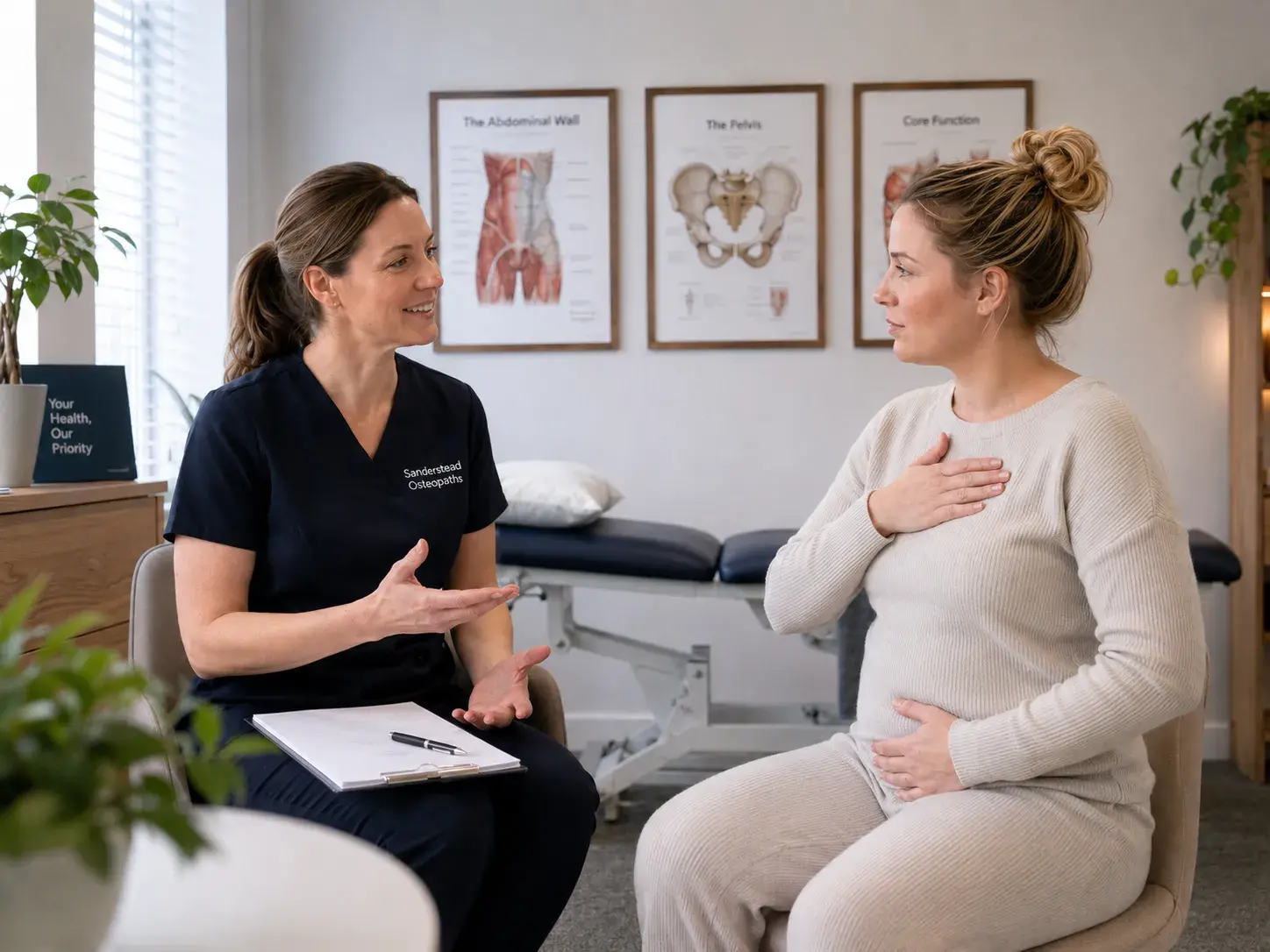
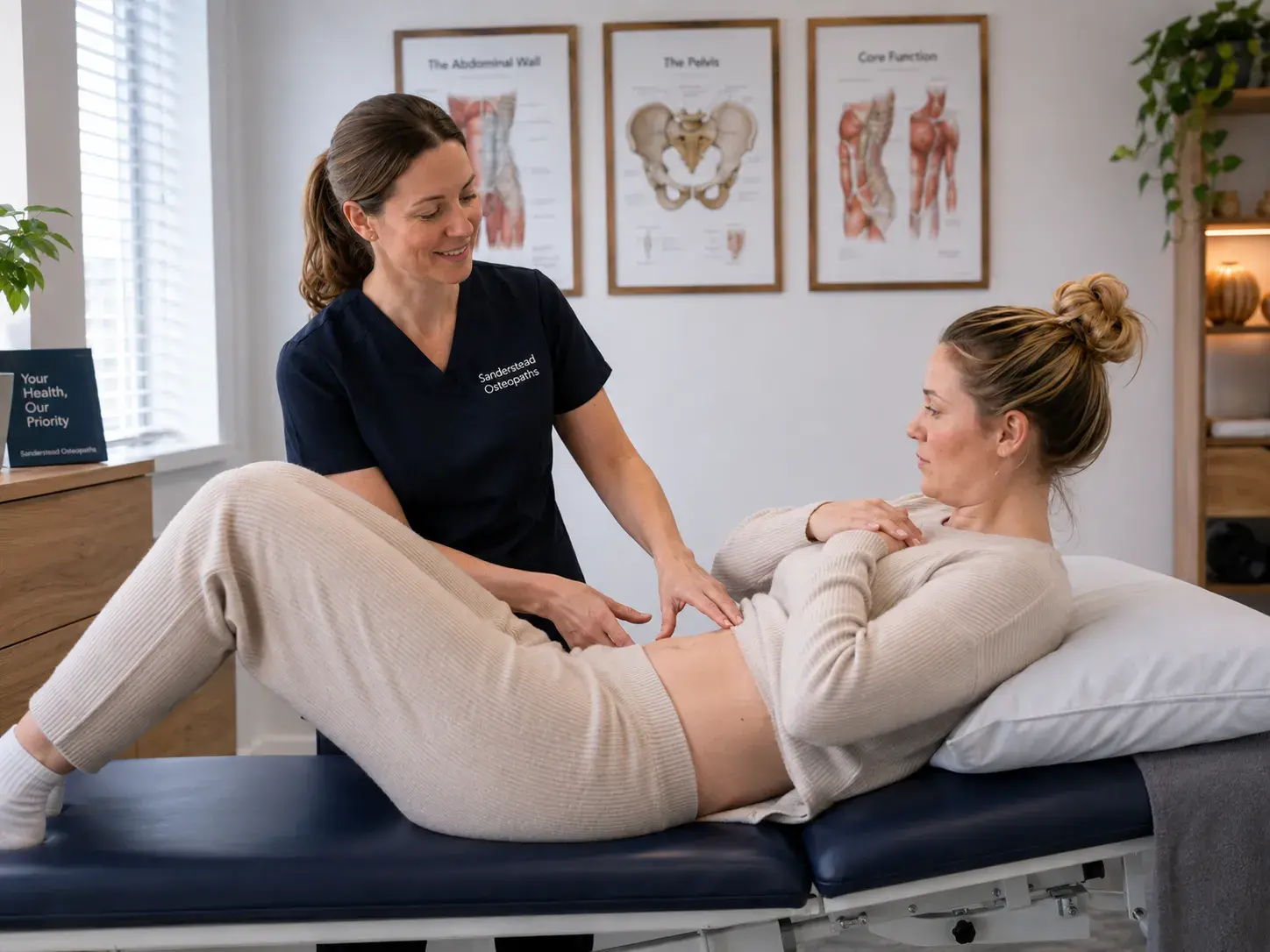
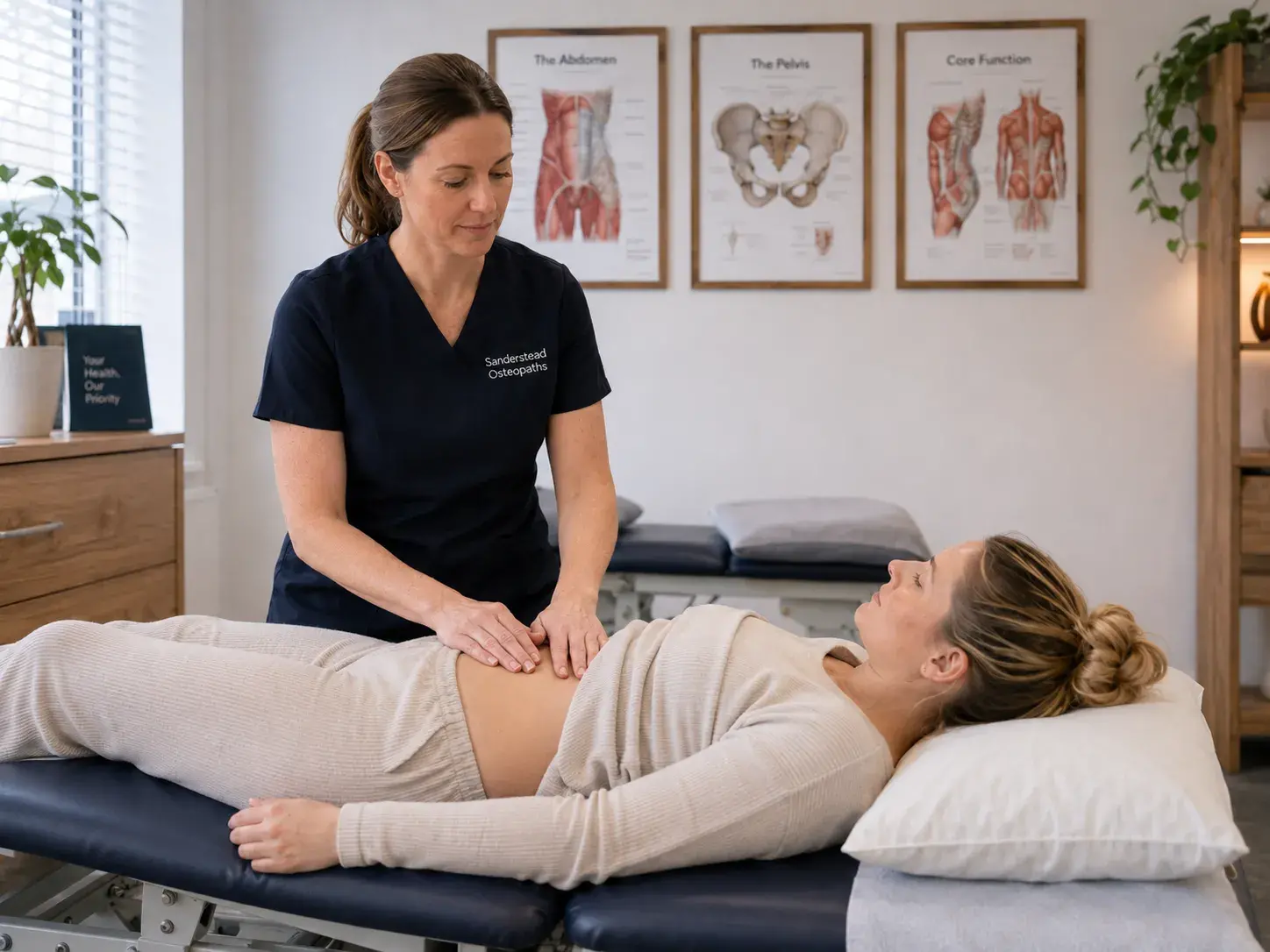
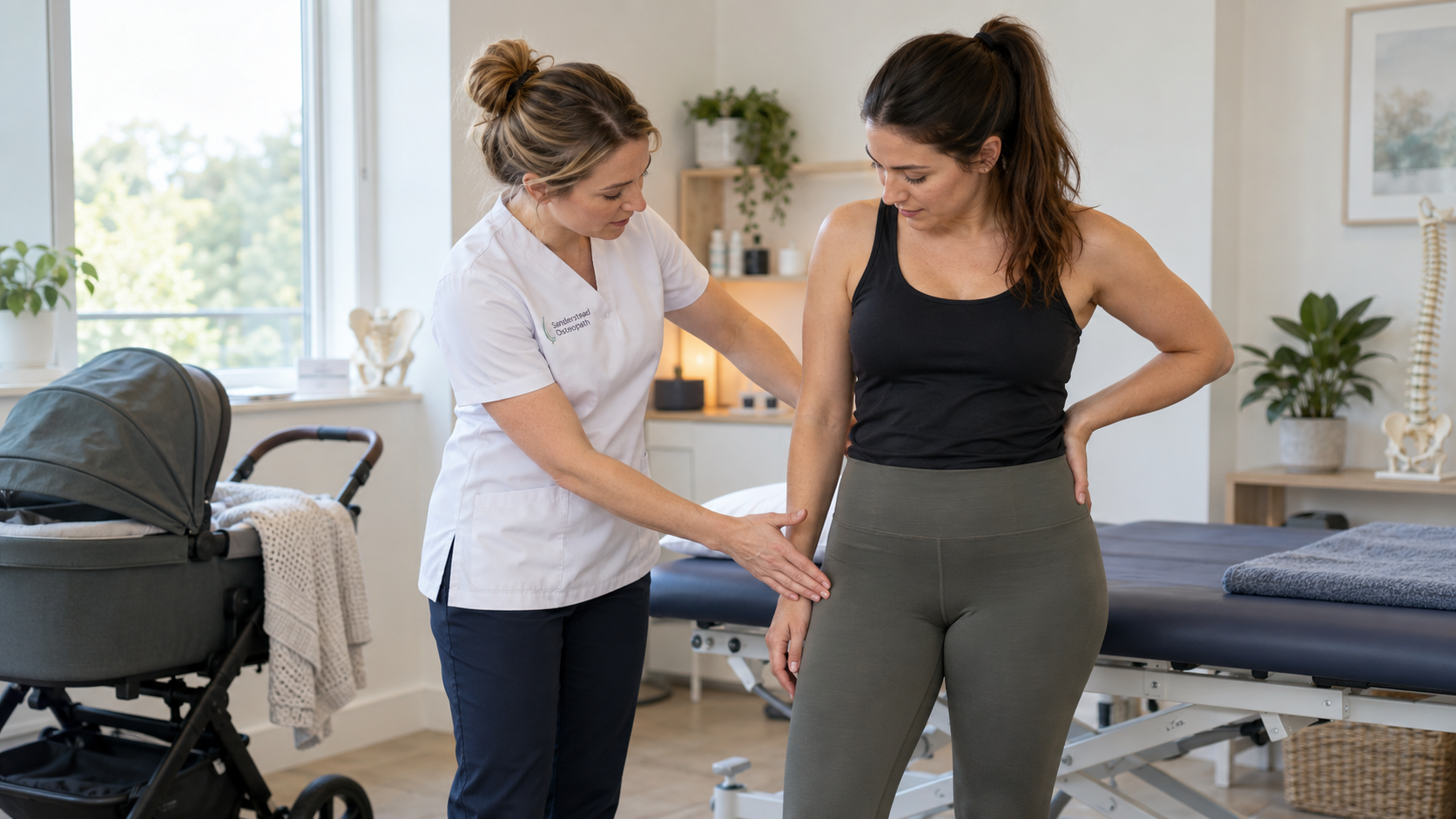
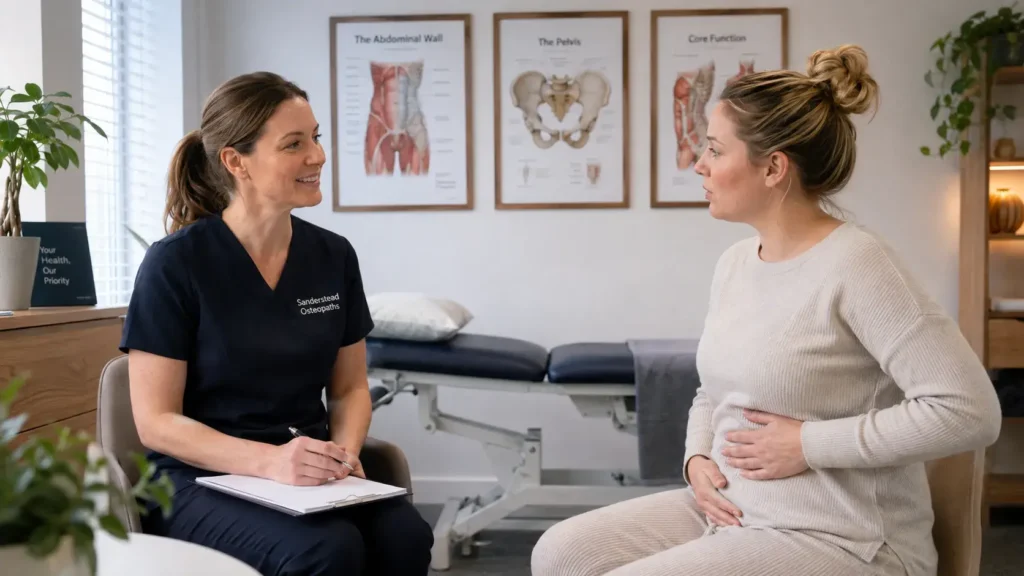
At Sanderstead Osteopaths, we assess abdominal doming after pregnancy by looking at how the abdominal wall, breathing, pelvic floor, spine, pelvis and movement patterns are working together. The aim is not just to look at the shape of the abdomen, but to understand how your body is managing pressure, tension and load.

Clinical note: A postnatal assessment is not a replacement for GP care, midwife advice or urgent medical assessment. Before attending a Mummy MOT, you should have had your postnatal GP check and been advised that it is appropriate to proceed. This is usually from 6 weeks after a natural birth and 8 weeks after a C-section.

Have seen both David and Clare on and off over the last 4 years with lower back pain/stiffness. They really know their stuff and have always provided me with solutions to my lower back. My job is quite demanding and doesn't help the pain (lots of driving and lifting) but knowing David and Clare will always be there to help at Sanderstead Osteopaths it puts my mind at rest. I started going weekly and with the regular treatments it's eased the pain so now I am going every 2-4 weeks. I would highly recommend either of these guys!

James McClelland Avatar James McClelland
August 28, 2023

What Abdominal Doming After Pregnancy Can Mean

Abdominal doming after pregnancy usually means the abdominal wall is struggling to manage pressure during effort.

The body naturally creates pressure when you sit up, cough, lift, exercise, roll over or move from one position to another. In a well-coordinated system, the abdominal wall, diaphragm, pelvic floor and deep core muscles help distribute that pressure.

When that system is not coordinating well, pressure may push forwards through the abdominal wall. This can create a visible bulge, ridge or dome, especially along the midline of the abdomen.

Doming does not automatically mean something serious is wrong. It does mean the movement is giving useful information about how your core is functioning. The shape of the abdomen is only part of the picture. The more important question is how the abdominal wall behaves when your body is asked to move, stabilise or manage load.

Why Doming Often Appears During Effort

Doming may appear only when you sit up quickly, lift your baby, do a crunch or try a plank. It may not be visible when you are standing still or lying down. That difference matters because it suggests the issue may be more about control under pressure than the way your stomach looks at rest.

Doming may suggest your core needs support if it continues months after birth, appears during everyday movement, becomes more obvious with exercise, or is linked with other symptoms such as lower back pain, leaking, pelvic heaviness, abdominal weakness, scar tightness after a C-section or feeling unstable through the trunk.

The aim is not to panic about the appearance of doming. The aim is to understand why it is happening and whether your abdominal wall, breathing, pelvic floor and movement strategy need support.

Have seen both David and Clare on and off over the last 4 years with lower back pain/stiffness. They really know their stuff and have always provided me with solutions to my lower back. My job is quite demanding and doesn't help the pain (lots of driving and lifting) but knowing David and Clare will always be there to help at Sanderstead Osteopaths it puts my mind at rest. I started going weekly and with the regular treatments it's eased the pain so now I am going every 2-4 weeks. I would highly recommend either of these guys!

James McClelland Avatar James McClelland
August 28, 2023

Why Doming Can Happen When You Sit Up

Sitting up from lying is one of the most common times people notice abdominal doming after pregnancy.

This movement requires the abdominal wall to manage a sudden increase in pressure while the body curls forwards. If the deep core system does not coordinate well, the pressure may push through the midline of the abdomen instead of being controlled.

That is why doming is often seen during sit-ups, crunches, getting out of bed or moving from lying to sitting.

When you sit up, pressure increases inside the abdominal cavity. This is normal. The issue is how that pressure is controlled. The diaphragm, abdominal wall, pelvic floor and deep stabilising muscles all play a role in managing pressure. If one part of the system is not responding well, pressure may move in the direction of least resistance.

After pregnancy, the abdominal wall may be stretched, the pelvic floor may be recovering, breathing patterns may have changed, and the body may be compensating through the lower back, hips or upper body. This can make pressure harder to control during effort.

Pressure, Breath-Holding and Bracing

The abdominal wall may bulge outwards if it cannot generate enough controlled tension during movement. This can happen when the connective tissue through the midline of the abdomen is stretched, when the deep abdominal muscles are not coordinating well, or when the movement is too demanding for the current stage of recovery.

The bulge itself is not the only issue. What matters is whether the tissue can respond, create tension and support movement effectively. A small amount of doming in one demanding movement may be less concerning than strong doming that appears repeatedly during simple daily tasks.

Breath-holding can also make doming more noticeable. Many people hold their breath without realising when they sit up, lift, exercise or concentrate. After pregnancy, this can push pressure forwards into the abdominal wall or downwards into the pelvic floor.

Bracing too hard can create a similar issue. If the abdominal wall grips without coordinating with breathing and pelvic floor function, pressure may not be distributed well. This is why recovery is not just about working harder. It is about learning how to use the core system more effectively.

I have been using Sanderstead Osteopaths for many years David has been treating my ongoing back and neck issues and wouldn’t go anywhere else. I would highly recommend.

Allison Stagg Avatar Allison Stagg
August 28, 2023

The Link Between Doming and Diastasis Recti

Doming is often linked with diastasis recti, but they are not exactly the same thing.

Diastasis recti refers to separation of the abdominal muscles along the midline connective tissue. Doming is a visible behaviour of the abdominal wall during pressure or effort.

You can have diastasis recti without obvious doming. You can also have doming because of poor pressure management, even if the gap itself is not the main problem.

During pregnancy, the abdominal wall stretches to allow space for the growing baby. This can lead to separation along the linea alba, the connective tissue between the two sides of the rectus abdominis muscles. Some degree of separation is common during and after pregnancy.

After birth, the important question is how well the abdominal wall recovers function. A gap may reduce over time, but measurement alone does not tell us whether the tissue is generating tension, managing pressure or supporting movement well.

Why Gap Size Alone Does Not Explain Doming

Many patients ask whether their doming is happening because their diastasis recti gap is too wide. Gap size can be relevant, but it does not explain everything.

A smaller gap may still dome if the tissue has poor tension or the movement strategy creates too much pressure. A wider gap may function reasonably well if the abdominal wall can create tension and coordinate properly.

This is why assessment needs to consider tissue depth, tension, control, doming behaviour, breathing, pelvic floor coordination and movement quality. The aim is not simply to measure a gap. It is to understand whether the abdominal wall can support movement.

If abdominal separation is your main concern, our diastasis recti treatment page explains this in more detail.

Lexi has been very helpful with pain in my back and the treatments have been very affective and she gives out great follow up exercises

Max Bullock Avatar Max Bullock
February 28, 2024

Why Core Exercises Can Sometimes Make Doming Worse

Some core exercises can reveal doming because they create more pressure than the abdominal wall can currently manage.

This does not mean exercise is bad. It means the exercise may not be the right starting point yet.

After pregnancy, the body often needs to rebuild control before progressing to more demanding core work. If you strengthen on top of poor pressure habits, the body may simply become stronger at doming, bracing or compensating.

Doming may appear during exercises such as sit-ups, crunches, planks, double-leg lifts, mountain climbers, burpees, heavy lifting, running drills, Pilates roll-ups or certain gym-based abdominal exercises.

These movements can all be useful at the right time. The problem is when they are introduced before the body can manage the pressure they create.

Why Sit-Ups and Crunches May Not Be the Right Starting Point

Sit-ups and crunches are a common example. They ask the abdominal wall to work against a high level of pressure. If your stomach domes when you sit up, repeating sit-ups may reinforce the same pressure pattern.

That does not mean you can never do them again. It means your body may need to rebuild deeper control, breathing coordination and abdominal wall tension first.

A better starting point is often lower-load core work that teaches the body how to manage pressure without bulging, bracing or breath-holding. As control improves, exercises can become more demanding.

An exercise may be too much too soon if you notice doming, bulging, leaking, heaviness, pelvic pressure, lower back pain, scar pulling after a C-section, neck tension or loss of control.

These signs do not mean you have failed. They mean your body is giving feedback. A useful recovery plan should help you find exercises that challenge the body without overwhelming it. Over time, those exercises can be progressed as control improves.

I have been using Sanderstead Osteopaths for many years David has been treating my ongoing back and neck issues and wouldn’t go anywhere else. I would highly recommend.

Allison Stagg Avatar Allison Stagg
August 28, 2023

How Breathing and Pressure Management Affect Doming

Breathing plays a central role in abdominal pressure.

The diaphragm moves with each breath. The pelvic floor and abdominal wall respond to that movement. When the system coordinates well, breathing helps manage pressure during movement. When breathing is restricted, held or poorly timed, pressure can become harder to control.

The diaphragm, abdominal wall and pelvic floor work together as part of a pressure system. As you breathe in, the diaphragm moves and pressure changes through the trunk. As you breathe out, the abdominal wall and pelvic floor can coordinate to support effort.

If this coordination is poor, pressure may push forwards through the abdomen or downwards into the pelvic floor. This is why doming, leaking and heaviness can sometimes appear together.

Why Exhaling During Effort May Help

Exhaling during effort can help some patients reduce doming because it prevents breath-holding and helps the abdominal wall engage more effectively. For example, gently exhaling as you lift, roll, stand or move from lying to sitting may help reduce the pressure pushing through the midline.

This is not a magic fix, and it does not replace assessment. But it can be a useful principle when rebuilding control.

The key is not to force the breath or brace aggressively. The aim is gentle coordination. Some patients are trying very hard to “switch on” the core, but the effort itself may be increasing pressure and making the abdomen dome more.

Poor coordination can cause the body to use excessive effort for simple movements. You may grip through the upper abdomen, push down into the pelvis, overuse the lower back, hold tension around the ribs or brace before moving.

During assessment, we look at how your body prepares for movement, not just the movement itself. This helps us identify whether the issue is strength, timing, pressure management or movement habit.

Thanks to Tom for treating me before and after my Marathon last year – I literally would not have been able to do it without him. He also treated me for a pulled shoulder and neck pain. I'll definitely use Sanderstead Osteopaths again – highly recommend! 👍

Richard Belton Avatar Richard Belton
August 28, 2023

When Doming Is Linked to Other Postnatal Symptoms

Abdominal doming does not always happen in isolation.

Because the core, pelvic floor, spine and pelvis work together, poor pressure management may show up in several ways. This is why patients with doming may also notice back pain, pelvic symptoms, leaking, heaviness, C-section scar tightness or reduced confidence exercising.

Doming and lower back pain can be connected if the abdominal wall is not supporting movement effectively. If the core system is not managing pressure well, the lower back may take on more load. This can contribute to aching, stiffness or discomfort during lifting, feeding, carrying, walking or exercise.

If lower back pain is a major concern, our postnatal back pain treatment page explains this area in more detail.

Doming with leaking after birth or pelvic heaviness may suggest the pressure system needs assessment. If pressure is pushing forwards through the abdominal wall, it may also be pushing downwards into the pelvic floor. This can contribute to symptoms such as leaking when coughing or exercising, heaviness, dragging or reduced pelvic support.

If pelvic floor symptoms are present, our pelvic floor recovery after pregnancy page explains how pressure management, breathing and pelvic floor coordination may be involved.

Doming can also appear after a C-section. A C-section scar may heal well on the surface, but some patients still feel tightness, guarding, numbness, sensitivity or reduced confidence using the lower abdomen.

Scar-related restriction or protective movement can affect how the abdominal wall behaves during effort. If the body avoids loading the area, the lower back, hips or upper abdomen may compensate.

If you have had a C-section, our Mummy MOT after a C-section article explains core, scar and movement recovery in more detail.

Very professional and friendly service from Paul.

Julia Callan Avatar Julia Callan
October 28, 2023

How We Assess Abdominal Doming After Pregnancy

At Sanderstead Osteopaths, we assess doming by looking at the way your abdominal wall behaves during movement.

We do not only look for a gap. We look at pressure, tension, control, breathing, movement strategy and the wider postnatal system. This helps us understand why doming is happening and what kind of recovery plan may be appropriate.

We may assess the abdominal wall while you breathe, engage your core, lift your head, sit up, roll, stand, bend or perform simple movement tasks.

We look at whether the abdomen domes, flattens, braces, grips, collapses or struggles to create tension. We may also look at whether doming changes when you adjust your breathing, reduce the load or modify the movement.

What We Look for During Assessment

If diastasis recti is suspected, we may assess the width, depth and behaviour of the separation. However, the most useful part of the assessment is often how the tissue responds.

We may consider whether the tissue can create tension, whether it domes under load, whether it improves with breathing changes, whether it worsens with bracing and whether the pelvic floor appears to coordinate with the abdominal wall.

Doming often becomes more noticeable when the body is under load, so movement assessment matters. We may look at movements such as lifting, standing from sitting, bending, walking, balancing or engaging the core during effort.

These movements show whether your body can manage pressure in real-life tasks. The aim is to build a recovery plan around what you actually need to do every day, not just exercises performed lying on a mat.

If doming appears alongside wider symptoms, a full Mummy MOT assessment in Sanderstead may be more appropriate than assessing the abdomen alone.

Very knowledgeable, nice people

Bernt Hellman Avatar Bernt Hellman
January 28, 2024

What Can Help Improve Doming After Pregnancy

Improving doming is usually about rebuilding control, not forcing the stomach flat.

The body needs to learn how to manage pressure through breathing, abdominal wall tension, pelvic floor coordination, posture and movement. The right approach depends on what is driving the doming.

Strength matters, but control usually comes first. If the abdominal wall cannot coordinate properly during simple movements, jumping straight into harder core exercises may not solve the problem.

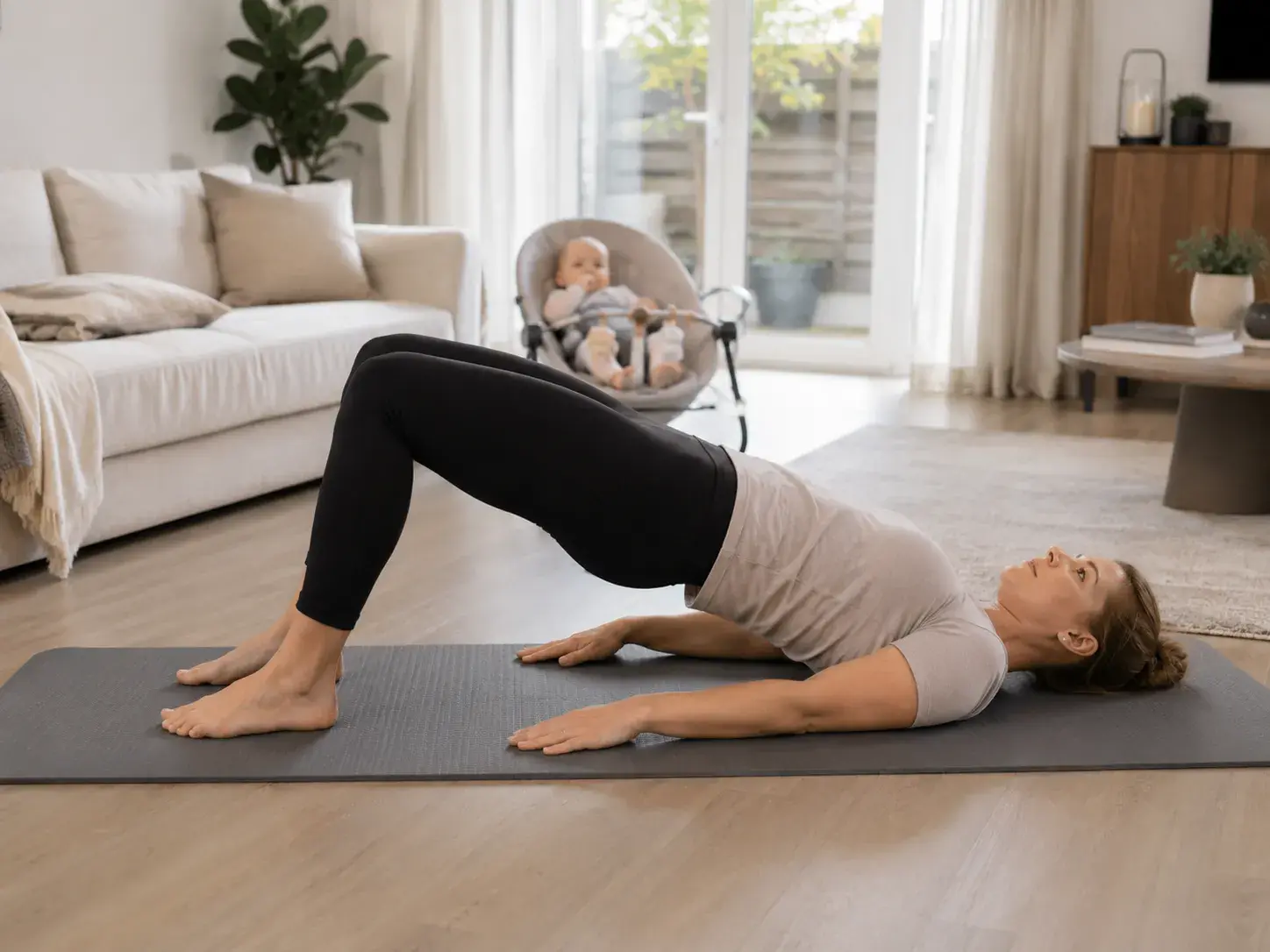
Early rehabilitation often focuses on gentle core activation, breathing coordination, pelvic floor integration, abdominal wall awareness and low-load movements that can be performed without bulging.

Small changes in breathing and movement strategy can make a significant difference. For example, exhaling during effort, reducing breath-holding, avoiding excessive bracing and learning how to engage the abdominal wall gently may help reduce doming during simple movements.

Progressing Exercise Without Reinforcing Doming

We may also look at how you get out of bed, lift your baby, carry a car seat, return to exercise or perform daily tasks. This makes rehabilitation more relevant to real life.

Progression should be based on how your body responds. If an exercise can be performed without doming, leaking, heaviness, pain or loss of control, it may be appropriate to progress gradually. If symptoms appear, the exercise may need to be adapted.

The aim is not to avoid challenge forever. The aim is to build capacity in the right order, moving from low-load control towards stronger, more demanding movements over time.

I’ve been attending Sanderstead Osteopaths to see David for a few years. The treatment is effective and the service professional.

Stuart kennedy Avatar Stuart kennedy
August 28, 2023

When to Book a Postnatal Core Assessment

A postnatal core assessment may be useful if doming continues, worries you or appears during activities you want to return to.

You do not need to wait until symptoms are severe. The earlier you understand what your body is doing, the easier it is to choose the right level of exercise and support.

Doming that continues months after birth may indicate that the abdominal wall still needs support with control, tension or pressure management. Time alone does not always restore core function.

If you still notice doming when sitting up, lifting, exercising or moving under load, assessment can help identify whether the issue is related to diastasis recti, breathing, pelvic floor coordination, scar restriction, posture or movement strategy.

Doming during exercise is also worth assessing. This is especially relevant during sit-ups, crunches, planks, running, jumping, gym training or Pilates movements that require strong abdominal control.

Many patients are unsure whether they should continue exercising, stop completely or avoid certain movements. If you feel weak, unstable, disconnected from your core or unsure what is safe, a postnatal assessment can provide clarity.


The goal is not to frighten you away from movement. It is to help you understand what your body is ready for and how to progress confidently.

Thanks to Tom for treating me before and after my Marathon last year – I literally would not have been able to do it without him. He also treated me for a pulled shoulder and neck pain. I'll definitely use Sanderstead Osteopaths again – highly recommend! 👍

Richard Belton Avatar Richard Belton
August 28, 2023

Postnatal Core Support at Sanderstead Osteopaths

At Sanderstead Osteopaths, we support patients with abdominal doming, diastasis recti concerns, postnatal core weakness and movement confidence after pregnancy.

We regularly see patients from Sanderstead and nearby areas including South Croydon, Purley, Warlingham, Kenley, Selsdon and Coulsdon.

Our approach is based on assessment, function and practical recovery. We look at how your abdominal wall behaves during breathing, movement and load, rather than judging recovery by appearance alone.

Our osteopaths may assess core engagement, abdominal tension, doming, posture, pelvic movement, spinal function, breathing strategy and symptoms during everyday tasks.

This helps us understand whether doming is mainly linked to diastasis recti, pressure control, poor coordination, movement strategy or wider postnatal recovery.

A Mummy MOT may be recommended if abdominal doming is part of a wider postnatal recovery picture. For example, you may also have pelvic floor symptoms, lower back pain, C-section scar tightness, neck and shoulder tension, reduced confidence lifting or difficulty returning to exercise.

In these cases, a full Mummy MOT assessment can help us look at how your posture, spine, pelvis, abdominal wall, pelvic floor and movement patterns are working together.

Arranging an Appointment

To arrange a postnatal core assessment or Mummy MOT, contact Sanderstead Osteopaths or book online.

Before attending, please make sure you have had your postnatal GP check and have been advised that it is appropriate to proceed.

If you are unsure whether an assessment is suitable, our team can help guide you.

David Ayres was brilliant with my back issues, as were his 2 colleagues I saw when he wasn't available. Professional and knowledgeable, would recommend 👌

Jane welch Avatar Jane welch
August 28, 2023

Frequently Asked Questions About Abdominal Doming After Pregnancy

Is stomach doming after pregnancy normal?

Stomach doming after pregnancy is common, especially during movements that increase abdominal pressure. However, if it continues, worsens or appears during everyday activity or exercise, it is worth having your abdominal wall and pressure management assessed.

Not always. Doming can be linked to diastasis recti, but it may also be caused by poor pressure management, breath-holding, bracing, reduced core control or movement habits. Assessment helps identify what is contributing to it.

If your stomach domes during sit-ups, sit-ups may not be the best starting point. The exercise may need to be adapted while you rebuild core control, breathing coordination and pressure management.

In many cases, doming can improve when exercises are matched to your current level of control. The aim is to rebuild abdominal wall tension, breathing coordination, pelvic floor support and movement confidence gradually.

Yes. Doming can happen after a C-section because pregnancy affects the abdominal wall, and surgery may also influence scar mobility, confidence, core control and movement strategy.

Useful External References

For general postnatal health information, patients may also find NHS post-pregnancy body guidance, NHS C-section recovery guidance, NICE pelvic floor dysfunction guidance and official Mummy MOT information useful. These resources are for general information only and do not replace individual medical advice.

Thanks to Tom for treating me before and after my Marathon last year – I literally would not have been able to do it without him. He also treated me for a pulled shoulder and neck pain. I'll definitely use Sanderstead Osteopaths again – highly recommend! 👍

Richard Belton Avatar Richard Belton
August 28, 2023

Latest Posts

Why Lower Back Pain Can Continue Months After Pregnancy

Mummy MOT After a C-Section: Core, Scar and Movement Recovery

Leaking After Birth: When It May Be a Sign Your Pelvic Floor Needs Support

Our Services

Sports Injury Treatment Clinic

Sports Injury

The use of sport’s osteopathy is an effective treatment that assists in detecting, treating and preventing a number of health problems. Our treatments include the moving, stretching and massaging of muscles and joints within the body.
Neck, Back & Shoulder Treatment Clinic

Neck Pain

Our osteopathic treatments will reduce your shoulder pain, improve your flexibility and insure a speedy recovery. Our osteopathic treatments may include soft tissue massage, mobilisation and strengthening work to your effected area be that the shoulder, neck or back.
Headaches & Migraines Treatment Clinic

Headaches & Migraines

The majority of headaches are found to be caused by musculoskeletal tension and/or postural issues and can be successfully treated by our osteopath practitioners at our Sanderstead based osteopathy clinic.
Pregnancy & Post Natal Treatment Clinic

Pregnancy & Post Natal

Postpartum osteopathy is osteopathic treatment that focuses on treatments effective the birth of a child. Postpartum osteopathy is an alternative treatment whereby our osteopath practitioners detect, treat and prevents future health issues by means of stretching and massaging the muscles, joints and connective tissues.
Children & Baby Treatment Clinic

Children & Teenager Treatment

Our osteopaths practitioners are highly qualified & experienced when treating children & babies. We utilise a range of techniques that includes physical manipulation, stretching and massage. We also offer more gentle techniques such as cranial osteopathy renowned for being safe safe and non-manipulative.
Chronic Pain Treatment Clinic

Chronic Pain Treatment

Our osteopathy team utilise manipulative treatment in order to alleviate somatic dysfunction. Our treatments apply manually guided forces to improve overall physiologic function and support homeostasis.

Our Services

Sanderstead Osteopaths Clinic

Sports Injury

The use of sport’s osteopathy is an effective treatment that assists in detecting, treating and preventing a number of health problems. Our treatments include the moving, stretching and massaging of muscles and joints within the body.
Neck, Back & Shoulder Treatment Clinic

Neck Pain

Our osteopathic treatments will reduce your shoulder pain, improve your flexibility and insure a speedy recovery. Our osteopathic treatments may include soft tissue massage, mobilisation and strengthening work to your effected area be that the shoulder, neck or back.
Headaches & Migraines Treatment Clinic

Headaches & Migraines

The majority of headaches are found to be caused by musculoskeletal tension and/or postural issues and can be successfully treated by our osteopath practitioners at our Sanderstead based osteopathy clinic.
Pregnancy & Post Natal Treatment Clinic

Pregnancy & Post Natal

Postpartum osteopathy is osteopathic treatment that focuses on treatments effective the birth of a child. Postpartum osteopathy is an alternative treatment whereby our osteopath practitioners detect, treat and prevents future health issues by means of stretching and massaging the muscles, joints and connective tissues.
Children & Baby Treatment Clinic

Children & Teenager Treatment

Our osteopaths practitioners are highly qualified & experienced when treating children & babies. We utilise a range of techniques that includes physical manipulation, stretching and massage. We also offer more gentle techniques such as cranial osteopathy renowned for being safe safe and non-manipulative.
Chronic Pain Treatment Clinic

Chronic Pain Treatment

Our osteopathy team utilise manipulative treatment in order to alleviate somatic dysfunction. Our treatments apply manually guided forces to improve overall physiologic function and support homeostasis.

Areas our Osteopathy Treatment Covers

Sanderstead, CR2

Purley, CR8

Kenley, CR8

Selsdon, CR2

New Addington, CR0

South Croydon, CR2

Hamsey Green, CR6

Croydon, CR0

Coulsdon, CR5

Caterham, CR3

Warlingham, CR6

Osteopathy Coverage

David Ayres Osteopath

About the Clinical Director

David Ayres is the Founder and Clinical Director of Sanderstead Osteopaths, providing clinical guidance and oversight across all treatment and content.

David Ayres

Clinical Director & Founder, Sanderstead Osteopaths

David Ayres is the founder and Clinical Director of Sanderstead Osteopaths, with over 25 years of experience in osteopathic care, clinical education, and practitioner development.

He qualified from the British School of Osteopathy in 2000 and went on to spend a decade lecturing at the institution between 2002 and 2012. During this time, he taught final-year students advanced osteopathic techniques and manipulation, while also working as a clinical tutor overseeing and mentoring students in the treatment of their own patients.

Throughout his clinical career, David developed particular expertise in the treatment of neck injuries, spinal conditions, and joint-related issues affecting the shoulders and knees. He also worked with newborn babies using cranial osteopathic approaches, supporting early-stage musculoskeletal development.

David’s role within Sanderstead Osteopaths is focused on clinical leadership, mentoring, and maintaining high standards of care across the team.

He works closely with practitioners within the clinic to guide treatment approaches, support clinical decision-making, and ensure patients receive structured, evidence-informed care tailored to their individual needs.

Under his direction, Sanderstead Osteopaths has built a strong reputation across Sanderstead, Croydon and the surrounding areas for delivering professional, patient-focused treatment for a wide range of musculoskeletal conditions.

Scroll to Top