
Very knowledgeable, nice people

 Bernt Hellman
January 28, 2024
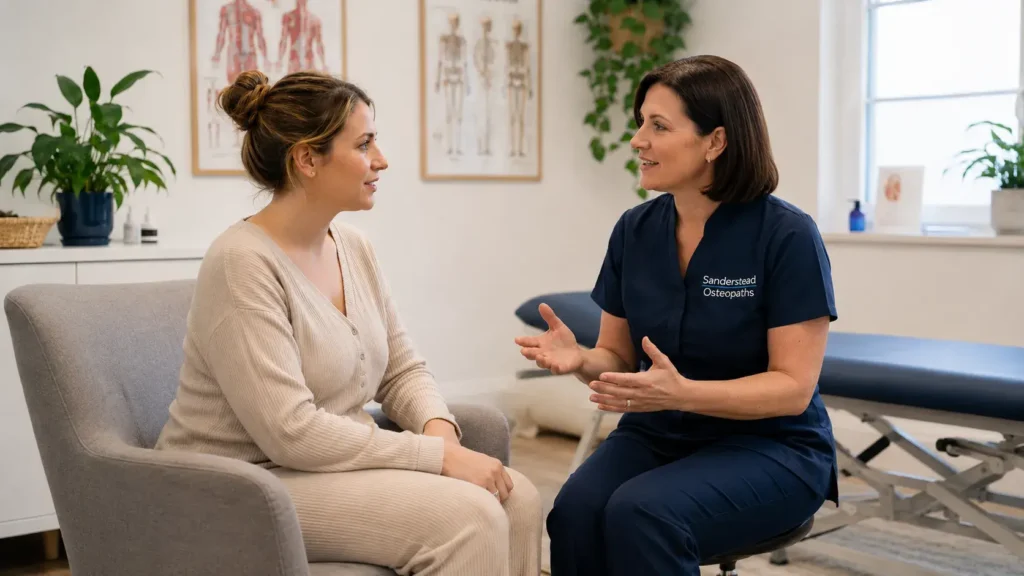
What Is a Mummy MOT?
A Mummy MOT looks at postnatal recovery from a functional and musculoskeletal perspective.
Pregnancy does not simply affect one muscle or one joint.
Over many months, the abdominal wall stretches, the pelvis adapts, the centre of gravity changes, the pelvic floor manages increased load and the spine responds to a progressively changing body.
Birth then places additional demands on that system.
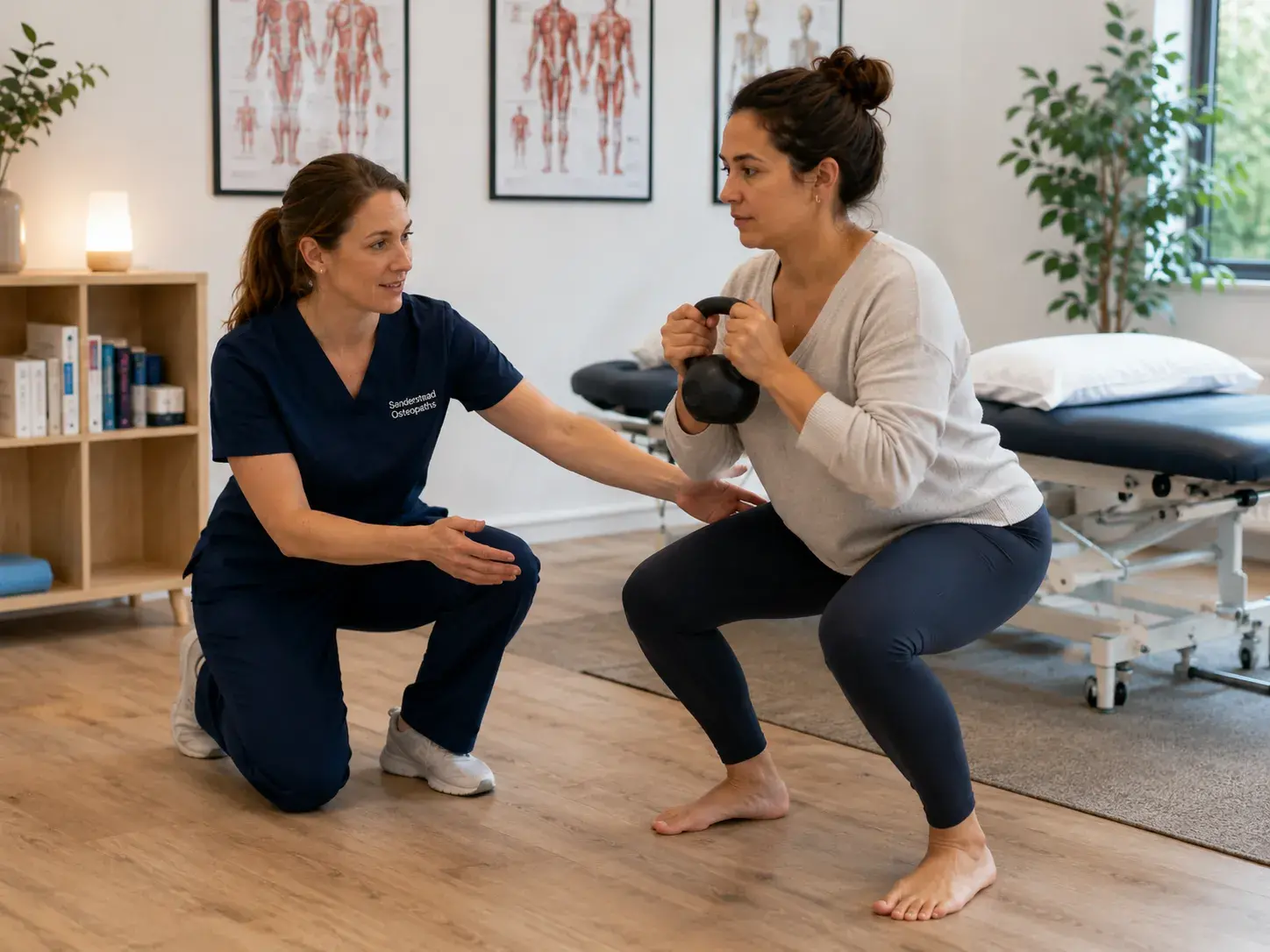
Immediately afterwards, your body also has to cope with feeding, lifting, carrying, bending, getting up from the floor, pushing a buggy, lifting a car seat and repeatedly moving while caring for your baby.
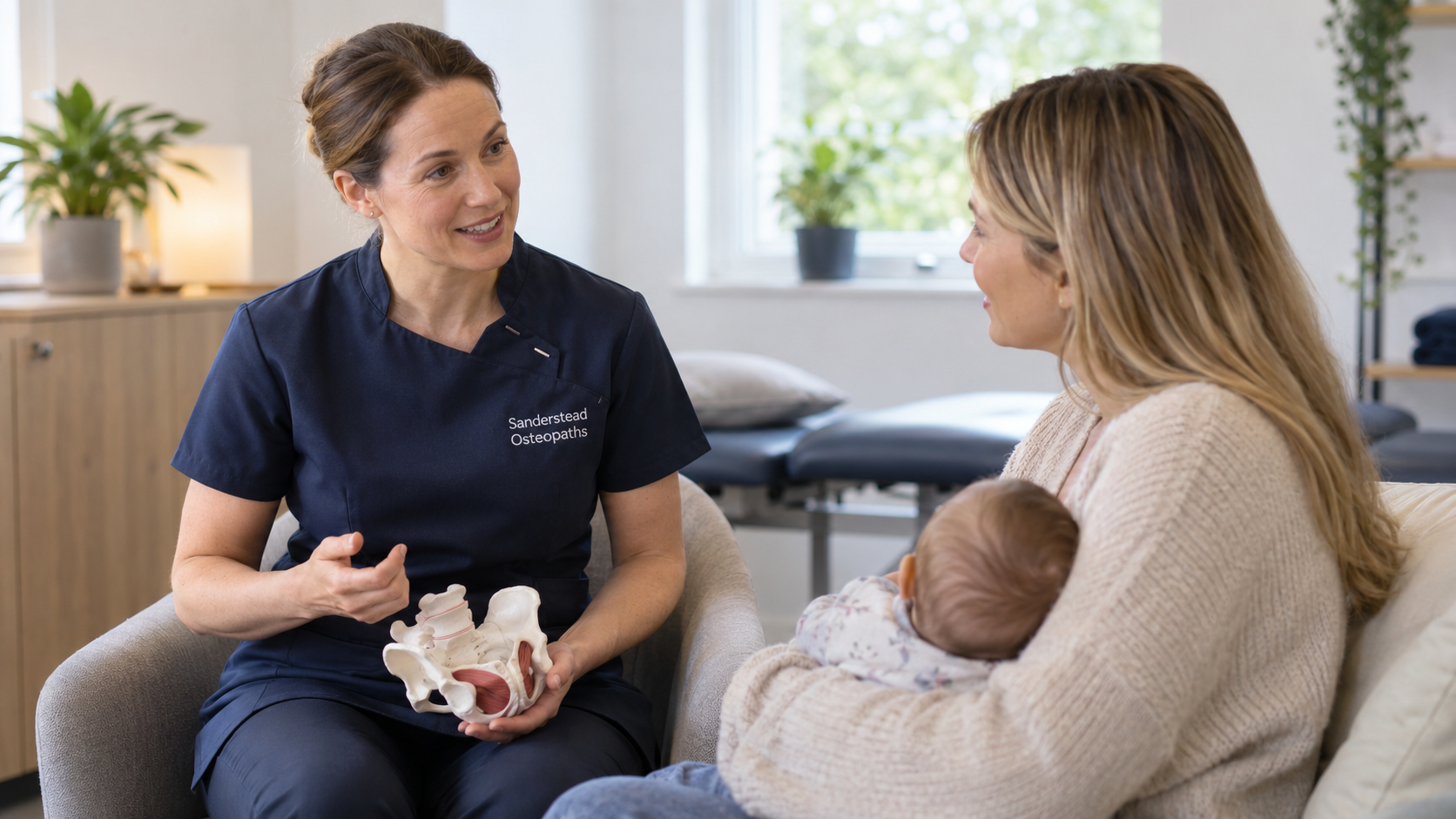
A Mummy MOT in Sanderstead assesses how your body is managing those demands.
Depending on your symptoms, stage of recovery and goals, the assessment may consider:
- Abdominal wall function
- Core control
- Diastasis recti
- Abdominal doming
- Pelvic floor coordination
- Breathing and pressure management
- Pelvic movement
- Lower back function
- Hip movement
- Posture
- C-section scar-related restriction where relevant
- Functional movement
- Lifting and carrying
- Exercise readiness
The objective is not simply to identify weakness.
It is to understand what has recovered well, what may still need support and whether other parts of the body are compensating.
The Difference Between Medical Recovery and Functional Recovery
Medical recovery and functional recovery overlap, but they are not exactly the same thing.
You can be medically well without every part of your physical function having returned to its previous level.
A C-section incision may have healed appropriately while the surrounding tissues still feel tight or guarded.
You may have no serious pelvic floor problem requiring medical treatment but still leak when running.
You may have no significant spinal condition but experience lower back pain whenever you carry your baby.
You may have abdominal separation that is not medically concerning but struggle to generate useful abdominal tension when lifting or exercising.
The postnatal GP review is concerned primarily with your medical recovery and overall wellbeing.
A Mummy MOT examines how well your body is functioning during movement, pressure and everyday load.
Have seen both David and Clare on and off over the last 4 years with lower back pain/stiffness. They really know their stuff and have always provided me with solutions to my lower back. My job is quite demanding and doesn't help the pain (lots of driving and lifting) but knowing David and Clare will always be there to help at Sanderstead Osteopaths it puts my mind at rest. I started going weekly and with the regular treatments it's eased the pain so now I am going every 2-4 weeks. I would highly recommend either of these guys!
 James McClelland
August 28, 2023
What a Mummy MOT May Assess in More Functional Detail
Your GP may ask about symptoms affecting many of the areas discussed below and can investigate or refer where medically appropriate.
A routine GP consultation, however, is not generally designed to provide an extended assessment of how the abdominal wall, pelvic floor, breathing system, pelvis and spine behave together during functional movement.
That is where a Mummy MOT can provide additional information.
H3: How Your Abdominal Wall Is Functioning
After pregnancy, many women describe their stomach or core as feeling weak, stretched or disconnected.
However, describing the core as weak does not tell us exactly what is happening.
During a Mummy MOT, we may look at how the abdominal wall behaves when you:
- Breathe
- Engage the core
- Lift your head
- Roll
- Sit up
- Stand
- Bend
- Lift
- Balance
- Exercise
We may consider whether the abdominal wall can create useful tension, whether you brace excessively, whether you hold your breath and whether the abdomen domes or bulges during effort.
We may also assess whether your lower back, hips or upper body are compensating when the abdominal wall is placed under load.
The aim is to understand function rather than judge the appearance of the abdomen.
Diastasis Recti After Pregnancy
Diastasis recti refers to separation of the abdominal muscles along the connective tissue running through the midline of the abdomen.
Some degree of separation is common during pregnancy because the abdominal wall has to stretch to accommodate the growing baby.
After birth, measuring the width of a gap can provide useful information, but the measurement alone does not tell us how well the abdominal wall is functioning.
During a functional assessment, we may also consider:
- Where separation is present
- The depth of the separation
- The tension through the midline
- What happens when the abdomen is loaded
- Whether doming appears
- Whether breathing changes the response
- Whether the tissue can generate useful tension
Two people with a similar measured gap can have very different levels of abdominal control.
The goal is therefore not simply to make a gap smaller.
The more useful question is whether your abdominal wall can manage pressure and support movement effectively.
If abdominal separation is your main concern, our diastasis recti treatment in Sanderstead service focuses specifically on abdominal wall recovery, pressure management and progressive rehabilitation.
Abdominal Doming When You Sit Up
A ridge, cone or dome appearing through the middle of the abdomen is one of the changes some women notice after pregnancy.
It may appear when:
- Getting out of bed
- Sitting up from the sofa
- Performing a crunch
- Planking
- Lifting your baby
- Running
- Doing Pilates
- Returning to gym training
Doming can provide useful information about how pressure is being managed through the abdominal wall.
During assessment, we may look at whether the doming changes when the movement is modified.
For example, does it improve when you exhale?
Does it reduce when the load is lowered?
Are you holding your breath?
Are you bracing too aggressively?
Is the abdominal wall struggling to create tension?
Is diastasis recti involved?
Are pelvic floor symptoms appearing at the same time?
These distinctions help determine what type of rehabilitation is appropriate.
If you have noticed this symptom, our article on why your stomach domes when you sit up after pregnancy explains the issue in more detail.
Pelvic Floor Function During Movement
Pelvic floor recovery is relevant after both vaginal birth and C-section.
Pregnancy itself places increased demand on the pelvic floor for many months.
The pelvic floor also works closely with the abdominal wall, diaphragm, pelvis and spine to manage internal pressure and support movement.
Symptoms that may suggest this system needs additional support include:
- Leaking when coughing
- Leaking when sneezing
- Leaking when laughing
- Leaking when lifting
- Leaking during running or jumping
- Pelvic heaviness
- Dragging
- Pelvic pressure
- Reduced pelvic support
- Difficulty controlling the pelvic floor
- Reduced confidence returning to exercise
These symptoms should be discussed with your GP where appropriate, particularly if they are persistent, worsening or concerning.
A Mummy MOT can additionally look at how those symptoms behave during functional movement.
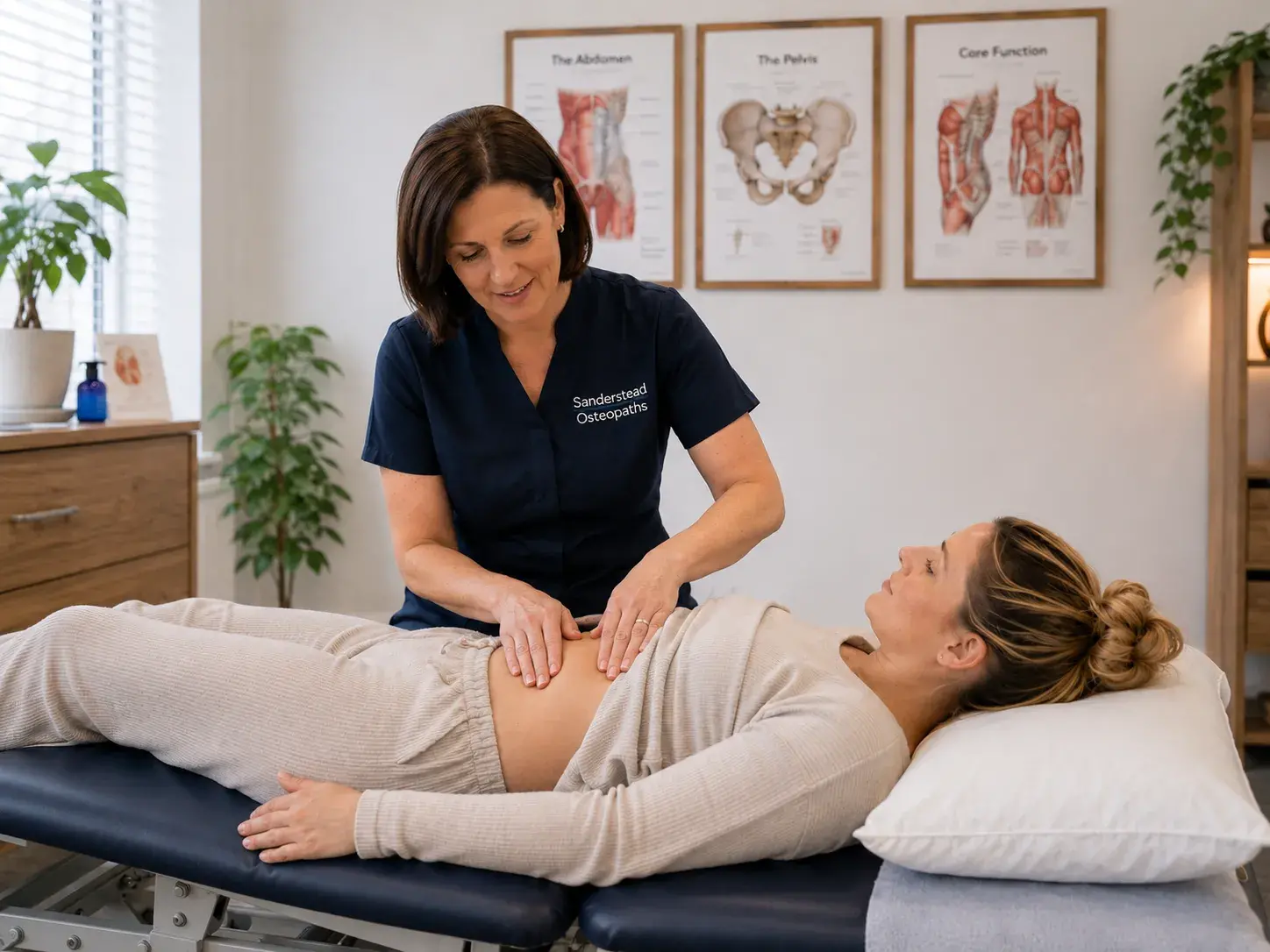
At Sanderstead Osteopaths, our pelvic floor assessment within a Mummy MOT is external.
We may assess breathing, abdominal movement, pelvic control, posture, pressure management and movement to understand how the pelvic floor appears to be coordinating with the wider system.
If bladder control, heaviness or pelvic support is your main concern, our pelvic floor recovery after pregnancy service provides a more focused assessment.
Our guide to leaking after birth also explains why leaking can involve much more than pelvic floor strength alone.
Breathing and Pressure Management
Breathing may not immediately seem connected to postnatal recovery, but it plays an important role in the way pressure is controlled through the trunk.
The diaphragm, abdominal wall and pelvic floor work together.
Pressure naturally increases when you:
- Cough
- Sneeze
- Lift your baby
- Carry a car seat
- Stand from sitting
- Get up from the floor
- Exercise
- Run
- Jump
The issue is not that pressure exists. Your body is designed to manage pressure.
The question is how efficiently that pressure is controlled.
If you hold your breath, brace excessively or push pressure forwards or downwards, you may notice symptoms such as abdominal doming, leaking, heaviness or lower back strain.
During a Mummy MOT, we may therefore assess how breathing changes when you move or exert yourself.
This can help determine whether symptoms relate primarily to strength, coordination, timing, pressure management or a combination of factors.
Lower Back and Pelvic Function
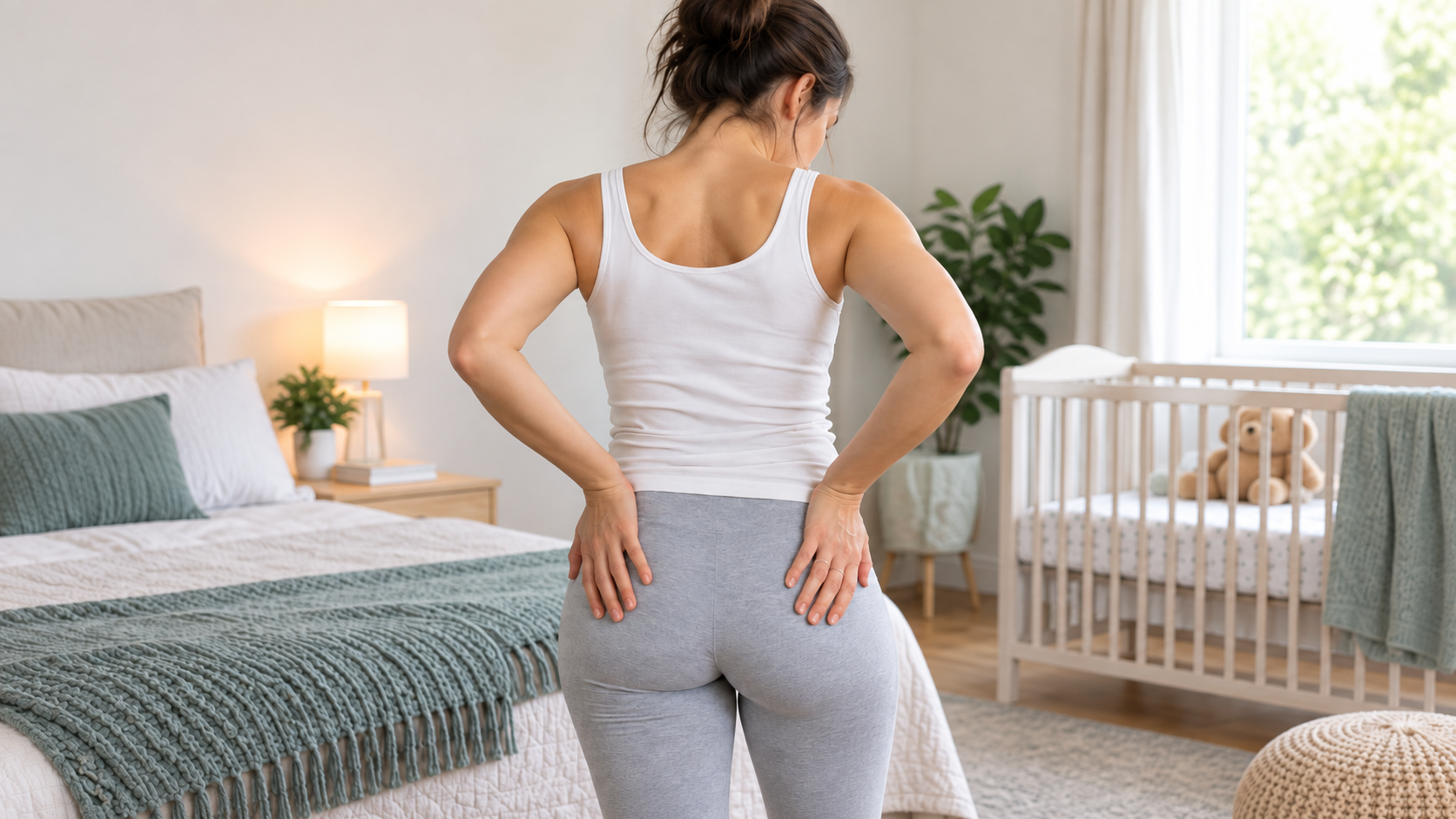
Lower back pain after pregnancy is not always caused by one isolated problem within the back itself.
The lower back forms part of a larger load-sharing system involving the pelvis, hips, abdominal wall and pelvic floor.
If your abdominal wall is contributing less effectively, the back may work harder.
If your hips are stiff, the lower back may compensate when you bend.
If you feel unstable through the pelvis, spinal muscles may grip to create a sense of control.
Repeated feeding, carrying and lifting can then reinforce those patterns.
During a postnatal assessment, we may look at movements including:
- Standing from sitting
- Bending
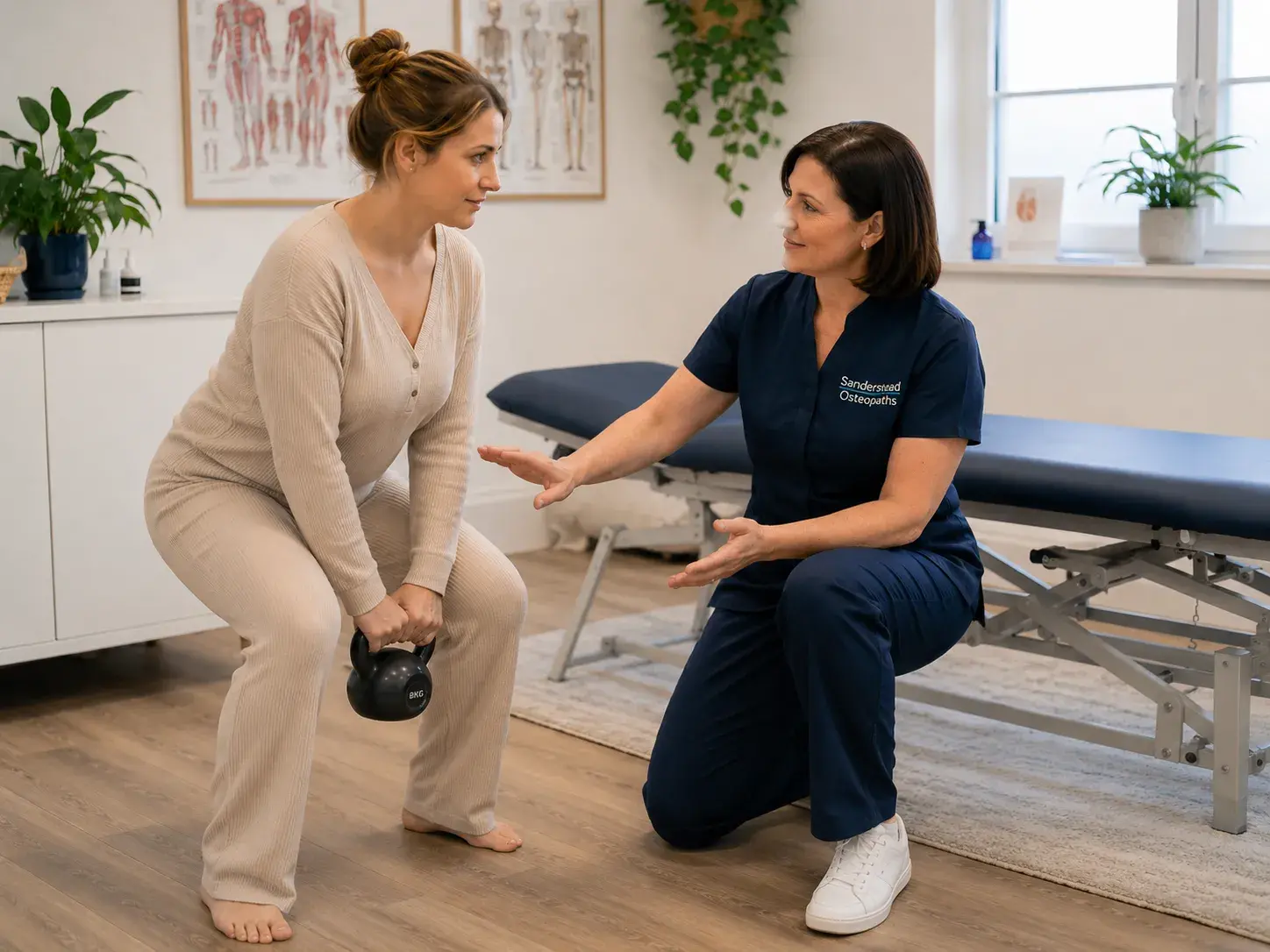
- Squatting
- Lifting
- Walking
- Balancing
- Twisting
- Getting up from the floor
The aim is to understand what your lower back may be compensating for, rather than assuming that the painful area is the only area involved.
If back pain is your main concern, our postnatal back pain treatment in Sanderstead service looks at how the spine, pelvis, abdominal wall, posture and everyday baby-care demands may be contributing.
You can also read our guide to why lower back pain can continue months after pregnancy.
C-Section Scar and Abdominal Wall Recovery
A C-section involves abdominal surgery as well as recovery from pregnancy.
Even when the incision has healed well medically, some women continue to notice:
- Scar tightness
- Pulling
- Sensitivity
- Numbness
- Guarding
- Reduced confidence using the lower abdomen
- Discomfort when standing upright
- Difficulty engaging the core
Protective movement around the scar can also influence other areas.
You may brace through the lower back, avoid extending through the front of the body, hold your breath when lifting or move more cautiously through the pelvis and hips.
These patterns can be understandable during early recovery.
If they persist, however, they may affect the way your body manages everyday movement.
A Mummy MOT may look at the scar area as part of the wider abdominal wall, pelvis and movement system.
Our guide to having a Mummy MOT after a C-section explains scar, core and movement recovery in more detail.
Feeding, Lifting and Carrying Your Baby
Pregnancy may have ended, but the physical workload on your body has not.
In many ways, it increases.
You may spend substantial amounts of time:
- Feeding
- Looking down
- Carrying your baby
- Holding your baby on one hip
- Bending into a cot
- Using a changing table
- Lifting a car seat
- Loading a buggy
- Getting up from the floor
- Sitting in unsupported positions
Individually, these movements may seem insignificant.
Repeated dozens of times every day, they can place considerable demand on the neck, shoulders, back, pelvis and core.
A Mummy MOT can assess how your body is performing these everyday tasks and whether small adaptations could reduce repeated strain.
Thanks to Tom for treating me before and after my Marathon last year – I literally would not have been able to do it without him. He also treated me for a pulled shoulder and neck pain. I'll definitely use Sanderstead Osteopaths again – highly recommend! 👍
 Richard Belton
August 28, 2023
I had treatments for backache and neck pain with both Tom and David, during pregnancy and after birth. I found the sessions really beneficial, they were gentle but straight to the point causing the pain. My mother sorted her backache in 4 treatments too. And I also got my newborn treated which helped her as she is much more relaxed now. I definitely recommend this clinic, osteopathy is good at any stage of life.
 Laura Vettore
August 28, 2023
When Should You Book Before Returning to Exercise?
If returning to demanding exercise is one of your goals, a useful time to consider a Mummy MOT is before making a major increase in load or impact.
General movement and high-demand exercise are not the same thing.
Walking and gentle activity place very different demands on the body compared with:
- Running
- Jumping
- Burpees
- Heavy squats
- Deadlifts
- High-impact fitness classes
- Intense abdominal exercises
- Competitive sport
Before increasing to these activities, it can be useful to understand how your abdominal wall, pelvic floor, pelvis and wider movement system respond under load.
Time Since Birth Does Not Automatically Mean Exercise Readiness
Two women can both be 12 weeks postnatal and have very different levels of readiness.
One may have good abdominal control, no pelvic symptoms and be progressing comfortably.
Another may experience leaking, abdominal doming, heaviness or lower back pain during relatively simple exercise.
The number of weeks since birth does not explain that difference.
A functional assessment can consider:
- Core control
- Abdominal wall behaviour
- Pelvic floor symptoms
- Breathing
- Pressure management
- Pelvic control
- Balance
- Load tolerance
- Movement quality
- Pain
- Confidence
Where a more exercise-focused rehabilitation programme is appropriate, our osteopathy and Pilates treatment service can provide additional support.
I’ve been attending Sanderstead Osteopaths to see David for a few years. The treatment is effective and the service professional.
 Stuart kennedy
August 28, 2023
Sanderstead Osteopath provide quality treatment & professional service, I've been using David Ayers Osteopath services for over a decade with no complaints.
 Mike McFarlane
August 28, 2023
When Should You Seek Medical Advice Instead of Booking a Mummy MOT?
A Mummy MOT is not appropriate for symptoms that require urgent or ongoing medical investigation.
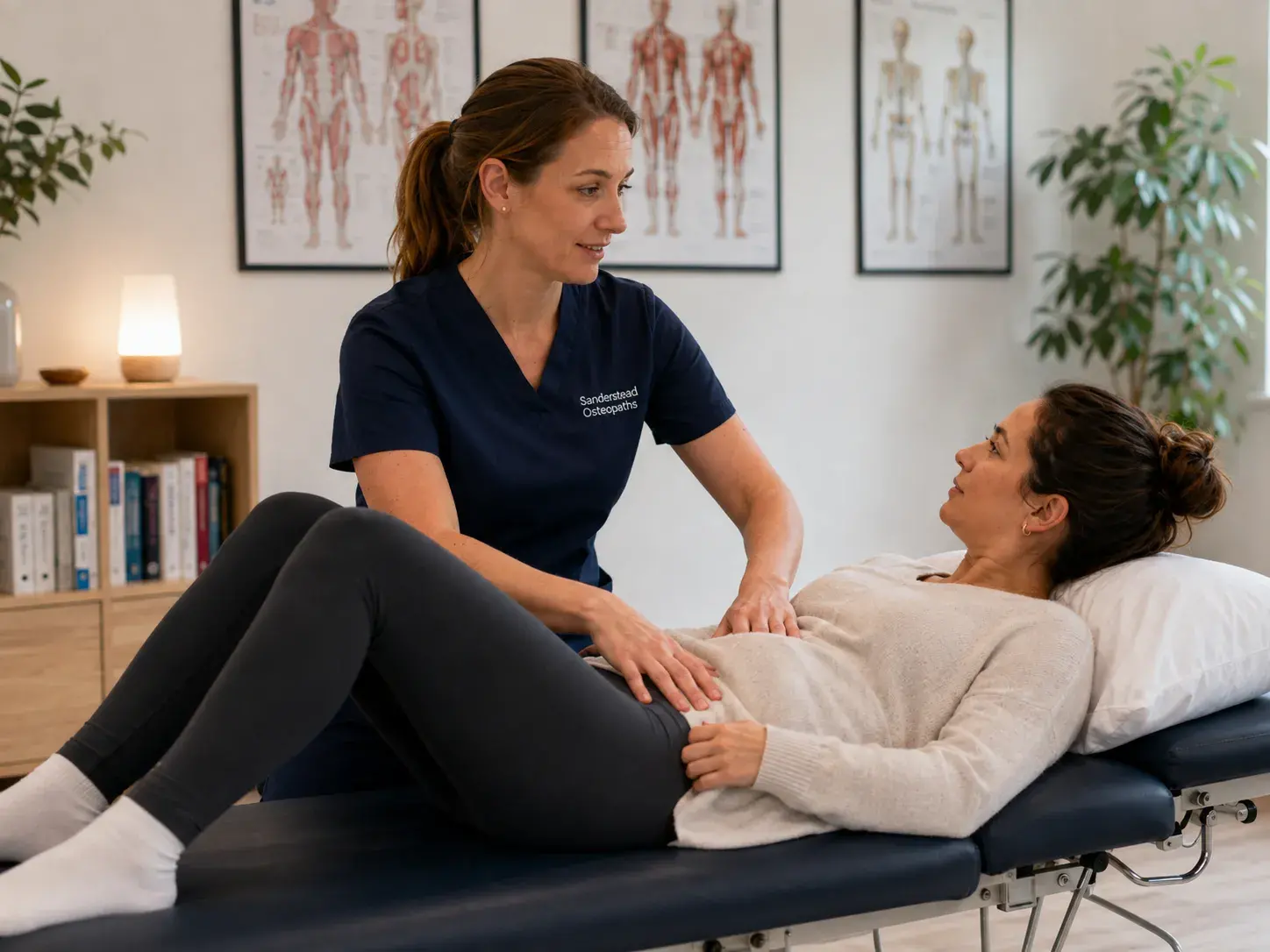
Seek appropriate medical advice if you develop symptoms such as:
- Fever
- Signs of infection
- Increasing wound redness
- Wound discharge
- Heavy or unusual bleeding
- Severe or rapidly worsening pain
- Chest pain
- Shortness of breath
- Sudden swelling
- New weakness
- New numbness
- Sudden loss of bladder or bowel control
- Blood in the urine
- Severe pelvic pain
- Symptoms that feel sudden or concerning
Your GP, midwife, NHS 111 or emergency services should be used as appropriate depending on the nature and severity of your symptoms.
A Mummy MOT is designed to support functional postnatal recovery, not replace medical assessment.
When Is the Right Time to Have a Mummy MOT?
Before attending a Mummy MOT, you should have completed your appropriate postnatal medical review and have been advised that it is appropriate to proceed.
After that, the right time depends on your individual recovery.
Some women attend because they want guidance before increasing exercise.
Others attend several months after birth because symptoms become more obvious as their baby becomes heavier and their activity increases.
Some attend much later because a problem never completely resolved.
A Mummy MOT may be useful if you continue to experience:
- Abdominal weakness
- Abdominal doming
- Diastasis recti concerns
- Pelvic floor symptoms
- Leaking
- Pelvic heaviness
- Lower back pain
- Pelvic discomfort
- C-section scar tightness
- Neck or shoulder discomfort
- Difficulty lifting or carrying
- Reduced confidence returning to exercise
If your symptoms are more general postnatal aches, stiffness or musculoskeletal discomfort, our pregnancy and postnatal osteopathy service may also be appropriate.
David has been treating my lower back pain. He provides a very professional service, and has a wealth of knowledge. Sanderstead Osteopath is a welcoming, cosy and clean clinic. On bad days when I have hardly been able to walk due to the pain, after David's treatment I feel I can do star jumps! The instant relief is noticeable. Parking is nearby which is very convenient. I highly recommend anyone to come here, you won't be disappointed.
 Tania Sang
August 28, 2023
What Happens During a Mummy MOT at Sanderstead Osteopaths?
The assessment begins with a detailed discussion about your pregnancy, birth and recovery.
We may ask about:
- Your pregnancy
- The type of birth you had
- Whether you experienced complications
- Your postnatal medical review
- Pain
- Pelvic floor symptoms
- Abdominal symptoms
- C-section recovery where relevant
- Feeding
- Lifting and carrying
- Exercise
- Work
- Your current concerns
- What you want to return to
The physical assessment is then adapted to you.
Assessing Posture and Movement
We may assess how you stand, sit, bend, walk and move through the spine, pelvis and hips.
The aim is not to find a perfect posture.
We want to understand how your body distributes load and whether certain areas are consistently doing more work than others.
Assessing Your Core and Abdominal Wall
We may look at how the abdominal wall behaves during breathing and movement.
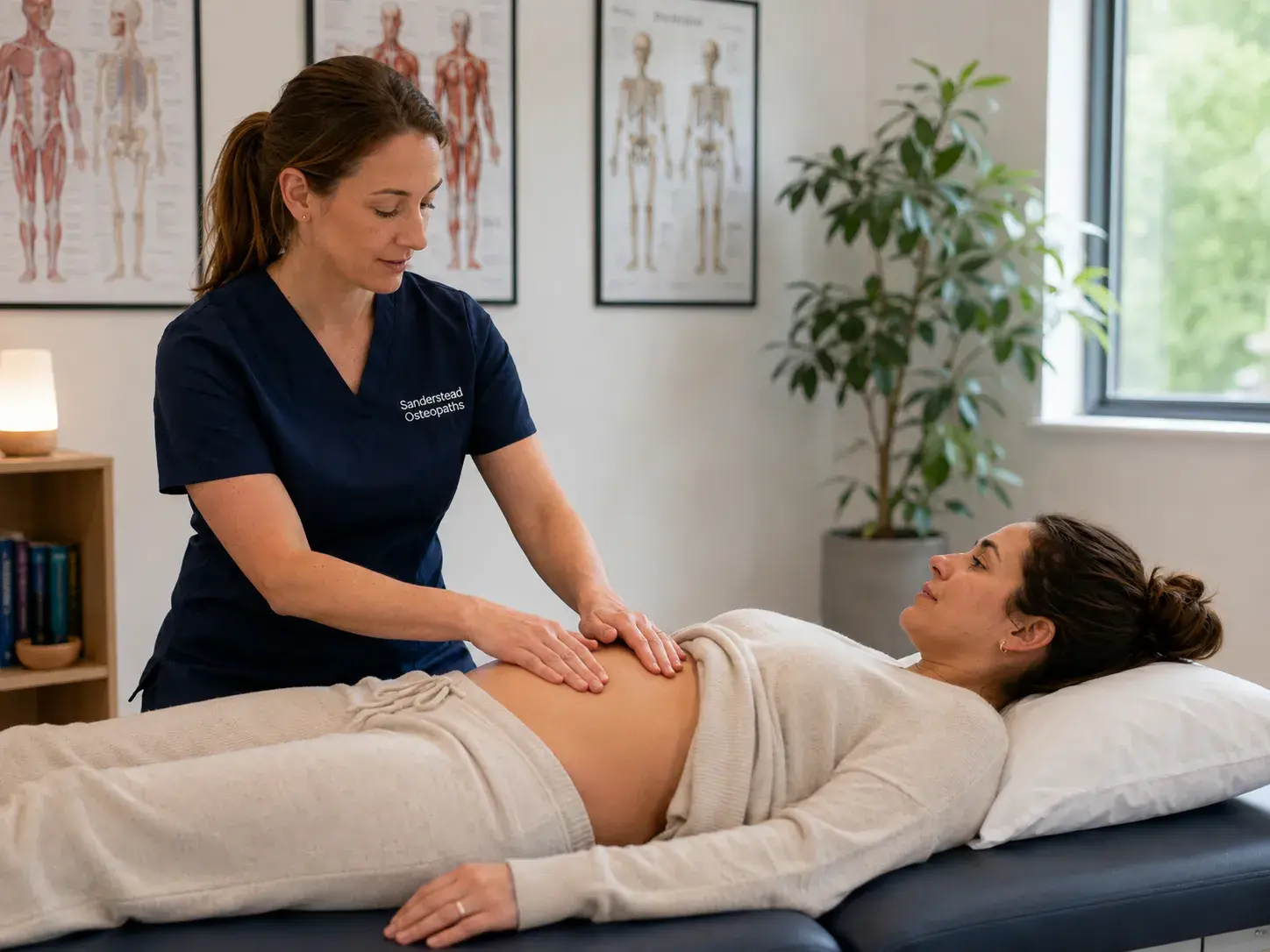
This can include assessing abdominal tension, diastasis recti, doming, pressure control and coordination.
The emphasis is on function rather than appearance.
Assessing Pelvic Floor Coordination
Where relevant, pelvic floor function is considered as part of the wider core and pressure-management system.
Our assessment is external.
We may look at breathing, abdominal movement, pelvic control and symptoms during functional movement.
Assessing Functional Everyday Tasks
Postnatal recovery has to work in real life.
Depending on your symptoms, we may therefore assess movements such as:
- Standing from a chair
- Bending
- Lifting
- Squatting
- Balancing
- Carrying
- Getting up from the floor
These movements can show whether you brace excessively, hold your breath, shift load unevenly or compensate through the lower back or pelvis.
Creating Your Recovery Plan
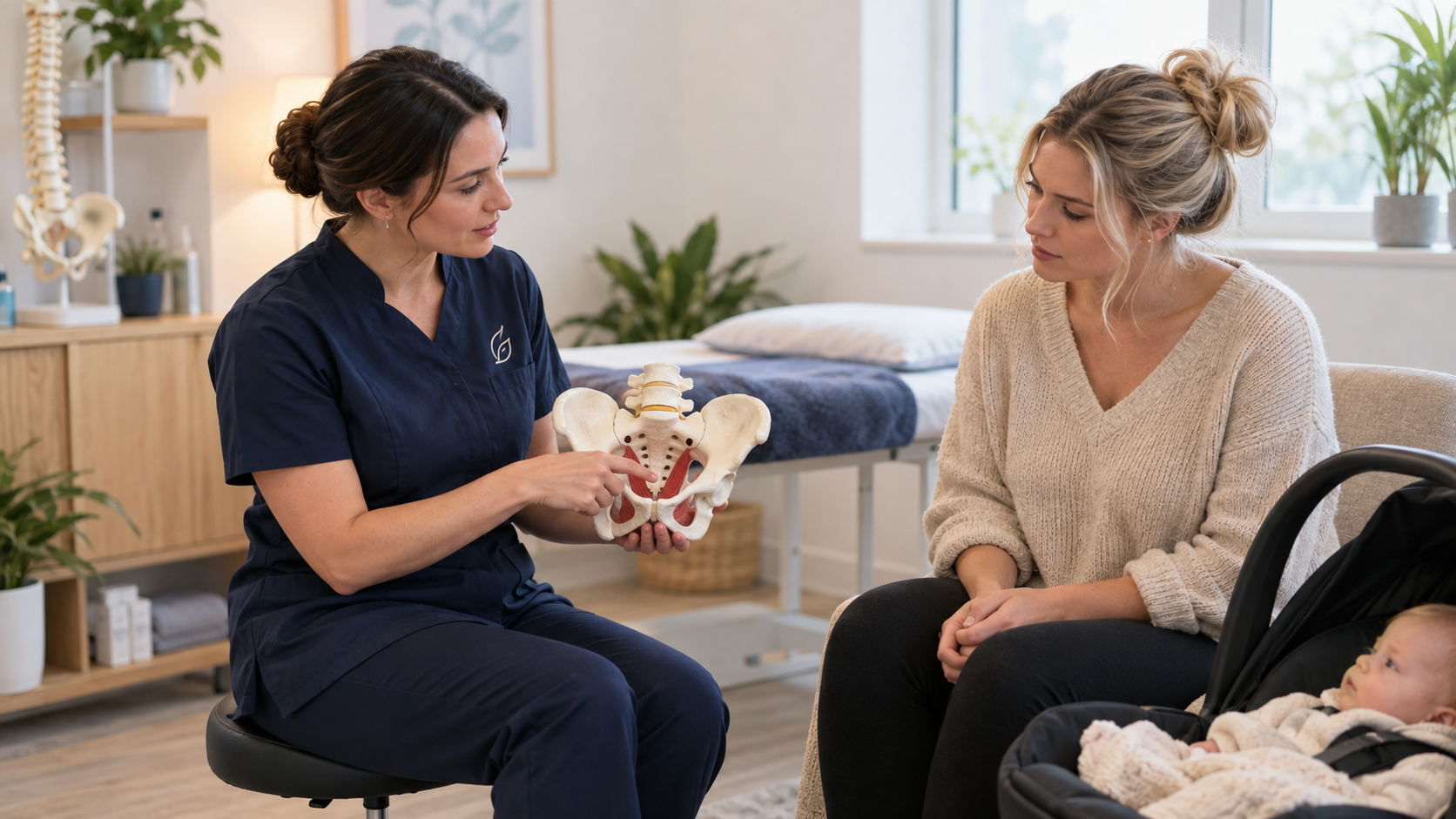
Following assessment, we explain what we have found and how it may relate to your symptoms or goals.
Your recovery plan may include:
- Core rehabilitation
- Pelvic floor coordination
- Breathing strategies
- Pressure-management work
- Movement retraining
- Posture advice
- Lifting guidance
- Mobility exercises
- Progressive strengthening
- Scar tissue support where appropriate
- Hands-on osteopathic treatment where appropriate
- Gradual return-to-exercise guidance
The plan should reflect your body, your symptoms and what you actually need to do in everyday life.
I have suffered with various back problems, especially lower back and shoulder tension. David has helped with my symptoms quickly and effectively. He is extremely professional and knowledgeable. I can highly recommend this practice and I will continue to use them in the future.
 Kim Fyfe
August 28, 2023
Lexi has been very helpful with pain in my back and the treatments have been very affective and she gives out great follow up exercises
 Max Bullock
February 28, 2024