
Pelvic Heaviness After Birth: Causes, Symptoms and When to Get Checked

Written by Sanderstead Osteopaths. Clinically reviewed by Judith Tardif, Registered Osteopath.

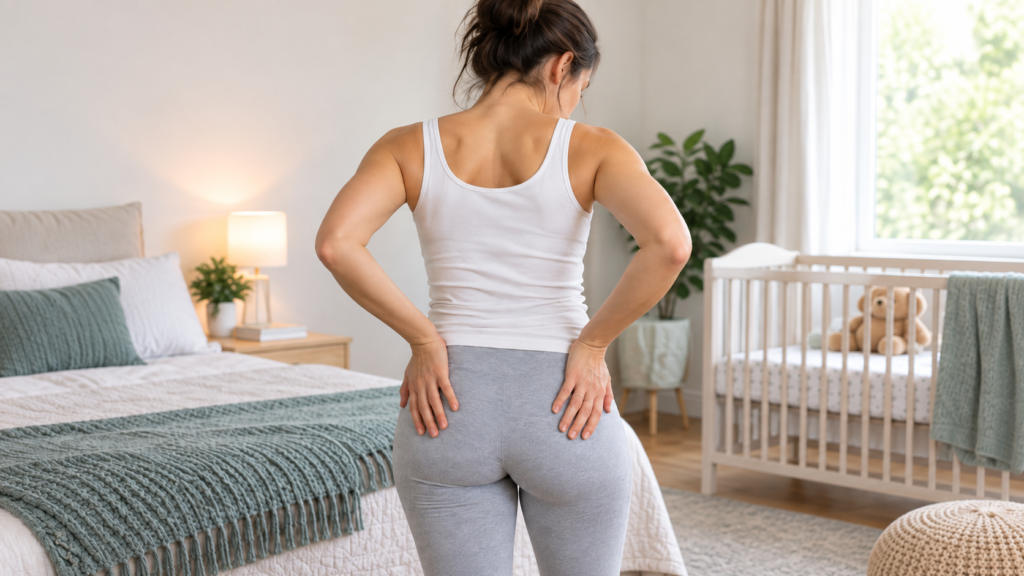
Pelvic heaviness after birth can feel like pressure, dragging, fullness or a sense that something is sitting lower in the pelvis than usual.

Some women notice it when walking or standing for longer periods. Others become aware of it later in the day, when lifting their baby, returning to exercise or after spending several hours on their feet.

Pelvic heaviness can occur during postnatal recovery, particularly while the pelvic floor and surrounding tissues are recovering from pregnancy and childbirth.

However, persistent or worsening heaviness should not simply be dismissed as a normal part of having a baby.

The symptom can have several possible explanations. Pelvic floor recovery, pressure management, activity levels and the way the abdominal wall and pelvic floor are coordinating may all be relevant. Pelvic heaviness can also occur with pelvic organ prolapse, which is why some symptoms are better assessed by a GP or specialist pelvic health professional.

This guide explains what pelvic heaviness after birth can feel like, why it may happen, when it deserves further assessment and where a postnatal functional assessment may fit into your recovery.

What Does Pelvic Heaviness After Birth Feel Like?

Pelvic heaviness is not always easy to describe.

Some women use words such as pressure, dragging, fullness or aching.

Others describe a sensation that feels as though there is more weight through the vagina or lower pelvis.

The symptom may be mild and occasional or noticeable enough to change how comfortable you feel when walking, exercising or spending time on your feet.

Heaviness, Dragging and Pressure Through the Pelvis

You may notice:

  • A heavy feeling low in the pelvis
  • Vaginal pressure
  • A dragging sensation
  • A feeling of fullness
  • Pelvic aching after activity
  • A sense that the pelvic floor becomes tired
  • Discomfort after standing for longer periods
  • Symptoms when lifting or carrying
  • Increased awareness of the pelvis during exercise

Not everyone experiences these symptoms in the same way.

Some women feel pelvic heaviness without pain.

Others notice heaviness alongside urinary leakage, lower back discomfort or a feeling that their core has not fully recovered.

The pattern of your symptoms can provide useful information.

Why Symptoms May Be Worse Later in the Day

A common pattern is for pelvic heaviness to be relatively mild in the morning and more noticeable by the afternoon or evening.

This may happen because the pelvic floor has been managing load for many hours.

During a typical postnatal day you may be:

  • Standing
  • Walking
  • Feeding
  • Carrying your baby
  • Lifting a car seat
  • Pushing a buggy
  • Bending
  • Climbing stairs
  • Doing housework
  • Exercising

Each individual activity may feel manageable.

But together they can create a considerable amount of physical demand.

If the pelvic floor and wider support system are still recovering, symptoms may become more noticeable as the day progresses.

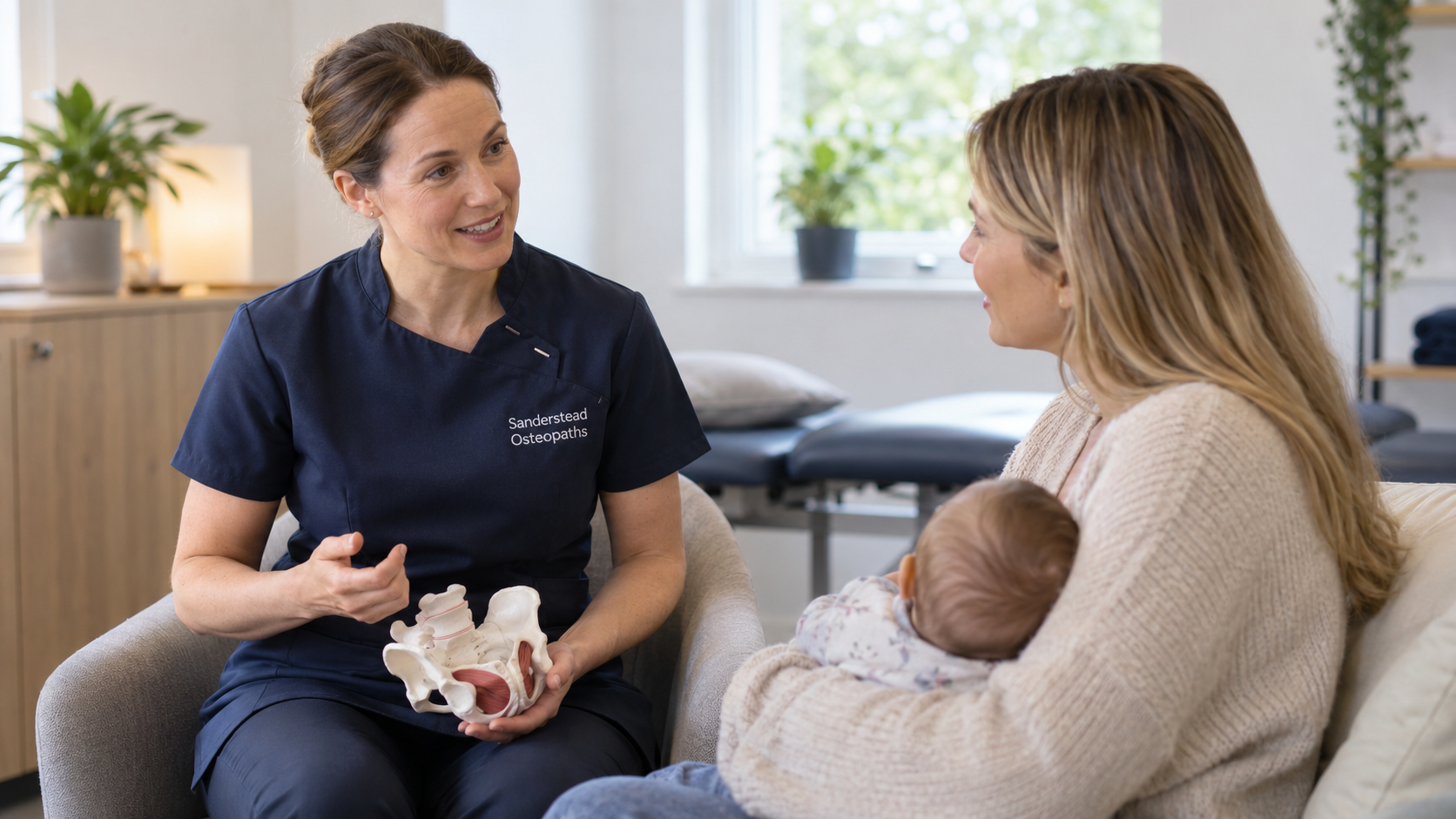
If you’re experiencing pelvic heaviness after birth, a professional assessment can help you understand your symptoms and identify the right next steps for your postnatal recovery.

Have used this osteopath for years and always had great service

Bill Burton Avatar Bill Burton
August 28, 2023

Is Pelvic Heaviness Normal After Giving Birth?

Some pelvic heaviness can occur during the early postnatal period.

Pregnancy places increasing demand on the pelvic floor over many months, and childbirth can place additional strain on muscles and connective tissues.

Recovery takes time.

That said, there is an important difference between recognising that symptoms can occur and assuming they should always be ignored.
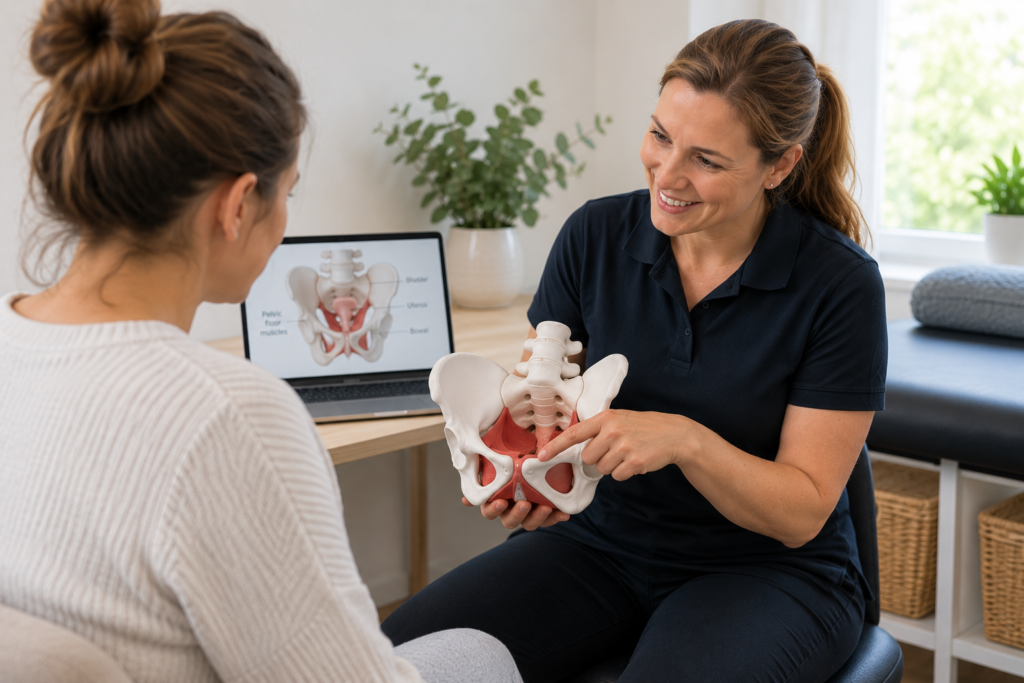
Why It Can Happen in the Early Postnatal Period

During pregnancy, the pelvic floor supports increasing weight and adapts to changes in pressure through the abdomen and pelvis.

Following birth, the body does not immediately return to its pre-pregnancy state.

The pelvic floor may need time to recover strength, coordination and endurance.

There may also be swelling or tenderness in the early stages, particularly following a vaginal birth.

At the same time, caring for a newborn introduces repeated lifting, carrying and standing.

That combination can make pelvic heaviness more noticeable even while normal postnatal recovery is taking place.

When Persistent Heaviness Should Be Assessed

Pelvic heaviness is worth discussing with an appropriate professional if it:

  • Continues beyond the early recovery period
  • Becomes more noticeable rather than improving
  • Appears every time you exercise
  • Limits how long you can walk or stand
  • Is associated with vaginal bulging
  • Occurs with problems emptying your bladder or bowel
  • Is accompanied by significant pelvic pain
  • Is making you avoid normal activity
  • Is affecting your confidence

Persistent symptoms do not automatically mean something serious is wrong.

They do mean it is reasonable to understand why they are continuing.

Feeling pressure, dragging or fullness in your pelvis after childbirth? Get personalised support to understand what may be contributing to your symptoms and how to move forward.

Been seeing Paul for a couple of months now for my neck pain, had been using another fairly local osteopaths before and didn’t really seem to be making any progress, but since finding here it’s been much better. I suffer really badly with tension in my neck which leads to real bad headaches, and can highly recommend this place for anyone who suffers the same issue as Paul has helped me massively.

Dan Avatar Dan
November 28, 2023

What Can Cause Pelvic Heaviness After Birth?

There is not one single cause of pelvic heaviness after childbirth.

The symptom may reflect how several parts of the postnatal system are coping with load.

This is why assessment should focus on more than one muscle.

Pelvic Floor Recovery and Reduced Support

The pelvic floor helps support the pelvic organs and contributes to bladder and bowel control.

During pregnancy it works under increased demand for many months.

Following childbirth, pelvic floor muscles may feel weaker, slower to respond or less able to sustain prolonged activity.

For some women, this may contribute to a heavy or tired sensation through the pelvis.

Muscle strength is only one part of pelvic floor function, though.

Endurance, coordination and the ability to respond to changing pressure also matter.

This is why repeatedly performing pelvic floor contractions may not always resolve every symptom.

Our article on pelvic floor exercises not working after birth explains why strength alone may not be enough when symptoms continue.

Pressure, Core Control and Returning to Activity

The pelvic floor works alongside the abdominal wall and diaphragm to manage pressure through the trunk.

Activities such as lifting, coughing, running and jumping increase that pressure.

If your body is not yet coordinating these demands efficiently, you may notice symptoms through the pelvis.

This can be particularly relevant when returning to exercise.

You may feel relatively comfortable during normal daily activity but become aware of heaviness when:

  • Running
  • Jumping
  • Lifting weights
  • Performing repeated squats
  • Increasing walking distance
  • Returning to higher-intensity classes

That does not necessarily mean exercise is harmful.

It may simply mean the current level of demand is greater than your body is ready to manage comfortably.

Pelvic heaviness shouldn’t be something you feel you have to ignore. Our team can help you explore your symptoms and guide you towards appropriate postnatal care.

I have suffered with various back problems, especially lower back and shoulder tension. David has helped with my symptoms quickly and effectively. He is extremely professional and knowledgeable. I can highly recommend this practice and I will continue to use them in the future.

Kim Fyfe Avatar Kim Fyfe
August 28, 2023

Why Walking, Standing and Exercise Can Make Pelvic Heaviness Worse

Pelvic floor symptoms often become more obvious when the body has to manage prolonged or repeated load.

That is why some women notice very little while sitting or lying down but become symptomatic during walking or exercise.

How Time on Your Feet Increases Demand

Standing and walking require the body to continually control load.

A short walk may cause no symptoms.

A longer walk may be enough for pelvic heaviness to appear.

You may also notice the difference between:

  • Walking slowly and walking quickly
  • Walking on flat ground and hills
  • Walking alone and pushing a buggy
  • Standing briefly and standing for several hours
  • Carrying your baby and walking without additional load

These differences can help show how much demand your pelvic floor is currently tolerating.

If symptoms consistently appear after a particular amount of activity, that may provide a useful starting point for rehabilitation.

Why Running and Impact Exercise Can Expose Symptoms

Running and jumping place different demands on the pelvic floor from walking.

The body has to respond quickly to repeated impact.

If pelvic floor endurance or coordination has not recovered sufficiently, heaviness or leakage may appear even if you feel comfortable during lower-level exercise.

This does not automatically mean you need to stop exercising completely.

The activity may need to be modified temporarily while you build the strength, control and load tolerance required for progression.

Our guide to returning to exercise after birth when your core still feels weak explains how postnatal exercise can be progressed according to function rather than simply how many weeks have passed since birth.

Pelvic Heaviness, Leaking and Other Pelvic Floor Symptoms

Pelvic heaviness does not always occur in isolation.

Some women also experience urinary leakage, urgency, pelvic discomfort or difficulty during exercise.

When several symptoms occur together, it may suggest that the wider pelvic floor system is struggling with certain demands.
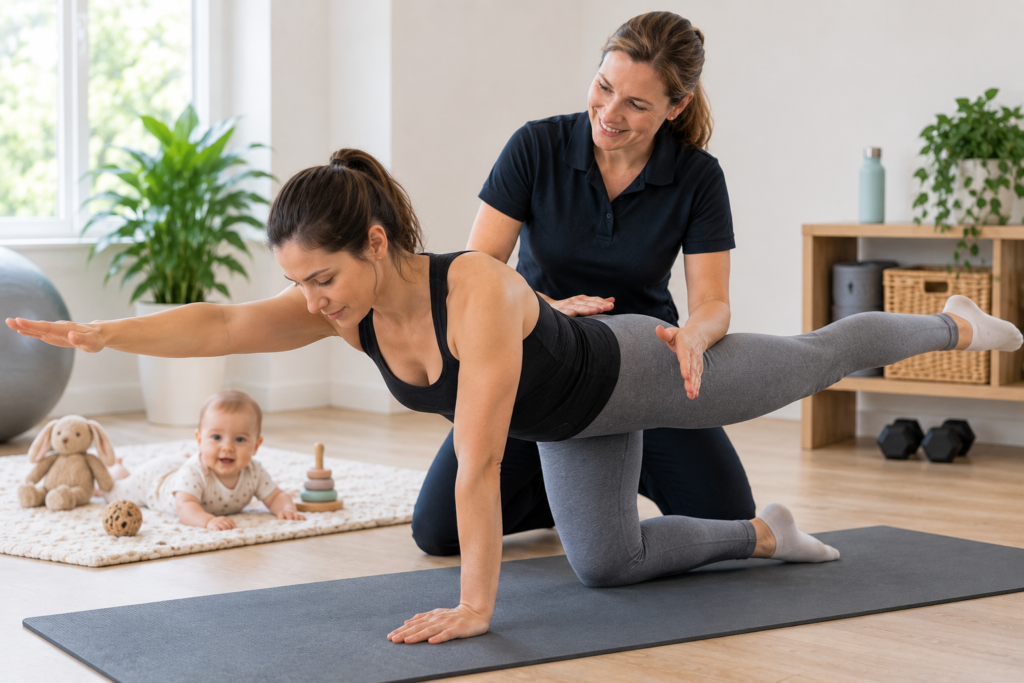
Why Symptoms Can Occur Together

Both leaking and heaviness can become more noticeable when pressure increases through the abdomen and pelvis.

This may happen when you:

  • Cough
  • Sneeze
  • Lift
  • Run
  • Jump
  • Carry something heavy
  • Stand for long periods

The symptoms are different, but they may share contributing factors such as reduced endurance, poor timing or difficulty managing pressure.

If urinary leakage is your main concern, our guide to leaking after birth and pelvic floor support looks more closely at why leakage can continue after pregnancy.

Why Pelvic Floor Weakness Is Not Always the Whole Explanation

It is tempting to assume that every pelvic floor symptom means weakness.

That is not always the case.

Symptoms can also be influenced by:

  • Timing
  • Coordination
  • Endurance
  • Breathing
  • Abdominal control
  • Pressure management
  • Activity level
  • Pelvic floor overactivity

This matters because the treatment approach depends on what is actually happening.

Someone who needs better endurance may require a different approach from someone whose pelvic floor is already excessively tense.

Assessment helps avoid treating every symptom with the same generic programme.

If pelvic heaviness is affecting your walking, standing or everyday activities, a postnatal assessment can help you understand how your body is managing movement and load.

Great experience with Sanderstead Osteopaths. I began treatment due to a sports injury in my leg which greatly reduced my mobility. In all honesty, I just looked up osteopaths near me and these lads came up. Couldn’t be more happy with their work. My progress to recovery has taken time and obviously money to get to where I am now (back to 95%) but I couldn’t be more pleased. All of my treatment was by Paul Harmes. If you need something to be looked at, consider these guys. C

Charles Thakker Avatar Charles Thakker
December 28, 2023

Does Pelvic Heaviness Mean You Have a Prolapse?

Not necessarily.

Pelvic heaviness can occur for different reasons, and feeling pressure or dragging does not by itself diagnose pelvic organ prolapse.

However, prolapse is one possible cause of pelvic heaviness, so symptoms should not simply be ignored.

Why Heaviness Does Not Automatically Mean Prolapse

Pelvic organ prolapse occurs when one or more pelvic organs descend from their usual position and create increased pressure towards the vagina.

Symptoms may include:

  • Vaginal heaviness
  • Dragging
  • A feeling of pressure
  • A vaginal bulge
  • A sensation that something is coming down
  • Bladder or bowel symptoms

But pelvic heaviness can also occur without prolapse.

For example, a pelvic floor that becomes fatigued during prolonged activity may create a heavy sensation without a structural prolapse being present.

This is why symptoms alone cannot confirm the diagnosis.

When Medical or Specialist Pelvic Health Assessment Is Appropriate

You should speak to your GP or an appropriate pelvic health professional if you notice:

  • A visible or palpable vaginal bulge
  • A sensation of something coming down
  • Difficulty emptying your bladder
  • Difficulty emptying your bowel
  • Significant pelvic pain
  • New changes in bladder or bowel control
  • Symptoms that are rapidly worsening
  • Bleeding or unusual discharge
  • Fever or symptoms of infection
  • New numbness or weakness
  • Symptoms that feel severe or concerning

An internal pelvic floor assessment may sometimes be required to properly investigate prolapse or other pelvic health conditions.

Sanderstead Osteopaths provides external pelvic floor assessment as part of postnatal care.

We do not perform internal pelvic floor examinations.

Where an internal examination or specialist pelvic health assessment is appropriate, we would recommend that you see the relevant pelvic health professional or medical service.

Ready to feel more confident in your postnatal recovery? Get professional guidance to help you understand your pelvic floor function and find the right approach for your individual needs.

Very professional and friendly service from Paul.

Julia Callan Avatar Julia Callan
October 28, 2023

When Should Pelvic Heaviness After Birth Be Checked?

There is no need to panic because you have experienced pelvic heaviness once.

The pattern matters.

Symptoms that are repeatedly triggered by normal activity, are worsening or are limiting what you feel able to do deserve more attention.
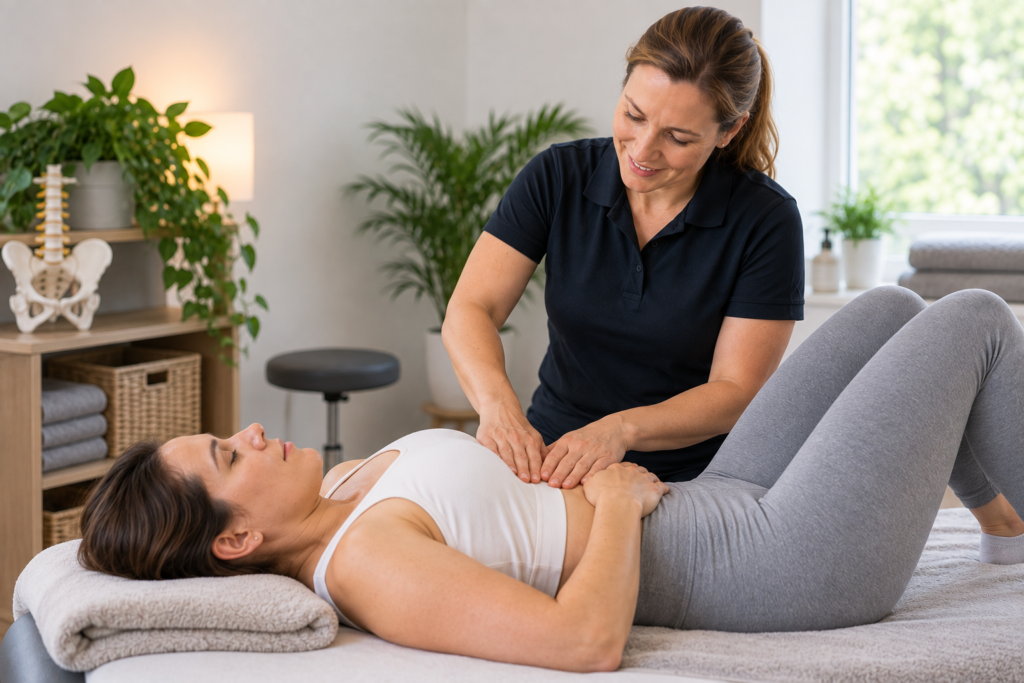
If Symptoms Persist or Become More Noticeable

Consider getting assessed if pelvic heaviness:

  • Continues for several weeks
  • Is not gradually improving
  • Becomes worse as activity increases
  • Appears every time you exercise
  • Limits your walking
  • Stops you returning to normal activity
  • Is associated with leaking
  • Is affecting your confidence

The aim of assessment is not to search for problems unnecessarily.

It is to understand what your body is currently managing well and what may still need support.

If You Notice Bulging, Significant Pressure or Other Concerning Symptoms

A feeling of significant downward pressure, a vaginal bulge or difficulty with bladder or bowel function should be assessed appropriately.

Medical assessment should also come first if you experience symptoms that are sudden, severe or unusual.

A functional postnatal assessment can help with movement, pressure management and rehabilitation where appropriate, but it does not replace medical or specialist pelvic health care.

Experiencing pelvic pressure or heaviness when carrying your baby or returning to exercise? Our team can help you understand your symptoms and explore suitable support for your recovery.

I had treatments for backache and neck pain with both Tom and David, during pregnancy and after birth. I found the sessions really beneficial, they were gentle but straight to the point causing the pain. My mother sorted her backache in 4 treatments too. And I also got my newborn treated which helped her as she is much more relaxed now. I definitely recommend this clinic, osteopathy is good at any stage of life.

Laura Vettore Avatar Laura Vettore
August 28, 2023

How We Assess Postnatal Pelvic Floor Function

Pelvic floor symptoms do not exist separately from the rest of the body.

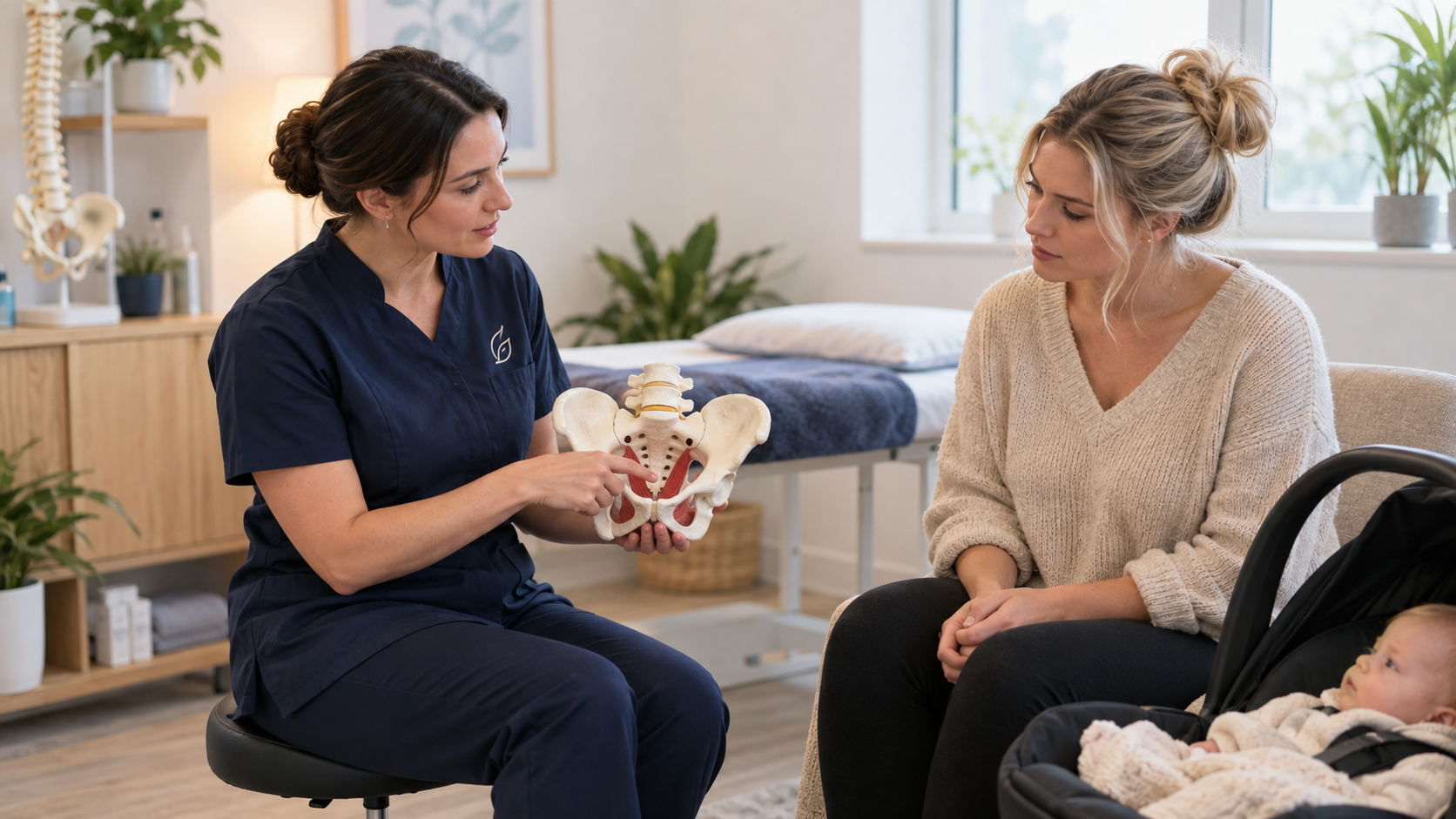
At Sanderstead Osteopaths, postnatal pelvic floor assessment is external and considers how symptoms relate to movement, breathing, abdominal control and load.

Our pelvic floor recovery service is designed for women experiencing symptoms such as leaking, heaviness, reduced control or uncertainty about pelvic floor recovery.

If your symptoms are part of a broader postnatal picture involving the abdomen, back, pelvis, C-section scar or return to exercise, a Mummy MOT may be more appropriate.
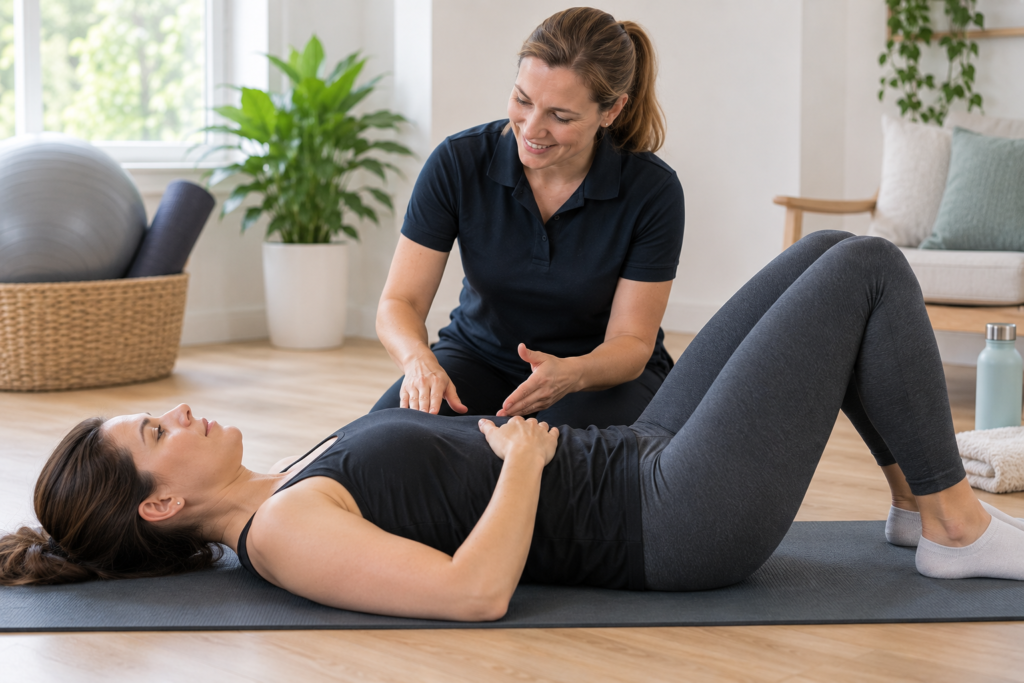
External Pelvic Floor Assessment

We may discuss:

  • Your pregnancy
  • Your birth
  • Your postnatal recovery
  • When the heaviness started
  • What makes it worse
  • Whether symptoms change through the day
  • Bladder symptoms
  • Bowel symptoms
  • Exercise
  • Lifting and carrying
  • Other postnatal concerns

Assessment may then consider how the pelvic floor appears to respond during breathing, abdominal engagement and functional movement.

We do not perform internal pelvic floor examinations.

If your symptoms indicate that internal assessment would be useful, we may recommend specialist pelvic health input.

Looking at Breathing, Core Control and Movement

We may also look at how your body manages activities that commonly expose pelvic floor symptoms.

These may include:

  • Standing
  • Walking
  • Squatting
  • Lifting
  • Single-leg movement
  • Changing position
  • Abdominal engagement
  • Breathing during effort

The purpose is not to find one perfect way of moving.

It is to identify whether certain movement or pressure patterns repeatedly coincide with your symptoms.

Where appropriate, rehabilitation may include pelvic floor guidance, breathing strategies, abdominal rehabilitation, movement progression and osteopathic treatment for relevant musculoskeletal problems.

Looking for pelvic floor support in Sanderstead, Croydon or the surrounding areas? Get personalised postnatal guidance to help you understand your symptoms and take the next step towards recovery.

David has been treating my lower back pain. He provides a very professional service, and has a wealth of knowledge. Sanderstead Osteopath is a welcoming, cosy and clean clinic. On bad days when I have hardly been able to walk due to the pain, after David's treatment I feel I can do star jumps! The instant relief is noticeable. Parking is nearby which is very convenient. I highly recommend anyone to come here, you won't be disappointed.

Tania Sang Avatar Tania Sang
August 28, 2023

Pelvic Floor Support in Croydon and Sanderstead

Sanderstead Osteopaths provides postnatal pelvic floor support for women across Croydon and the surrounding areas.

Patients visit us from Sanderstead, South Croydon, Purley, Selsdon, Warlingham, Kenley, Coulsdon and elsewhere across Croydon.

Pelvic heaviness is one of several symptoms that may indicate your postnatal recovery would benefit from further assessment.
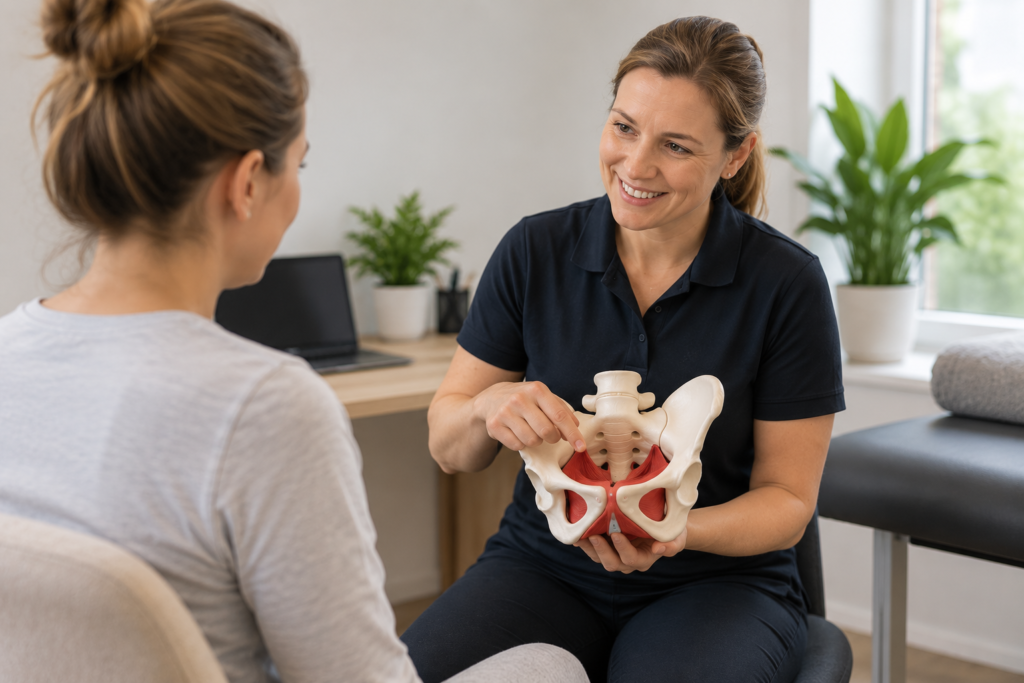
We may also see women experiencing:

  • Urinary leakage
  • Abdominal doming
  • Diastasis recti concerns
  • Lower back discomfort
  • Pelvic pain
  • Weak core control
  • Difficulty returning to exercise
  • Symptoms after a C-section

The most appropriate form of support depends on your individual symptoms.

Some women may benefit from external pelvic floor assessment and rehabilitation.

Others may need specialist pelvic health physiotherapy or medical assessment.

The purpose of your appointment is to help identify which route is appropriate rather than assuming every case of pelvic heaviness has the same cause.

You don’t have to navigate pelvic heaviness after birth alone. If your symptoms are persistent, worsening or affecting your daily life, our team can help you understand your options and find the appropriate care.

Very professional and friendly service from Paul.

Julia Callan Avatar Julia Callan
October 28, 2023

Frequently Asked Questions About Pelvic Heaviness After Birth

Is Pelvic Heaviness Normal After Childbirth?

Pelvic heaviness can occur during postnatal recovery, especially in the early stages after birth when the pelvic floor and surrounding tissues are still recovering.

However, persistent or worsening heaviness should not automatically be dismissed as normal.

If symptoms continue, affect everyday activities or are associated with bulging, bladder or bowel changes, pain or other concerns, appropriate assessment is recommended.

Walking increases the amount of time the pelvic floor has to manage load.

If pelvic floor strength, endurance or coordination has not fully recovered, a longer walk may expose symptoms that are not noticeable at rest.

The demands may increase further if you are pushing a buggy, carrying your baby or walking uphill.

If the same pattern repeatedly occurs, assessment may help identify what is limiting your current activity tolerance.

Pelvic heaviness may become more noticeable later in the day because the pelvic floor has been managing repeated activity for several hours.

Standing, walking, lifting, carrying and childcare all contribute to physical demand.

If symptoms gradually build as the day progresses, pelvic floor endurance and overall load may be relevant factors.

No. Pelvic heaviness does not automatically mean you have pelvic organ prolapse.

However, prolapse can cause sensations such as vaginal heaviness, dragging, pressure or bulging.

If you notice a vaginal bulge, difficulty emptying your bladder or bowel, significant pressure or symptoms that persist or worsen, you should seek appropriate medical or specialist pelvic health assessment.

If your symptoms appear to relate more broadly to postnatal movement and pelvic floor recovery, you can contact Sanderstead Osteopaths for guidance on the most appropriate appointment.

Latest Posts

Pelvic Floor Exercises Not Working After Birth? Why Strength Alone May Not Be Enough

Pelvic Girdle Pain After Birth: Why Pelvic Pain Can Continue After Childbirth

How to Check for Diastasis Recti After Pregnancy and What to Do Next

Our Services

Sports Injury Treatment Clinic

Sports Injury

The use of sport’s osteopathy is an effective treatment that assists in detecting, treating and preventing a number of health problems. Our treatments include the moving, stretching and massaging of muscles and joints within the body.
Neck, Back & Shoulder Treatment Clinic

Neck Pain

Our osteopathic treatments will reduce your shoulder pain, improve your flexibility and insure a speedy recovery. Our osteopathic treatments may include soft tissue massage, mobilisation and strengthening work to your effected area be that the shoulder, neck or back.
Headaches & Migraines Treatment Clinic

Headaches & Migraines

The majority of headaches are found to be caused by musculoskeletal tension and/or postural issues and can be successfully treated by our osteopath practitioners at our Sanderstead based osteopathy clinic.
Pregnancy & Post Natal Treatment Clinic

Pregnancy & Post Natal

Postpartum osteopathy is osteopathic treatment that focuses on treatments effective the birth of a child. Postpartum osteopathy is an alternative treatment whereby our osteopath practitioners detect, treat and prevents future health issues by means of stretching and massaging the muscles, joints and connective tissues.
Children & Baby Treatment Clinic

Children & Teenager Treatment

Our osteopaths practitioners are highly qualified & experienced when treating children & babies. We utilise a range of techniques that includes physical manipulation, stretching and massage. We also offer more gentle techniques such as cranial osteopathy renowned for being safe safe and non-manipulative.
Chronic Pain Treatment Clinic

Chronic Pain Treatment

Our osteopathy team utilise manipulative treatment in order to alleviate somatic dysfunction. Our treatments apply manually guided forces to improve overall physiologic function and support homeostasis.

Our Services

Sanderstead Osteopaths Clinic

Sports Injury

The use of sport’s osteopathy is an effective treatment that assists in detecting, treating and preventing a number of health problems. Our treatments include the moving, stretching and massaging of muscles and joints within the body.
Neck, Back & Shoulder Treatment Clinic

Neck Pain

Our osteopathic treatments will reduce your shoulder pain, improve your flexibility and insure a speedy recovery. Our osteopathic treatments may include soft tissue massage, mobilisation and strengthening work to your effected area be that the shoulder, neck or back.
Headaches & Migraines Treatment Clinic

Headaches & Migraines

The majority of headaches are found to be caused by musculoskeletal tension and/or postural issues and can be successfully treated by our osteopath practitioners at our Sanderstead based osteopathy clinic.
Pregnancy & Post Natal Treatment Clinic

Pregnancy & Post Natal

Postpartum osteopathy is osteopathic treatment that focuses on treatments effective the birth of a child. Postpartum osteopathy is an alternative treatment whereby our osteopath practitioners detect, treat and prevents future health issues by means of stretching and massaging the muscles, joints and connective tissues.
Children & Baby Treatment Clinic

Children & Teenager Treatment

Our osteopaths practitioners are highly qualified & experienced when treating children & babies. We utilise a range of techniques that includes physical manipulation, stretching and massage. We also offer more gentle techniques such as cranial osteopathy renowned for being safe safe and non-manipulative.
Chronic Pain Treatment Clinic

Chronic Pain Treatment

Our osteopathy team utilise manipulative treatment in order to alleviate somatic dysfunction. Our treatments apply manually guided forces to improve overall physiologic function and support homeostasis.

Areas our Osteopathy Treatment Covers

Sanderstead, CR2

Purley, CR8

Kenley, CR8

Selsdon, CR2

New Addington, CR0

South Croydon, CR2

Hamsey Green, CR6

Croydon, CR0

Coulsdon, CR5

Caterham, CR3

Warlingham, CR6

Osteopathy Coverage

David Ayres Osteopath

About the Clinical Director

David Ayres is the Founder and Clinical Director of Sanderstead Osteopaths, providing clinical guidance and oversight across all treatment and content.

David Ayres

Clinical Director & Founder, Sanderstead Osteopaths

David Ayres is the founder and Clinical Director of Sanderstead Osteopaths, with over 25 years of experience in osteopathic care, clinical education, and practitioner development.

He qualified from the British School of Osteopathy in 2000 and went on to spend a decade lecturing at the institution between 2002 and 2012. During this time, he taught final-year students advanced osteopathic techniques and manipulation, while also working as a clinical tutor overseeing and mentoring students in the treatment of their own patients.

Throughout his clinical career, David developed particular expertise in the treatment of neck injuries, spinal conditions, and joint-related issues affecting the shoulders and knees. He also worked with newborn babies using cranial osteopathic approaches, supporting early-stage musculoskeletal development.

David’s role within Sanderstead Osteopaths is focused on clinical leadership, mentoring, and maintaining high standards of care across the team.

He works closely with practitioners within the clinic to guide treatment approaches, support clinical decision-making, and ensure patients receive structured, evidence-informed care tailored to their individual needs.

Under his direction, Sanderstead Osteopaths has built a strong reputation across Sanderstead, Croydon and the surrounding areas for delivering professional, patient-focused treatment for a wide range of musculoskeletal conditions.

Scroll to Top