
Pelvic Floor Exercises Not Working After Birth? Why Strength Alone May Not Be Enough

Written by Sanderstead Osteopaths. Clinically reviewed by Judith Tardif, Registered Osteopath.

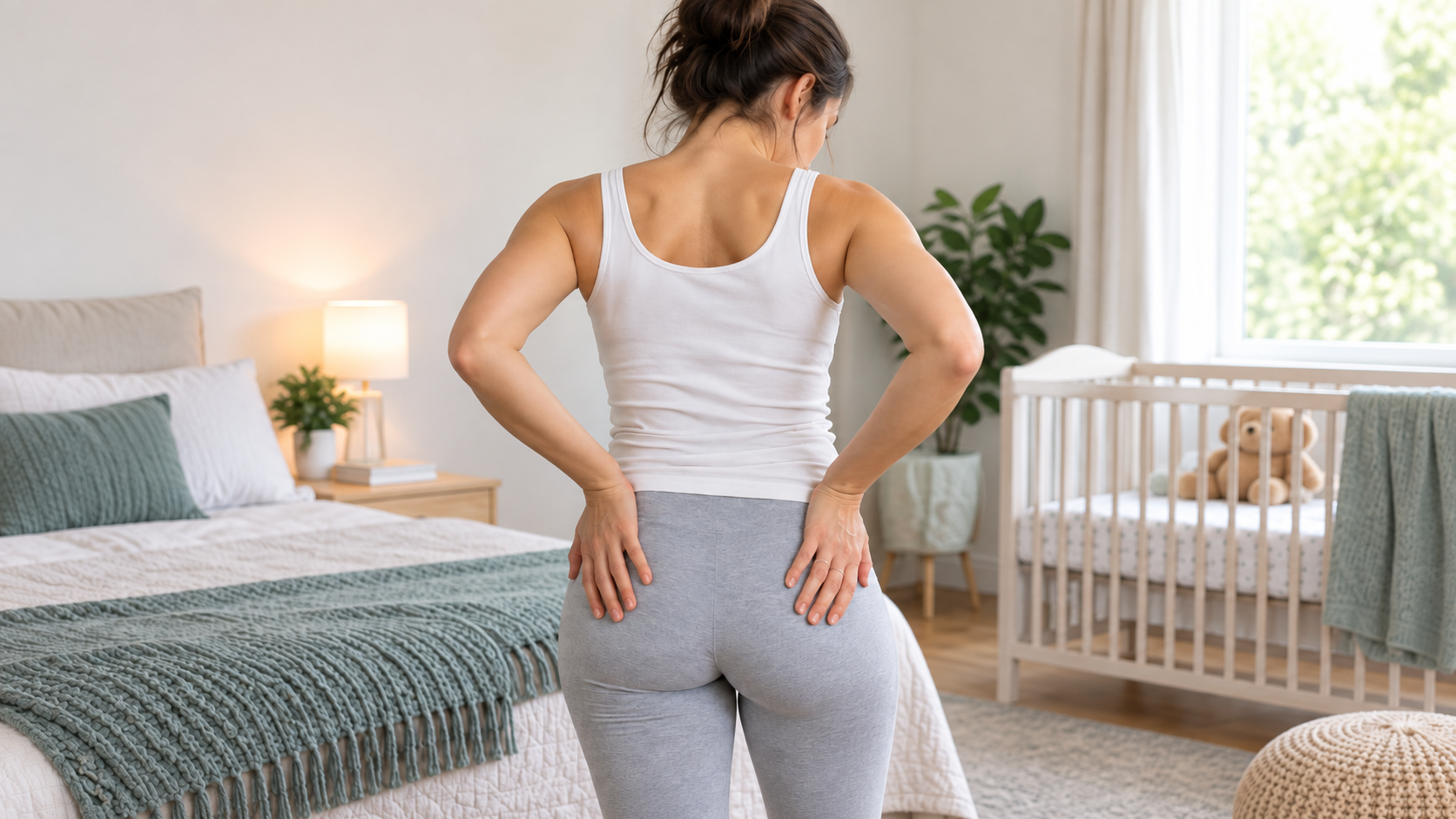
If you have been doing pelvic floor exercises after giving birth but are still leaking, feeling pelvic heaviness or struggling to return to exercise, it is understandable to wonder why they are not working.

The answer is not always that your pelvic floor simply needs to become stronger.

Strength matters, but pelvic floor function also depends on timing, coordination, relaxation, breathing, abdominal control and the way your body manages pressure during everyday movement.

You may be able to perform a pelvic floor contraction while sitting quietly yet still have symptoms when you cough, lift your baby, run, jump or spend a long time on your feet.

Some people may also have a pelvic floor that is overactive or has difficulty relaxing fully. In that situation, repeatedly squeezing harder may not address the actual problem.

This article explains why pelvic floor exercises do not always resolve postnatal symptoms, how to recognise signs of progress and when a more individual assessment may be useful.

Pelvic floor symptoms should not automatically be self-treated indefinitely. Persistent pain, significant pressure or bulging, changes in bladder or bowel control, difficulty emptying the bladder or bowel, or other concerning symptoms should be discussed with an appropriate medical or pelvic health professional.

Why Pelvic Floor Exercises Do Not Always Fix Postnatal Symptoms

Pelvic floor exercises are widely recommended after pregnancy and childbirth, and for many women they can form an important part of recovery.

The difficulty comes when every pelvic floor problem is treated as if it were simply a weak muscle that needs more repetitions.

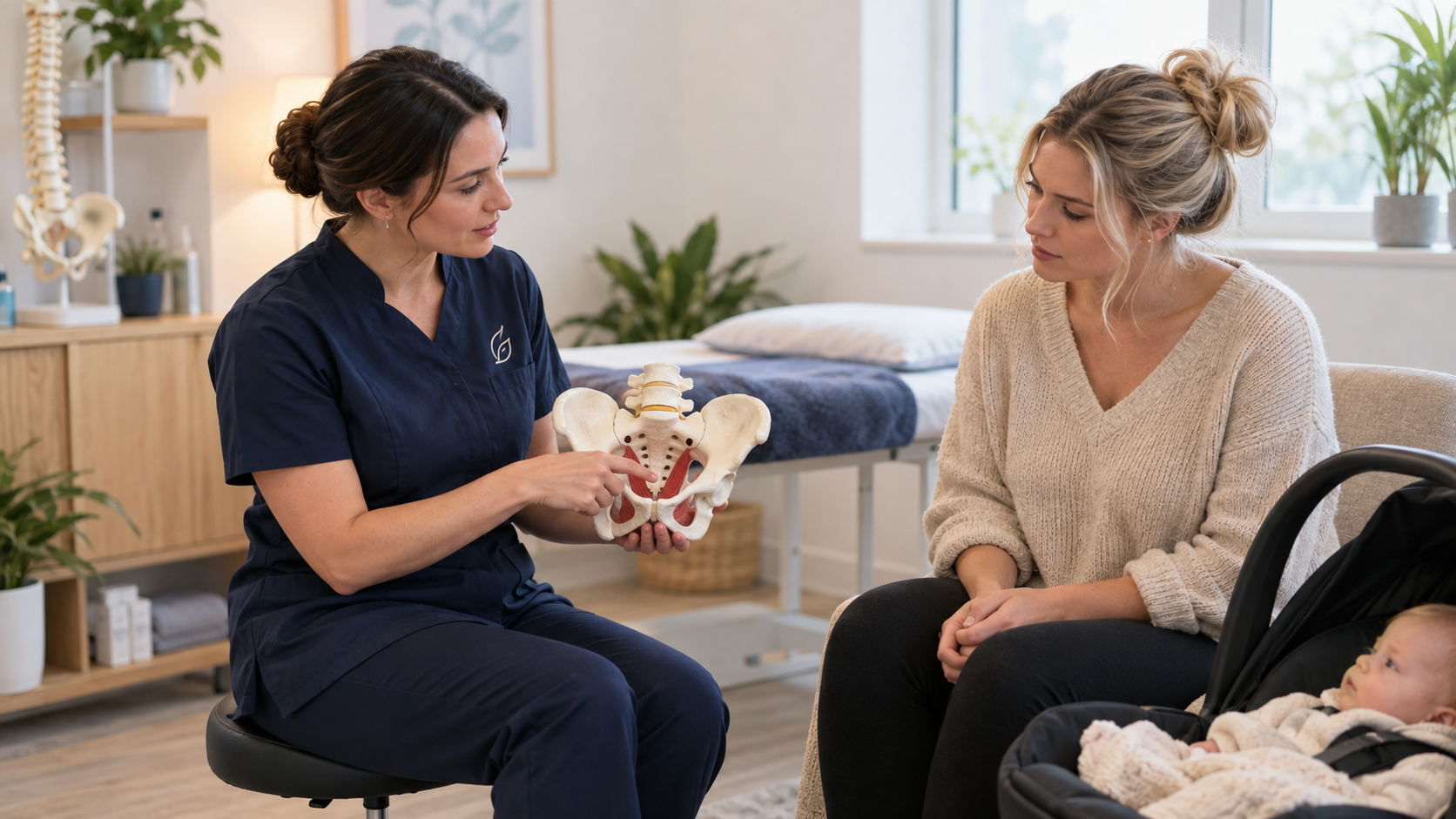
The pelvic floor is a group of muscles and connective tissues forming part of the support system at the base of the pelvis.

These muscles contribute to bladder and bowel control, pelvic support, sexual function and the management of pressure through the abdomen and pelvis.

They also work alongside the diaphragm, abdominal wall and other muscles around the trunk and pelvis.

That means pelvic floor recovery is not always as simple as squeeze, hold and repeat.

Pelvic Floor Strength Is Only Part of the Picture

A muscle needs strength, but it also needs to know when to work, how much force to produce and when to relax.

Imagine being able to perform a strong pelvic floor contraction for several seconds while lying down.

That may demonstrate some strength.

But everyday life demands much more.

Your pelvic floor may need to respond rapidly when you:

  • Cough
  • Sneeze
  • Laugh
  • Lift your baby
  • Pick up a car seat
  • Stand from a chair
  • Run
  • Jump
  • Exercise
  • Carry shopping
  • Push or pull something heavy

These activities create different amounts and speeds of pressure through the body.

A pelvic floor that can contract strongly in isolation may still struggle to respond effectively during those tasks.

Why Timing and Coordination Matter Too

Timing describes whether the pelvic floor responds at the appropriate moment.

Coordination describes how effectively it works with the rest of the body.

When you cough, for example, pressure through the abdomen rises very quickly.

Your pelvic floor needs to respond to that change in pressure.

If the contraction happens too late, urinary leakage may still occur even if the muscles are capable of producing reasonable force.

The same principle applies when lifting or exercising.

If the pelvic floor, abdominal wall and breathing pattern are not coordinating effectively, simply increasing pelvic floor strength may not completely resolve your symptoms.

This is one reason a personalised assessment can be more useful than endlessly increasing the number of exercises you perform.

If your pelvic floor exercises don’t seem to be helping after birth, a professional assessment can help you understand what’s happening and identify the right next steps for your recovery.

Have seen both David and Clare on and off over the last 4 years with lower back pain/stiffness. They really know their stuff and have always provided me with solutions to my lower back. My job is quite demanding and doesn't help the pain (lots of driving and lifting) but knowing David and Clare will always be there to help at Sanderstead Osteopaths it puts my mind at rest. I started going weekly and with the regular treatments it's eased the pain so now I am going every 2-4 weeks. I would highly recommend either of these guys!

James McClelland Avatar James McClelland
August 28, 2023

How Do You Know If Your Pelvic Floor Exercises Are Working?

Pelvic floor recovery is not always something you can judge by how hard you can squeeze.

The most meaningful changes often appear in everyday life.

You may notice that activities that previously triggered symptoms become easier or more comfortable.

Progress can also happen gradually rather than all at once.
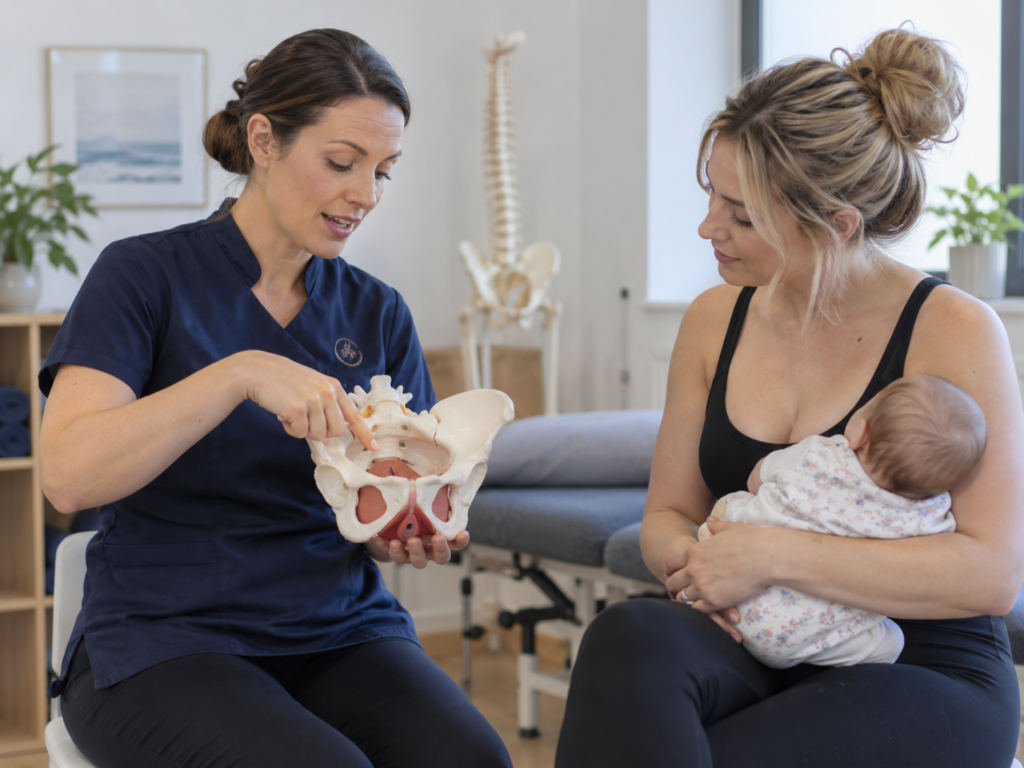
Signs Your Pelvic Floor Control May Be Improving

Depending on your original symptoms, signs of improvement may include:

  • Less leakage when coughing or sneezing
  • Fewer symptoms when lifting
  • Reduced pelvic heaviness
  • Better control during walking or exercise
  • Greater confidence returning to physical activity
  • Feeling more able to contract and relax the pelvic floor deliberately
  • Improved endurance during pelvic floor exercises
  • Fewer symptoms later in the day
  • Better control when moving from sitting to standing

The goal is not necessarily to produce the strongest possible squeeze.

The more useful question is whether your pelvic floor is becoming better able to cope with the demands you place on it.

Why More Repetitions Are Not Always the Answer

If symptoms continue, the natural response is often to do more.

More repetitions.

Longer holds.

Harder contractions.

But if the issue is poor timing, excessive tension, breath-holding or pressure management, increasing the number of contractions may not solve it.

Technique can also deteriorate when muscles become fatigued.

You may start gripping your buttocks, inner thighs or abdomen instead of isolating the movement you intended.

Quality usually matters more than simply accumulating repetitions.

If you have been performing pelvic floor exercises regularly without meaningful improvement, it may be time to assess why rather than automatically doing more.

Doing your pelvic floor exercises regularly but still experiencing symptoms? Get personalised guidance to help you understand your pelvic floor function and work towards better support after pregnancy.

Iv used David for 12 years now. Always reliable and available when needed for emergency appointments. I am now taking my children here when needed.

George Laura Avatar George Laura
August 28, 2023

Are You Contracting Your Pelvic Floor Correctly?

It can be surprisingly difficult to know whether you are performing a pelvic floor contraction correctly.

The movement is internal and cannot usually be observed in the same way as bending an elbow or lifting a leg.

People therefore often develop their own interpretation of what “squeeze and lift” means.

Sometimes that interpretation is effective.

Sometimes other muscles begin doing much of the work.

Common Mistakes During Pelvic Floor Exercises

Common patterns may include:

  • Holding your breath
  • Pulling the stomach in very hard
  • Clenching the buttocks
  • Squeezing the thighs together
  • Bearing down rather than lifting
  • Performing every contraction at maximum effort
  • Failing to relax fully between repetitions
  • Rushing the contractions
  • Continuing after technique deteriorates through fatigue

These patterns do not mean you have done anything wrong deliberately.

The pelvic floor is simply difficult to self-assess.

If you cannot clearly feel a contraction and release, professional guidance may help you understand what you are actually doing.

Why Squeezing Harder Is Not Always Better

Muscles need to produce different levels of force for different tasks.

You do not grip every object in your hand as tightly as possible.

The pelvic floor is similar.

A maximal contraction may be useful in some circumstances, but constantly gripping at maximum effort is not how the pelvic floor functions naturally throughout the day.

It also needs to lengthen and relax.

The aim is control rather than permanent tension.

Being able to contract gently, strongly, quickly, repeatedly and then fully relax may be more useful than simply being able to squeeze very hard.

Every postnatal recovery is different. If you’re struggling with pelvic floor weakness, discomfort or ongoing symptoms, our team can help you explore what may be contributing to your concerns.

Have seen both David and Clare on and off over the last 4 years with lower back pain/stiffness. They really know their stuff and have always provided me with solutions to my lower back. My job is quite demanding and doesn't help the pain (lots of driving and lifting) but knowing David and Clare will always be there to help at Sanderstead Osteopaths it puts my mind at rest. I started going weekly and with the regular treatments it's eased the pain so now I am going every 2-4 weeks. I would highly recommend either of these guys!

James McClelland Avatar James McClelland
August 28, 2023

Can a Pelvic Floor Be Too Tight as Well as Weak?

Yes.

Pelvic floor symptoms are not always caused by weakness alone.

Some people have pelvic floor muscles that remain excessively active or do not relax effectively.

This is sometimes referred to as an overactive or high-tone pelvic floor.

A muscle that is constantly working is not necessarily a strong or efficient muscle.

It may actually struggle to generate additional force when required because it is already holding tension.

Why an Overactive Pelvic Floor Can Still Cause Symptoms

An overactive pelvic floor may be associated with symptoms such as:

  • Pelvic discomfort
  • Pain during intercourse
  • Difficulty relaxing the pelvic floor
  • Difficulty emptying the bladder or bowel
  • A feeling of tension through the pelvis
  • Urinary urgency
  • Symptoms that worsen when repeatedly strengthening

These symptoms can have multiple causes, so they should not be self-diagnosed as an overactive pelvic floor.

The important point is that not every postnatal pelvic floor problem should automatically be treated with more strengthening.

When More Strengthening May Not Be Appropriate

If contracting the pelvic floor causes pain, increases pelvic tension or makes other symptoms worse, continuing to increase the intensity may not be appropriate without assessment.

The first priority may instead be learning how to relax the pelvic floor, coordinate breathing or manage pressure differently.

Where symptoms suggest more complex pelvic floor dysfunction, referral to a specialist pelvic health physiotherapist or appropriate medical professional may also be recommended.

At Sanderstead Osteopaths, pelvic floor assessment as part of our postnatal care is external.

We do not perform an internal pelvic floor examination.

If an internal assessment or specialist pelvic health treatment is indicated, we can recommend that you seek the appropriate pelvic health service.

Not seeing the results you expected from pelvic floor exercises? A postnatal assessment can help identify areas that may benefit from personalised support and guidance.

I’ve visited Tom at Sanderstead Osteopaths since March for postnatal neck and back issues and then subsequent issues with my neck from looking after a baby (and now toddler) and he’s absolutely superb. I’d highly recommend him!

Louise May Avatar Louise May
August 28, 2021

Why Breathing, Core Control and Pressure Management Matter

The pelvic floor is one part of a larger pressure-management system.

The diaphragm sits above the abdominal cavity.

The abdominal wall surrounds it.

The pelvic floor forms part of the base.

When you breathe and move, pressure changes within that system.

The aim is not to eliminate pressure. Pressure is normal and necessary.

The goal is for your body to manage it effectively.
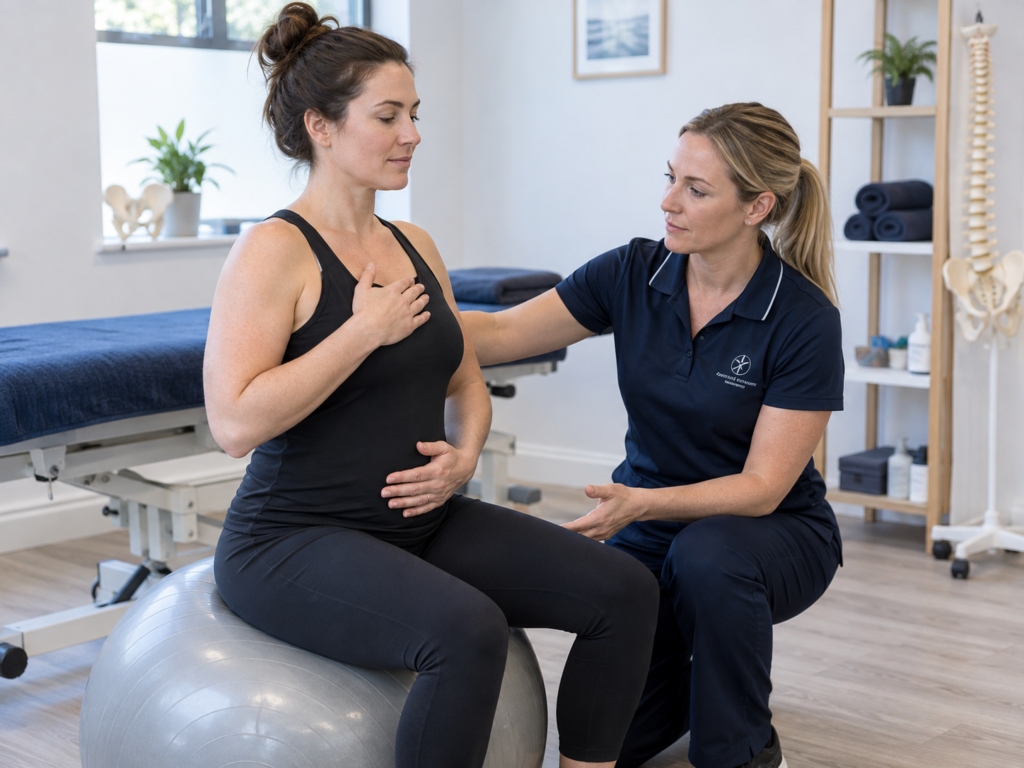
How Breath-Holding Can Increase Pressure

Many people instinctively hold their breath when something feels difficult.

You may do this when:

  • Lifting your baby
  • Moving a car seat
  • Getting up from the floor
  • Performing a squat
  • Lifting weights
  • Doing abdominal exercises
  • Running uphill

Holding your breath can increase pressure through the abdomen.

That does not automatically cause pelvic floor problems, but if you already have symptoms, it may make them more noticeable.

Learning to breathe appropriately during effort can sometimes reduce unnecessary strain and improve coordination between the pelvic floor and the rest of the trunk.

Why the Pelvic Floor Works With the Abdominal Wall

Your pelvic floor and abdominal wall do not function independently.

When the abdominal wall manages load, the pelvic floor also responds to changes in pressure.

If abdominal control is poor, if you brace excessively or if pressure repeatedly pushes downwards through the pelvis, pelvic floor symptoms may become more noticeable.

This is why postnatal pelvic floor rehabilitation may sometimes include abdominal and breathing work rather than only isolated pelvic floor contractions.

Our pelvic floor recovery service looks at pelvic floor function in the context of breathing, movement, core control and pressure management.

If abdominal separation is also a concern, our diastasis recti treatment in Sanderstead focuses more specifically on abdominal wall recovery.

If you’re finding it difficult to return to exercise or everyday activities after birth, understanding your pelvic floor function can help you take the next step towards recovery.

An excellent practice, with excellent therapists. I originally saw David with a bad lower back and got amazing results. Would recommend!

P H Avatar P H
August 28, 2023

Why Symptoms Can Continue During Exercise, Lifting or Coughing

You may feel that your pelvic floor exercises are going well when you perform them quietly at home.

Then you go for a run, cough unexpectedly or lift something heavy and symptoms return.

This does not necessarily mean your exercises have failed.

It may mean the demand of that particular activity exceeds what your pelvic floor can currently manage.

Why Everyday Load Tests Pelvic Floor Control

The body needs to react differently to different tasks.

A gentle pelvic floor contraction while lying down is relatively predictable.

Coughing is sudden.

Running involves repeated impact.

Lifting requires the whole trunk to manage load.

Carrying a baby can involve prolonged effort, often while standing asymmetrically.

The pelvic floor therefore needs endurance, timing and adaptability as well as strength.

Rehabilitation should eventually prepare your body for the activities you actually want to perform.

That may mean progressing beyond basic pelvic floor contractions once they have served their purpose.

What Leaking or Heaviness During Exercise May Tell You

Urinary leakage or pelvic heaviness during exercise may suggest that the pelvic floor and surrounding system are not yet managing that particular level of demand comfortably.

Symptoms may appear during:

  • Running
  • Jumping
  • Skipping
  • High-intensity exercise
  • Heavy lifting
  • Repeated squats
  • Longer walks
  • Activities performed when tired

If urinary leakage is your main concern, our article on leaking after birth and pelvic floor support explains why the issue may involve more than weakness alone.

If symptoms appear when you increase your activity levels, our guide to returning to exercise after birth when your core still feels weak looks more closely at rebuilding postnatal load tolerance.

The answer is not necessarily to avoid exercise indefinitely.

It may be to temporarily modify the activity while improving the specific strength, coordination and capacity required to tolerate it.

Your pelvic floor deserves more than guesswork. Get professional support to understand your symptoms and find an approach that works for your individual postnatal needs.

Sanderstead Osteopath provide quality treatment & professional service, I've been using David Ayers Osteopath services for over a decade with no complaints.

Mike McFarlane Avatar Mike McFarlane
August 28, 2023

When Should You Get Your Pelvic Floor Assessed?

Pelvic floor exercises can take time to produce changes.

However, continuing the same programme indefinitely despite persistent symptoms is unlikely to provide useful information about why those symptoms remain.

Assessment may help identify whether strength is genuinely the main problem or whether other factors need to be considered.
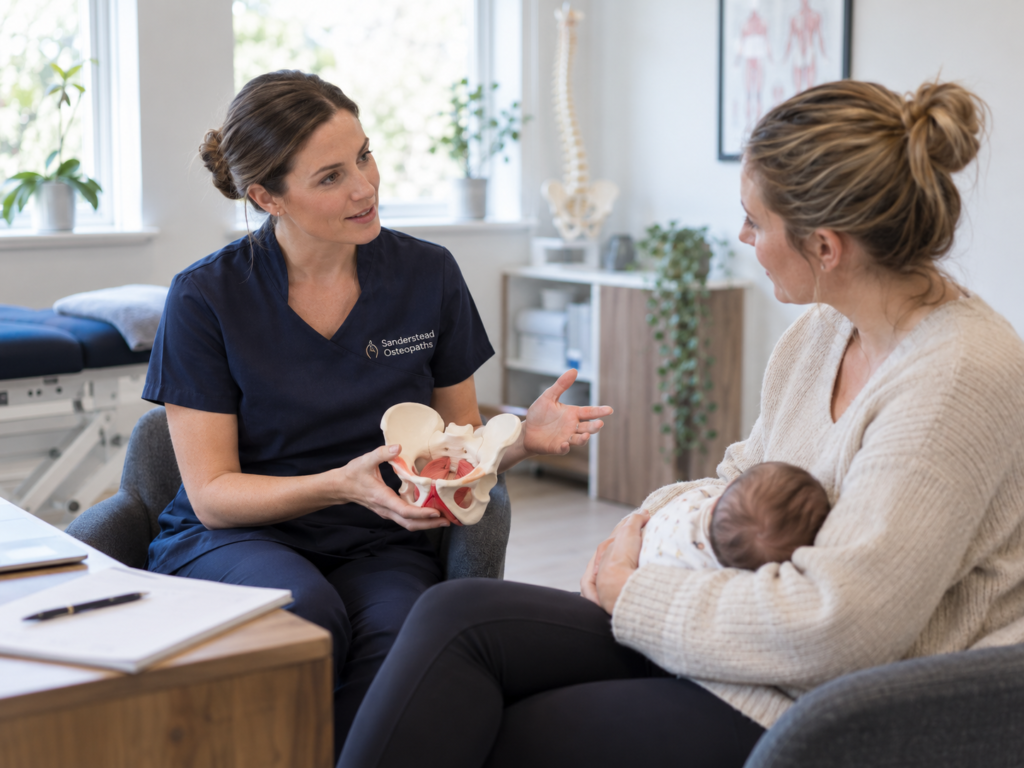
If Symptoms Continue Despite Regular Exercises

Consider seeking assessment if you have been doing pelvic floor exercises consistently but:

  • Leakage has not improved
  • Heaviness continues
  • You cannot feel whether you are contracting correctly
  • You cannot relax properly after a contraction
  • Symptoms return whenever you exercise
  • Lifting repeatedly triggers symptoms
  • You feel you are getting stronger but everyday control has not improved
  • Exercises themselves make symptoms uncomfortable

The goal is to understand what is limiting progress.

You may need a different exercise strategy rather than simply more of the same one.

If You Have Leaking, Heaviness, Pain or Reduced Confidence

Symptoms that interfere with normal life deserve attention.

You may start avoiding exercise, running, social activities or long walks because you are worried about leaking.

You may stop lifting normally because pelvic heaviness makes you anxious.

You may feel uncertain about returning to the gym because you do not trust your pelvic floor.

These effects on confidence and activity are relevant even if the physical symptoms seem relatively mild.

You should seek appropriate medical advice if you experience significant pelvic pain, vaginal bulging, difficulty emptying your bladder or bowel, blood in the urine, symptoms of infection, sudden changes in bladder or bowel control, new numbness or weakness, or other symptoms that are severe, unusual or concerning.

A postnatal functional assessment does not replace medical assessment where medical or specialist pelvic health care is required.

Looking for pelvic floor support in Sanderstead, Croydon or the surrounding areas? Our team can help you understand your postnatal concerns and guide you towards appropriate care.

Been seeing Paul for a couple of months now for my neck pain, had been using another fairly local osteopaths before and didn’t really seem to be making any progress, but since finding here it’s been much better. I suffer really badly with tension in my neck which leads to real bad headaches, and can highly recommend this place for anyone who suffers the same issue as Paul has helped me massively.

Dan Avatar Dan
November 28, 2023

Pelvic Floor Support in Croydon and Sanderstead
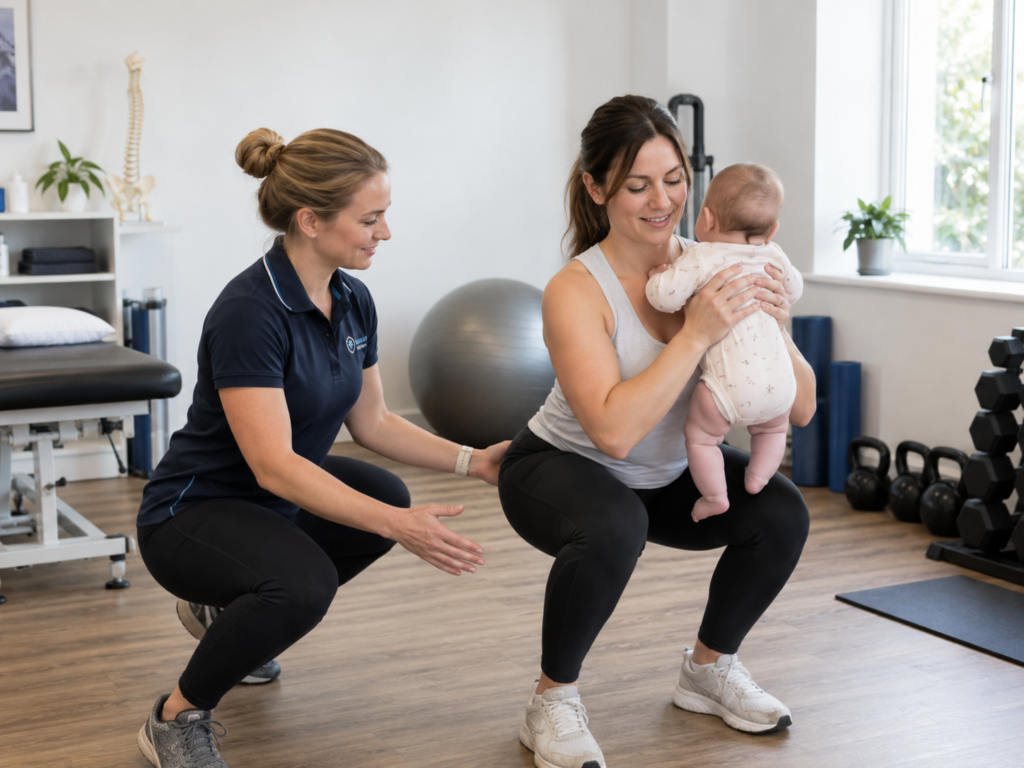
Sanderstead Osteopaths supports women with postnatal pelvic floor concerns from across Croydon and the surrounding areas.

Patients attend the clinic from Sanderstead, South Croydon, Purley, Selsdon, Warlingham, Kenley, Coulsdon and other parts of the Croydon area.

Our postnatal pelvic floor assessment is external.

Depending on your symptoms and recovery stage, we may consider:

  • Your pregnancy and birth history
  • Your current pelvic floor symptoms
  • Breathing patterns
  • Abdominal wall function
  • Core control
  • Pelvic movement
  • Pressure management
  • Functional movements
  • Lifting strategies
  • Exercise tolerance

We may also consider whether your symptoms appear alongside abdominal doming, diastasis recti, lower back pain or other postnatal concerns.

The aim is to understand whether pelvic floor strength, endurance, timing, relaxation, coordination or wider movement patterns may need support.

Where appropriate, your plan may include pelvic floor guidance, breathing strategies, core rehabilitation, exercise progression, movement advice or osteopathic treatment for relevant musculoskeletal issues.

If symptoms require specialist internal pelvic floor assessment or treatment, we may recommend that you see an appropriate pelvic health physiotherapist or medical professional.

If pelvic floor symptoms are part of a wider postnatal recovery picture, a Mummy MOT in Sanderstead may also be appropriate.

You don’t have to keep struggling with pelvic floor symptoms after birth. If your exercises aren’t working as expected, our team can help you understand your options and take the next step in your recovery.

I have been using Sanderstead Osteopaths for many years David has been treating my ongoing back and neck issues and wouldn’t go anywhere else. I would highly recommend.

Allison Stagg Avatar Allison Stagg
August 28, 2023

Frequently Asked Questions About Pelvic Floor Exercises After Birth

How Long Should Pelvic Floor Exercises Take to Work?

There is no single time frame that applies to everyone.

Pelvic floor muscles, like other muscles, need time and appropriate loading to adapt.

Some people notice changes within several weeks, while others may need a longer period of rehabilitation.

Your symptoms, starting strength, technique, pregnancy and birth history, activity level and whether other factors such as coordination or overactivity are involved can all influence progress.

If you have been exercising consistently without meaningful improvement, it may be more useful to assess why than to simply continue increasing repetitions.

Yes, it is possible to perform more pelvic floor exercise than is useful.

More is not automatically better.

The pelvic floor needs time to relax as well as contract, and excessively repetitive exercise may contribute to fatigue or encourage unnecessary gripping.

The correct amount varies between individuals.

Quality, appropriate progression and the ability to fully release between contractions are important.

If exercises cause pain, tension or worsening symptoms, seek appropriate assessment rather than continuing to increase them.

Leaking can continue even when you are performing pelvic floor exercises because bladder control involves more than maximum pelvic floor strength.

Timing, coordination, endurance, breathing, abdominal control and the amount of pressure generated during an activity may all matter.

You may also be performing the contraction differently from how you think you are.

If leakage mainly occurs during coughing, running, jumping or lifting, assessment can help identify why those particular tasks are exceeding your current control.

Our guide to leaking after birth explores this symptom in more detail.

A Mummy MOT may be appropriate if your pelvic floor symptoms occur alongside other postnatal concerns.

These might include:

  • Abdominal doming
  • Diastasis recti
  • Core weakness
  • Lower back pain
  • C-section scar tightness
  • Pelvic discomfort
  • Difficulty returning to exercise

A Mummy MOT looks at pelvic floor coordination as part of the wider postnatal system and uses external assessment.

If your symptoms appear to require specialist pelvic health investigation or an internal pelvic floor assessment, a pelvic health physiotherapist or appropriate medical professional may be the more suitable route.

If you are unsure which type of appointment would be most appropriate, you can contact Sanderstead Osteopaths for guidance.

Latest Posts

Pelvic Heaviness After Birth: Causes, Symptoms and When to Get Checked

Pelvic Girdle Pain After Birth: Why Pelvic Pain Can Continue After Childbirth

How to Check for Diastasis Recti After Pregnancy and What to Do Next

Our Services

Sports Injury Treatment Clinic

Sports Injury

The use of sport’s osteopathy is an effective treatment that assists in detecting, treating and preventing a number of health problems. Our treatments include the moving, stretching and massaging of muscles and joints within the body.
Neck, Back & Shoulder Treatment Clinic

Neck Pain

Our osteopathic treatments will reduce your shoulder pain, improve your flexibility and insure a speedy recovery. Our osteopathic treatments may include soft tissue massage, mobilisation and strengthening work to your effected area be that the shoulder, neck or back.
Headaches & Migraines Treatment Clinic

Headaches & Migraines

The majority of headaches are found to be caused by musculoskeletal tension and/or postural issues and can be successfully treated by our osteopath practitioners at our Sanderstead based osteopathy clinic.
Pregnancy & Post Natal Treatment Clinic

Pregnancy & Post Natal

Postpartum osteopathy is osteopathic treatment that focuses on treatments effective the birth of a child. Postpartum osteopathy is an alternative treatment whereby our osteopath practitioners detect, treat and prevents future health issues by means of stretching and massaging the muscles, joints and connective tissues.
Children & Baby Treatment Clinic

Children & Teenager Treatment

Our osteopaths practitioners are highly qualified & experienced when treating children & babies. We utilise a range of techniques that includes physical manipulation, stretching and massage. We also offer more gentle techniques such as cranial osteopathy renowned for being safe safe and non-manipulative.
Chronic Pain Treatment Clinic

Chronic Pain Treatment

Our osteopathy team utilise manipulative treatment in order to alleviate somatic dysfunction. Our treatments apply manually guided forces to improve overall physiologic function and support homeostasis.

Our Services

Sanderstead Osteopaths Clinic

Sports Injury

The use of sport’s osteopathy is an effective treatment that assists in detecting, treating and preventing a number of health problems. Our treatments include the moving, stretching and massaging of muscles and joints within the body.
Neck, Back & Shoulder Treatment Clinic

Neck Pain

Our osteopathic treatments will reduce your shoulder pain, improve your flexibility and insure a speedy recovery. Our osteopathic treatments may include soft tissue massage, mobilisation and strengthening work to your effected area be that the shoulder, neck or back.
Headaches & Migraines Treatment Clinic

Headaches & Migraines

The majority of headaches are found to be caused by musculoskeletal tension and/or postural issues and can be successfully treated by our osteopath practitioners at our Sanderstead based osteopathy clinic.
Pregnancy & Post Natal Treatment Clinic

Pregnancy & Post Natal

Postpartum osteopathy is osteopathic treatment that focuses on treatments effective the birth of a child. Postpartum osteopathy is an alternative treatment whereby our osteopath practitioners detect, treat and prevents future health issues by means of stretching and massaging the muscles, joints and connective tissues.
Children & Baby Treatment Clinic

Children & Teenager Treatment

Our osteopaths practitioners are highly qualified & experienced when treating children & babies. We utilise a range of techniques that includes physical manipulation, stretching and massage. We also offer more gentle techniques such as cranial osteopathy renowned for being safe safe and non-manipulative.
Chronic Pain Treatment Clinic

Chronic Pain Treatment

Our osteopathy team utilise manipulative treatment in order to alleviate somatic dysfunction. Our treatments apply manually guided forces to improve overall physiologic function and support homeostasis.

Areas our Osteopathy Treatment Covers

Sanderstead, CR2

Purley, CR8

Kenley, CR8

Selsdon, CR2

New Addington, CR0

South Croydon, CR2

Hamsey Green, CR6

Croydon, CR0

Coulsdon, CR5

Caterham, CR3

Warlingham, CR6

Osteopathy Coverage

David Ayres Osteopath

About the Clinical Director

David Ayres is the Founder and Clinical Director of Sanderstead Osteopaths, providing clinical guidance and oversight across all treatment and content.

David Ayres

Clinical Director & Founder, Sanderstead Osteopaths

David Ayres is the founder and Clinical Director of Sanderstead Osteopaths, with over 25 years of experience in osteopathic care, clinical education, and practitioner development.

He qualified from the British School of Osteopathy in 2000 and went on to spend a decade lecturing at the institution between 2002 and 2012. During this time, he taught final-year students advanced osteopathic techniques and manipulation, while also working as a clinical tutor overseeing and mentoring students in the treatment of their own patients.

Throughout his clinical career, David developed particular expertise in the treatment of neck injuries, spinal conditions, and joint-related issues affecting the shoulders and knees. He also worked with newborn babies using cranial osteopathic approaches, supporting early-stage musculoskeletal development.

David’s role within Sanderstead Osteopaths is focused on clinical leadership, mentoring, and maintaining high standards of care across the team.

He works closely with practitioners within the clinic to guide treatment approaches, support clinical decision-making, and ensure patients receive structured, evidence-informed care tailored to their individual needs.

Under his direction, Sanderstead Osteopaths has built a strong reputation across Sanderstead, Croydon and the surrounding areas for delivering professional, patient-focused treatment for a wide range of musculoskeletal conditions.

Scroll to Top