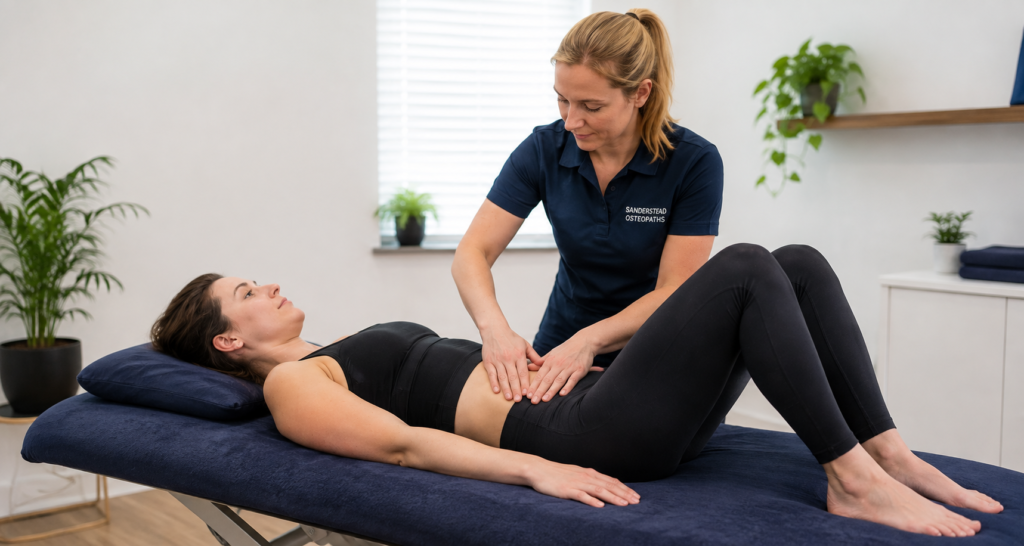

Returning to Exercise After Birth When Your Core Still Feels Weak

Written by Sanderstead Osteopaths. Clinically reviewed by Judith Tardif, Registered Osteopath.

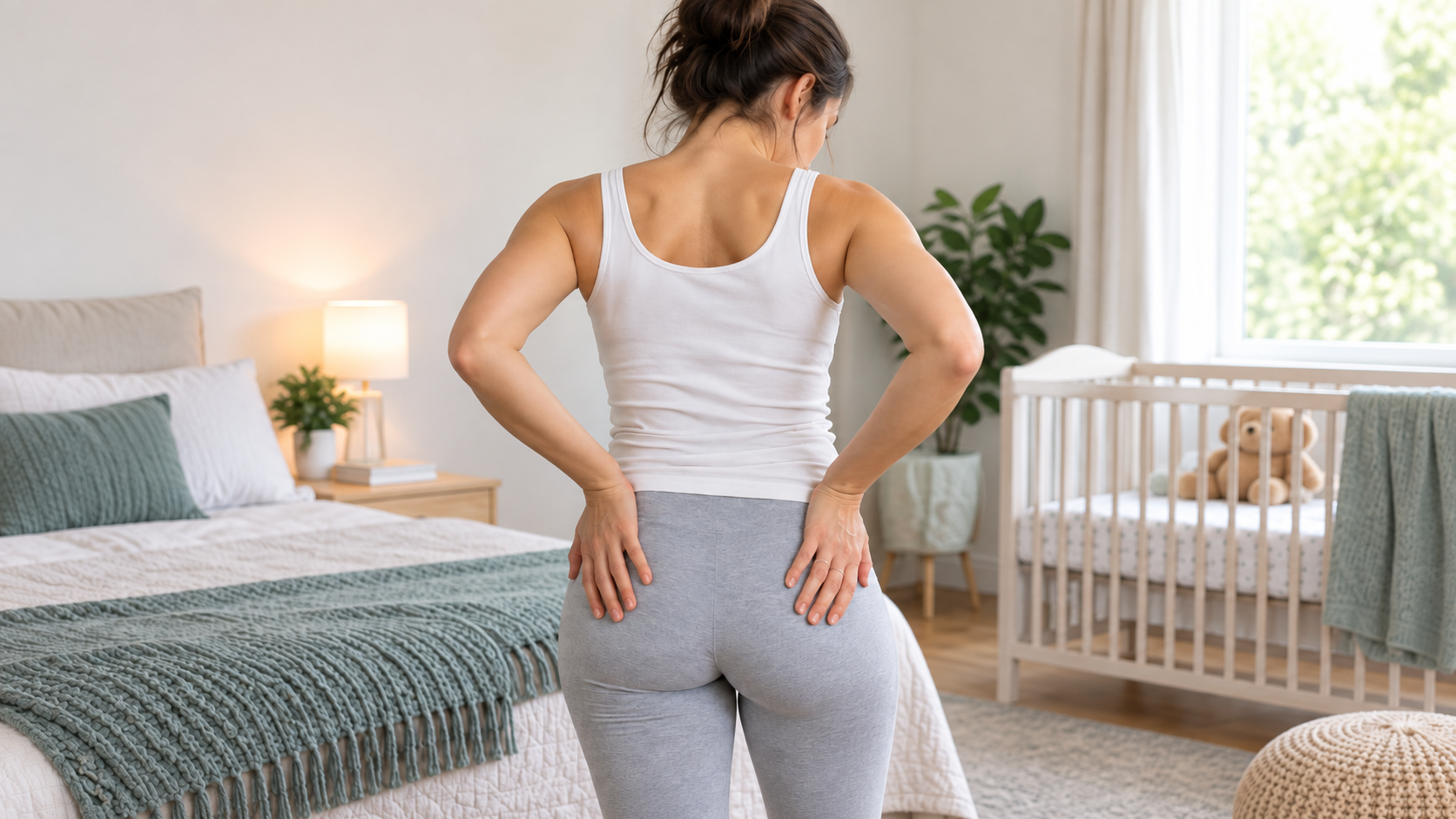
Returning to exercise after birth can feel surprisingly different from exercising before pregnancy.

You may have completed your postnatal medical review, feel generally well and be keen to become active again, yet notice that your body does not respond in quite the same way.

Your abdomen may feel weak or disconnected.

Your stomach may dome when you sit up.

Running may cause leaking or pelvic heaviness.

Lifting weights may make your lower back ache.

Exercises you previously performed without thinking may suddenly feel unstable or much harder to control.

This does not automatically mean that exercise is unsafe or that you need to avoid activity.

It may simply mean that your body needs a more gradual progression from healing back towards higher levels of strength, impact and load.

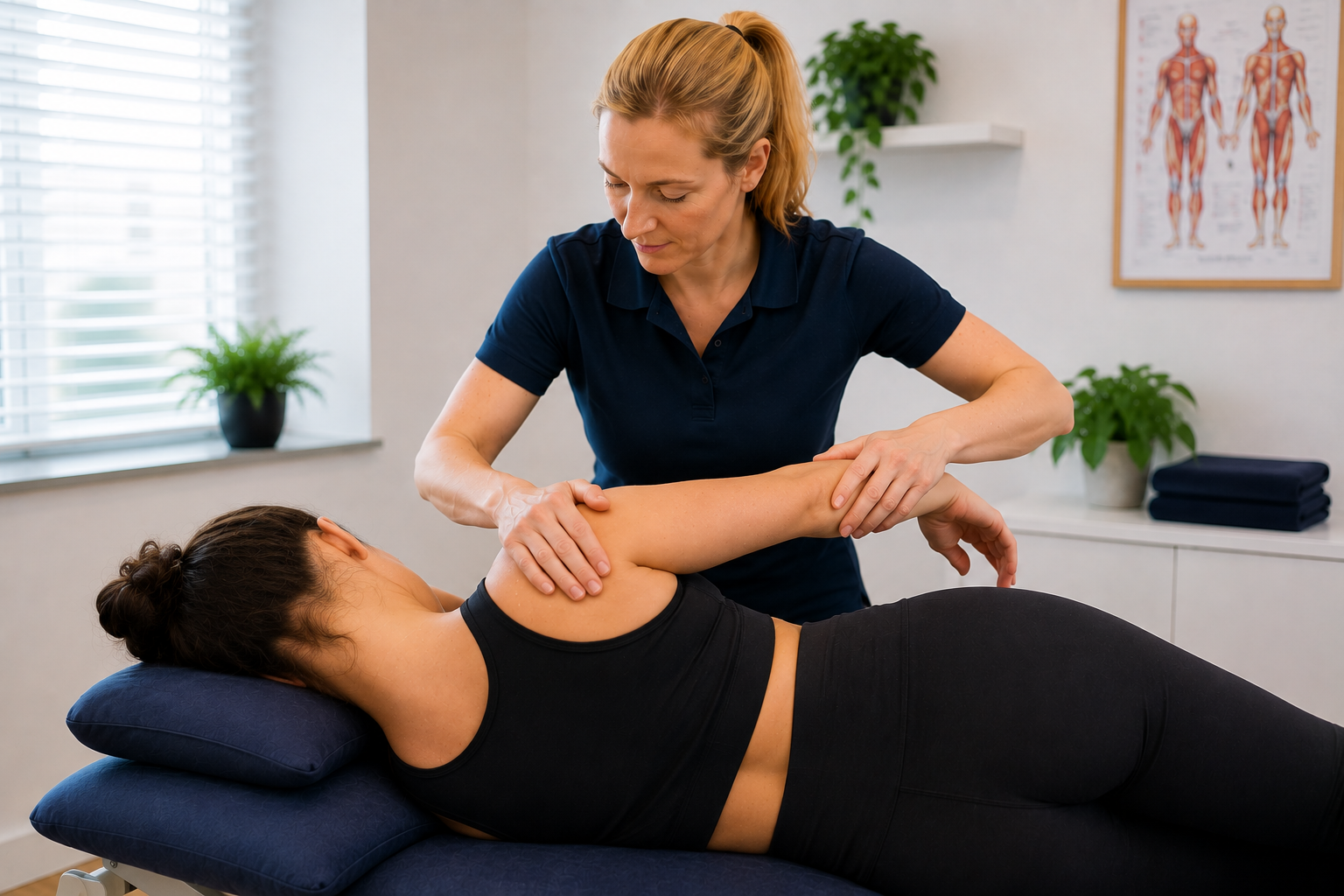
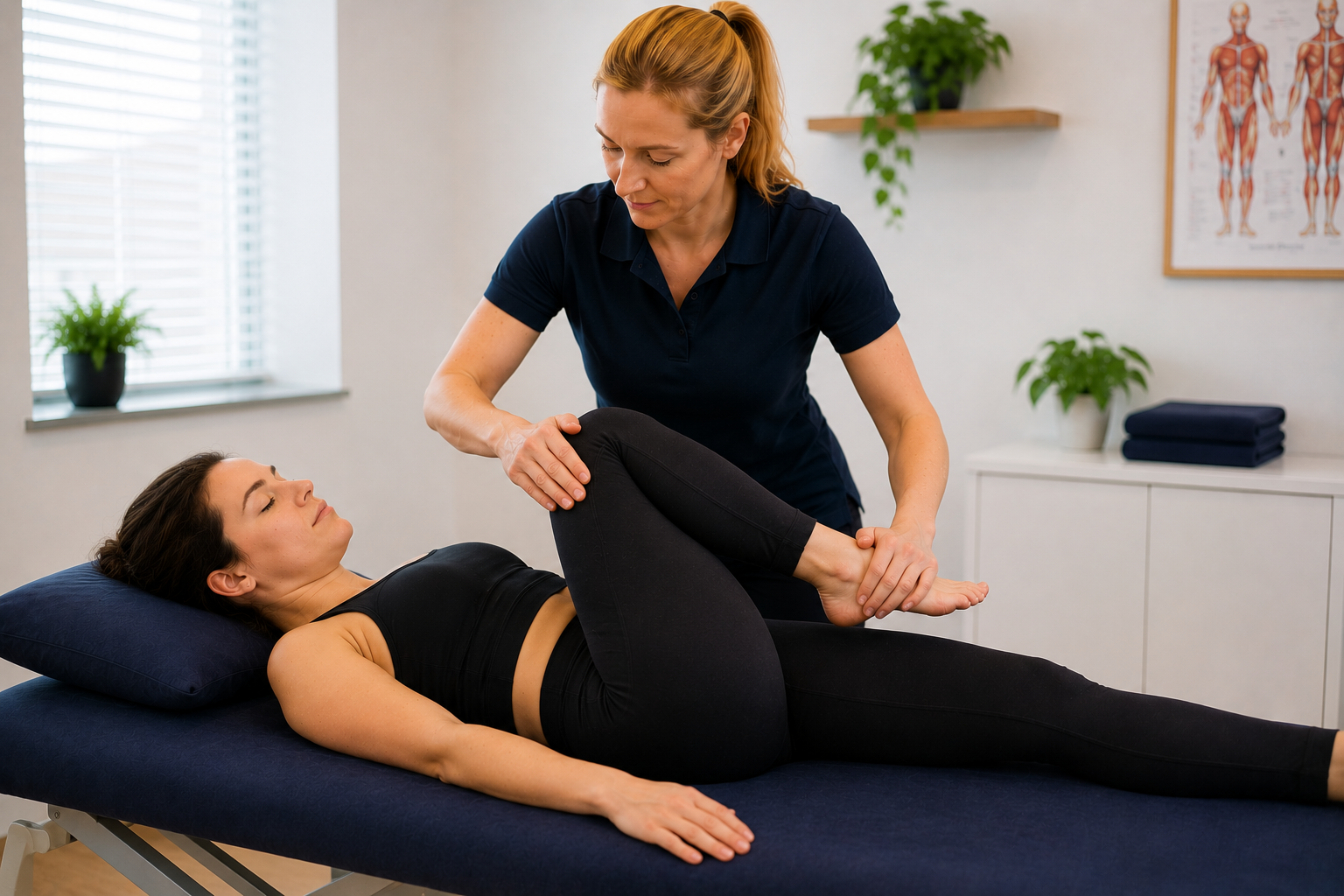
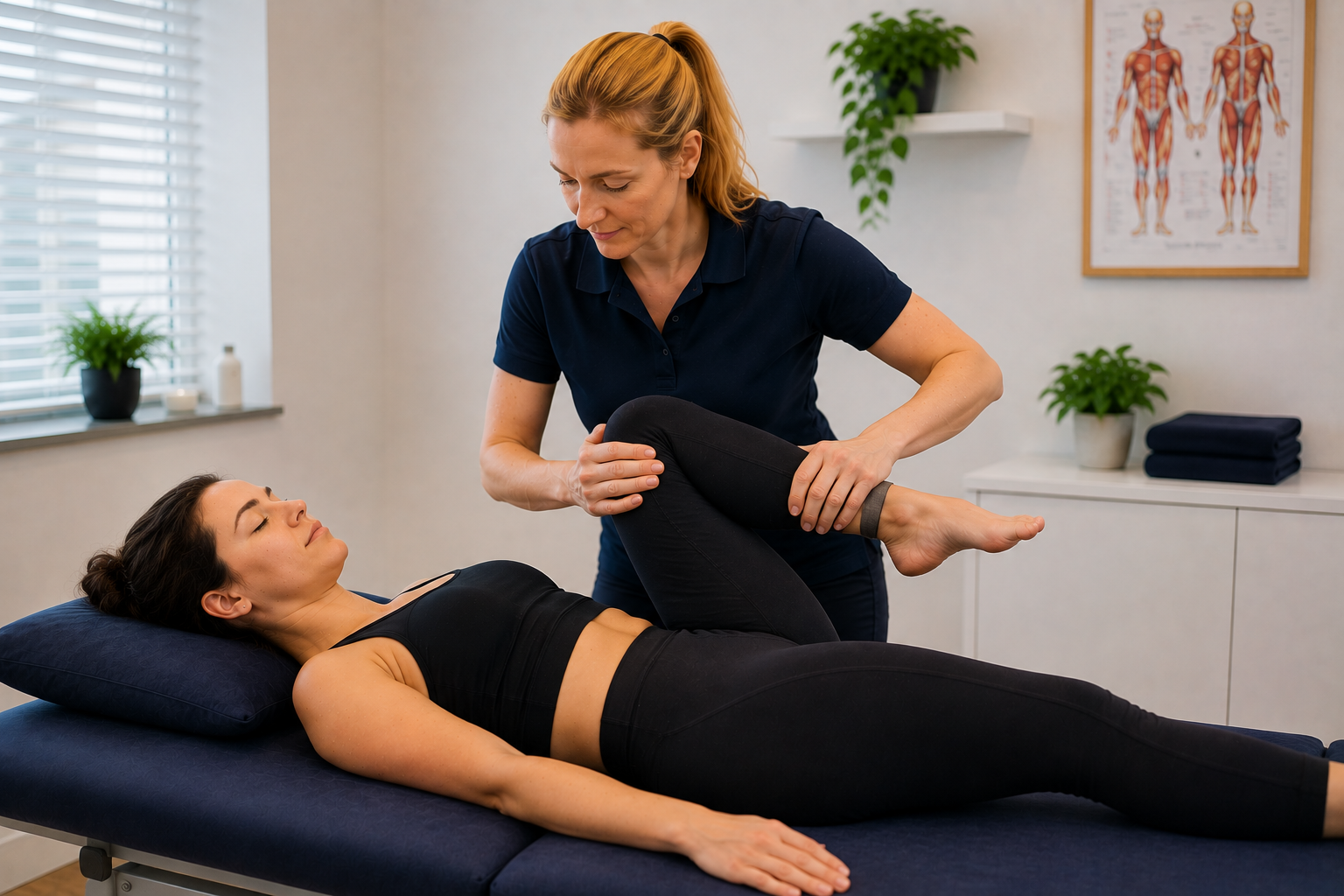
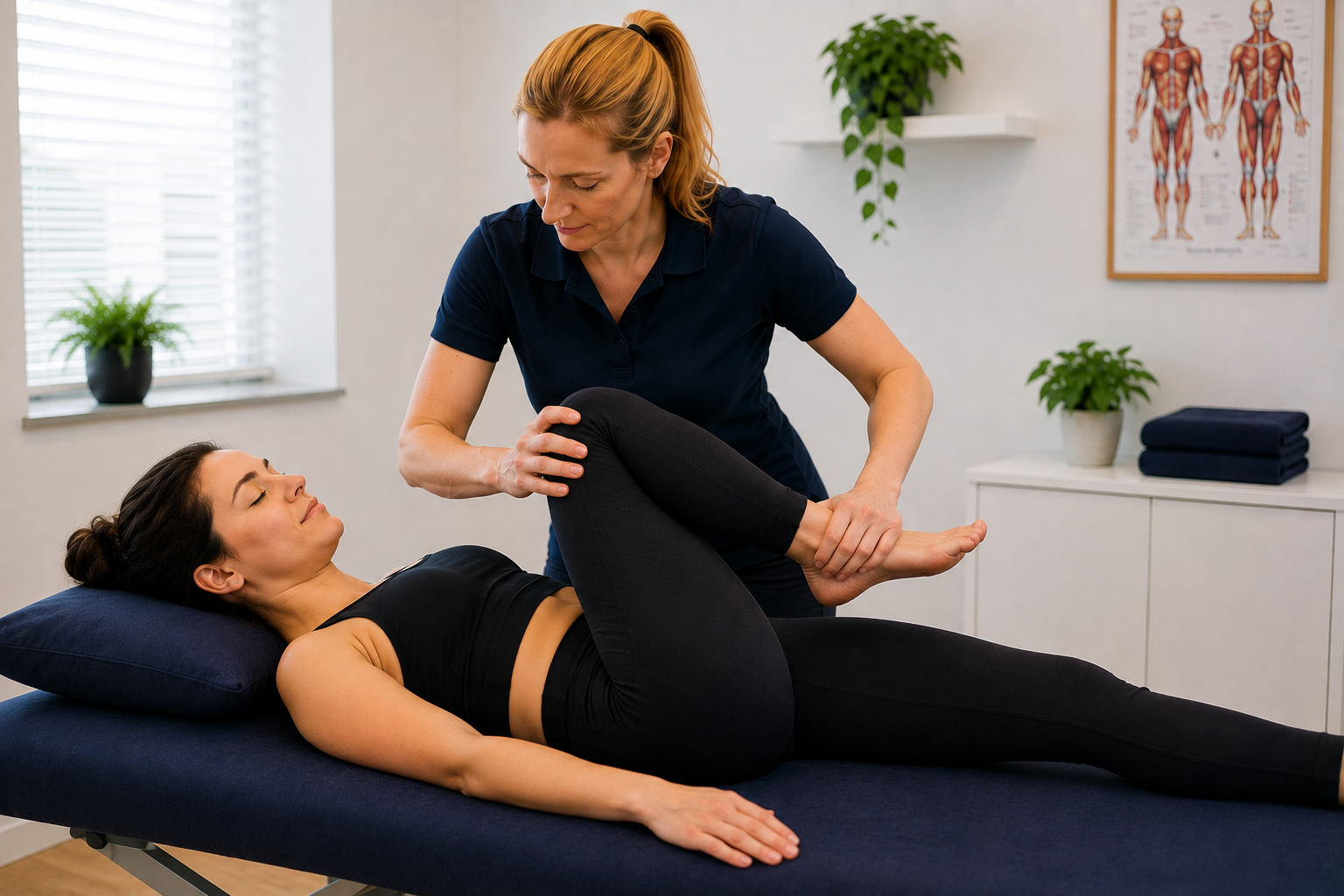
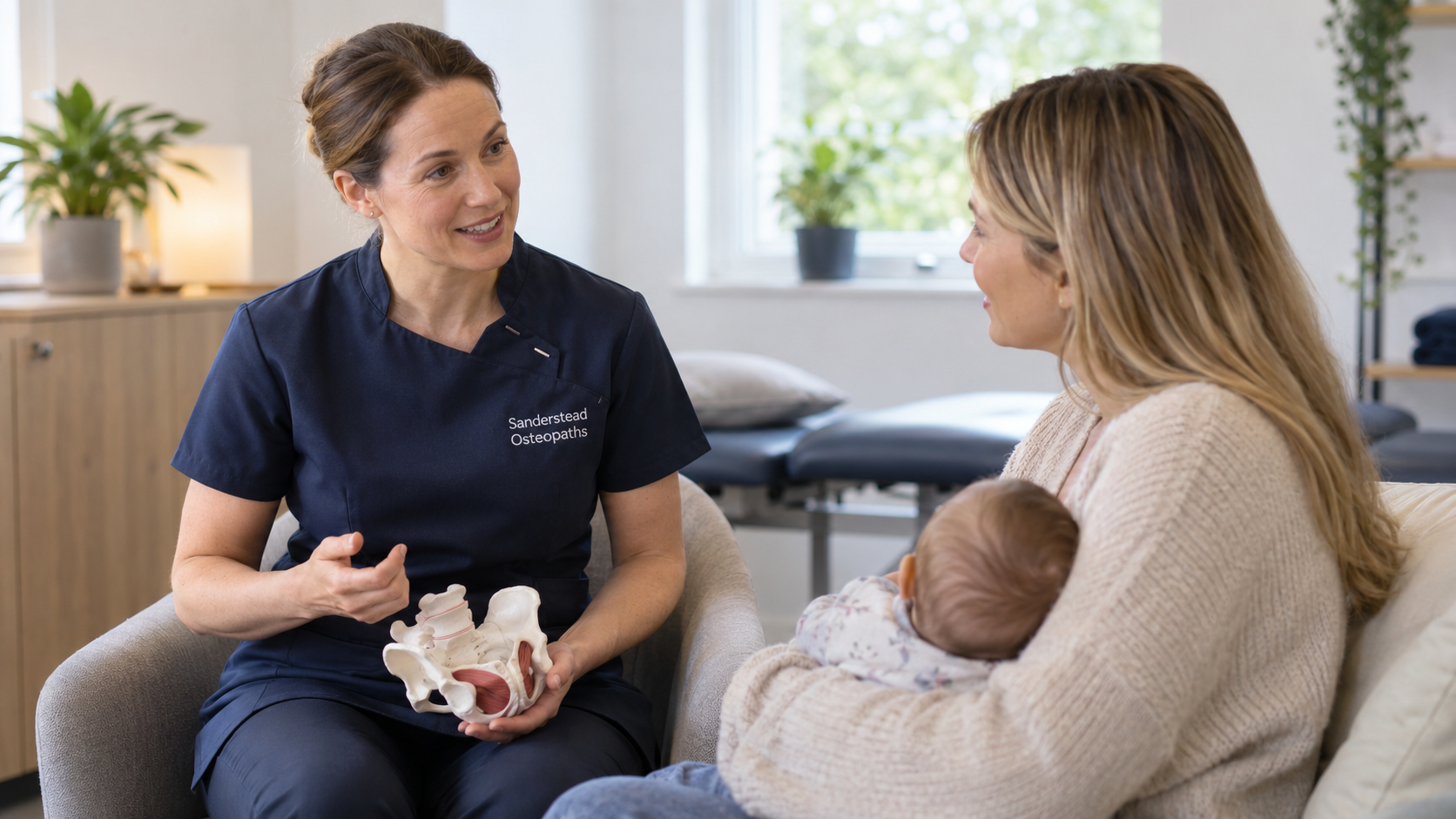
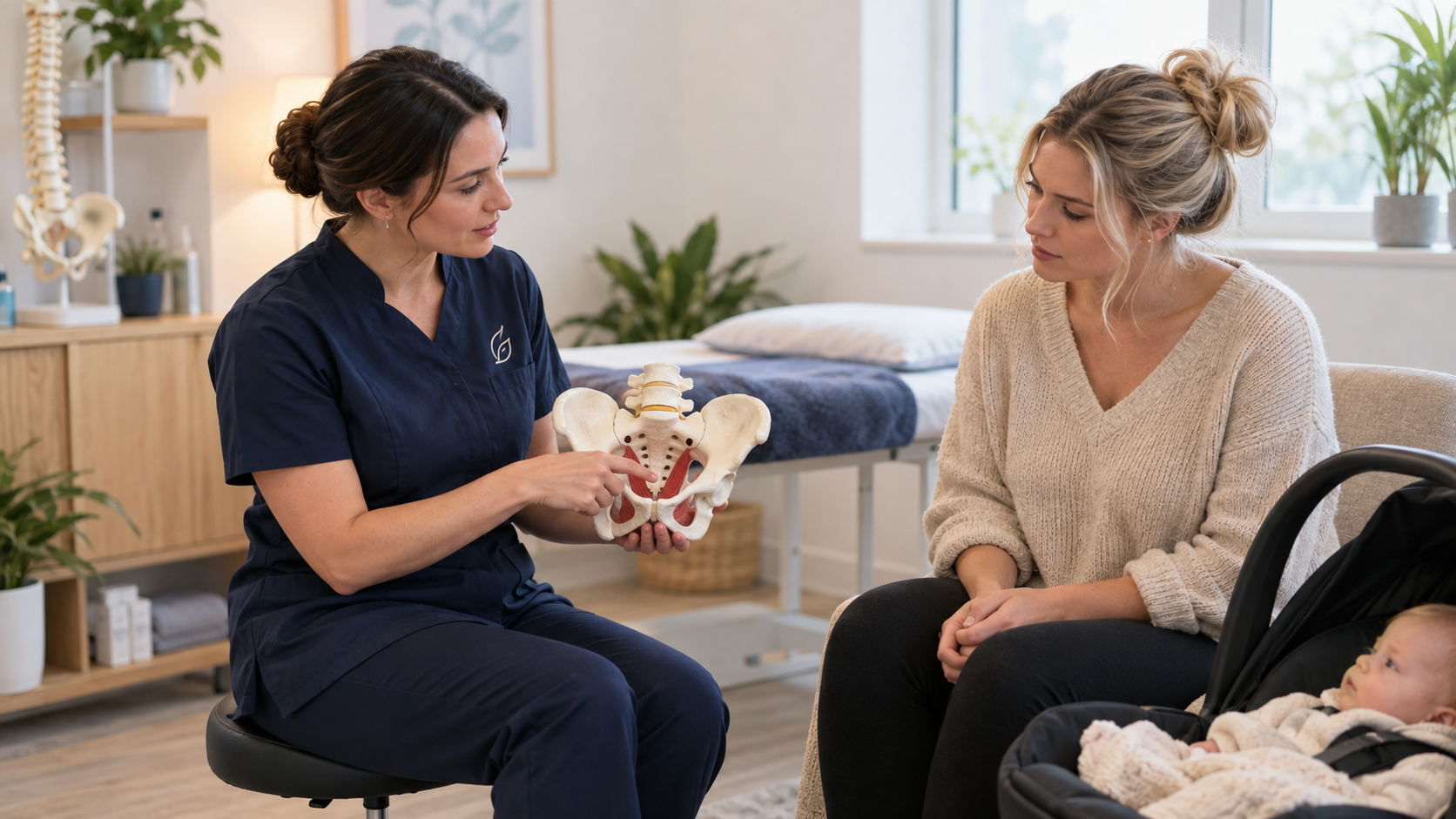
A Mummy MOT in Sanderstead can help assess how your abdominal wall, pelvic floor, breathing, pelvis and wider movement system are functioning before you significantly increase your exercise.

The aim is not to keep you away from exercise.


It is to understand what your body can currently manage and build from there.

I have been using Sanderstead Osteopaths for many years David has been treating my ongoing back and neck issues and wouldn’t go anywhere else. I would highly recommend.

Allison Stagg Avatar Allison Stagg
August 28, 2023

Why Your Core Can Still Feel Weak After Pregnancy

Pregnancy places progressive demands on the abdominal wall for many months.

As your baby grows, the abdominal muscles and surrounding tissues adapt to increasing size and pressure.

At the same time:

  • Your centre of gravity changes
  • Your pelvis adapts to increased load
  • The pelvic floor manages greater pressure
  • Your breathing mechanics change
  • The spine and hips adjust to different movement demands

Birth then places additional demands on the body.

Afterwards, there is no instant switch that returns everything to its pre-pregnancy state.

Tissues need time to recover, but strength alone is not the whole story.

The abdominal wall also needs to regain coordination, tension and the ability to manage pressure during movement.

That is why some women describe their core as feeling weak even when individual muscles are technically capable of contracting.

A Weak Core Does Not Always Mean Weak Abdominal Muscles

When people talk about a weak core, they often imagine that they simply need stronger abdominal muscles.

Sometimes strength is part of the problem.

But the core works as a coordinated system involving the abdominal wall, diaphragm, pelvic floor, spine, pelvis and surrounding muscles.

If these areas are not coordinating effectively, you may notice difficulty during tasks that increase pressure or load.

For example:

  • Sitting up
  • Lifting your baby
  • Squatting
  • Running
  • Jumping
  • Planking
  • Performing abdominal exercises
  • Lifting weights

Your body may be strong enough to complete the movement while still using a strategy that produces doming, leaking, pain or excessive bracing.

Postnatal core recovery therefore involves more than simply doing more sit-ups.

Iv used David for 12 years now. Always reliable and available when needed for emergency appointments. I am now taking my children here when needed.

George Laura Avatar George Laura
August 28, 2023

When Can You Start Exercising After Giving Birth?

There is no single exercise timeline that applies perfectly to every person.

Your recovery depends on factors including:

  • The type of birth you had
  • Whether there were complications
  • C-section recovery where relevant
  • Perineal healing
  • Pelvic floor symptoms
  • Pain
  • Previous fitness
  • Sleep and general recovery
  • The type of exercise you want to return to

Gentle movement is very different from running, heavy strength training or high-impact classes.

NHS guidance on exercise after having a baby encourages gradual activity and advises discussing return to more demanding exercise at your postnatal review.

At Sanderstead Osteopaths, we ask patients to complete their appropriate postnatal medical review before attending a Mummy MOT.

If you are unsure when that assessment is appropriate, our guide to when to book a Mummy MOT after giving birth explains the timing in more detail.

Healing Time and Exercise Readiness Are Different Things

Time after birth matters.

Tissues need an opportunity to heal.

However, reaching a particular week does not automatically tell us how well your body will tolerate exercise.

Two people can both be several months postnatal and have very different levels of readiness.

One may be walking, exercising and progressively strengthening without symptoms.

Another may experience leaking, abdominal doming, pelvic heaviness or back pain when relatively little load is added.

The difference is not simply the number of weeks since birth.


Exercise readiness also depends on how your body responds when demand increases.

An excellent practice, with excellent therapists. I originally saw David with a bad lower back and got amazing results. Would recommend!

P H Avatar P H
August 28, 2023

Signs Your Core May Need More Support Before You Progress

Feeling tired during exercise is normal.

Postnatal symptoms that repeatedly appear when load increases can tell us something different.

Signs worth paying attention to include:

  • Abdominal doming or coning
  • Leaking urine
  • Pelvic heaviness
  • Pelvic pressure
  • Lower back pain
  • Pelvic discomfort
  • C-section scar pulling
  • Difficulty controlling movements
  • Breath-holding during simple tasks
  • A sensation that the abdomen cannot support you
  • Symptoms that worsen as exercise becomes harder

These signs do not necessarily mean you must stop exercising completely.

They may indicate that the current exercise, load or technique needs to be adjusted while you rebuild capacity.

Why Symptoms During Exercise Matter

Exercise places increasing demand on the pressure-management system.

During a squat, lift, plank, jump or run, forces need to be controlled through the abdominal wall, pelvic floor, pelvis and spine.

If that system cannot currently manage the demand efficiently, symptoms may appear.

For example:

Running may expose pelvic floor symptoms that walking does not.

A plank may reveal abdominal doming that is absent during easier movements.

A heavy squat may cause you to hold your breath or overload your lower back.


Progression should therefore be based partly on how your body responds to load rather than simply whether you can complete the exercise.

Iv used David for 12 years now. Always reliable and available when needed for emergency appointments. I am now taking my children here when needed.

George Laura Avatar George Laura
August 28, 2023

What Abdominal Doming During Exercise Can Mean

Abdominal doming is a ridge or bulge that appears through the midline of the abdomen during effort.

You may notice it when:

  • Sitting up
  • Performing crunches
  • Holding a plank
  • Lowering your legs
  • Lifting weights
  • Getting up from the floor
  • Exercising under fatigue

Doming does not automatically mean something has been damaged.

It can, however, provide useful information about how pressure is being managed through the abdominal wall.

If the abdomen cannot create sufficient controlled tension for the task, pressure may push forwards through the midline.

Changing breathing, reducing the load or altering the exercise may change what happens.

If doming is one of your main concerns, our guide to why your stomach domes when you sit up after pregnancy explains the issue in greater detail.

Doming and Diastasis Recti Are Not Exactly the Same Thing

Diastasis recti refers to separation through the midline of the abdominal wall following pregnancy.

Doming describes what the abdomen does under pressure.

The two can occur together, but they are not identical.

Someone can have abdominal separation without obvious doming.

Another person may show poor pressure control even if the measured separation is relatively small.

This is why assessment should consider more than simply the width of the gap.

We may also look at:

  • Depth
  • Tissue tension
  • Abdominal control
  • Breathing
  • Pressure management
  • How the abdomen behaves during movement

If abdominal separation is your main concern, our diastasis recti treatment in Sanderstead provides more focused assessment and rehabilitation.

I’ve visited Tom at Sanderstead Osteopaths since March for postnatal neck and back issues and then subsequent issues with my neck from looking after a baby (and now toddler) and he’s absolutely superb. I’d highly recommend him!

Louise May Avatar Louise May
August 28, 2021

Leaking When You Return to Exercise

Some women first notice pelvic floor symptoms when they increase their activity.

Walking may be completely comfortable, but running, jumping or lifting produces leakage.

This may happen during:

  • Running
  • Skipping
  • Jumping
  • Burpees
  • Heavy lifting
  • High-impact classes
  • Coughing during exercise

Pelvic floor recovery involves more than being able to consciously squeeze the muscles.

The pelvic floor also needs to respond automatically when pressure rises.

Timing, endurance, breathing and coordination with the abdominal wall can all influence what happens.

Leaking is common after pregnancy, but it is not something you should simply assume you need to tolerate forever.

If this is your main symptom, our pelvic floor recovery after pregnancy service provides more focused support.

You can also read our guide to leaking after birth and pelvic floor support.

Pelvic Heaviness During Exercise Is Also Important

Pelvic floor symptoms are not limited to leaking.

You may notice:

  • Heaviness
  • Dragging
  • Pelvic pressure
  • A feeling of reduced support
  • Symptoms that increase during running
  • Symptoms after prolonged exercise

Persistent or worsening heaviness should be discussed with your GP or an appropriate healthcare professional.

Once medical concerns have been considered, functional assessment may help explore how symptoms relate to load, breathing, abdominal control and pelvic floor coordination.

Why Your Lower Back May Hurt When You Return to Exercise

Lower back pain during postnatal exercise does not necessarily mean there is something structurally wrong with your spine.

The lower back is part of a wider load-sharing system.

If abdominal control has not fully recovered, the back may work harder during lifting or exercise.

Hip stiffness, pelvic movement and breathing can also change how load is distributed.

You may notice back pain during:

  • Squats
  • Deadlifts
  • Lunges
  • Abdominal exercises
  • Running
  • Carrying weights
  • Getting up from the floor

The goal is not simply to strengthen the back.

Assessment may need to consider why the back is taking more load than expected.

If back pain has become your main issue, our postnatal back pain treatment in Sanderstead provides a more specific assessment.


Our guide to why lower back pain can continue months after pregnancy also explains how postnatal movement and core recovery may contribute.

I’ve visited Tom at Sanderstead Osteopaths since March for postnatal neck and back issues and then subsequent issues with my neck from looking after a baby (and now toddler) and he’s absolutely superb. I’d highly recommend him!

Louise May Avatar Louise May
August 28, 2021

Returning to Exercise After a C-Section

Returning to exercise following a C-section involves recovery from pregnancy and abdominal surgery.

Even after the incision has healed medically, you may notice:

  • Lower abdominal tightness
  • Scar pulling
  • Numbness
  • Reduced confidence engaging the abdomen
  • Doming
  • Lower back discomfort
  • Guarding during movement

It is common to become cautious around the abdominal area after surgery.

That protective behaviour can sometimes continue even when the tissues have healed sufficiently for movement to progress.

You may hold your breath, brace heavily or avoid extending through the front of the body.

A gradual return to movement can help rebuild confidence as well as physical capacity.

Our guide to a Mummy MOT after a C-section explains scar, abdominal wall and movement recovery in more detail.

Do You Need to Avoid Sit-Ups, Planks and Core Exercises After Birth?

Not necessarily.

There is no single list of exercises that is appropriate or inappropriate for every postnatal person.

A plank may be perfectly manageable for one person and too demanding for another.

The same applies to:

  • Crunches
  • Sit-ups
  • Leg raises
  • Dead bugs
  • Pilates exercises
  • Press-ups
  • Loaded carries

The more useful question is what happens when you perform the exercise.

Can you breathe?

Can your abdominal wall maintain control?

Does the abdomen dome significantly?

Do you leak?

Do you feel pelvic heaviness?

Does your lower back take over?

Can you maintain the movement without excessive bracing?

If an exercise causes symptoms, modifying it is often more useful than labelling the exercise permanently bad.

Control Before Load

A useful principle in postnatal rehabilitation is to build control before dramatically increasing load.

That might mean starting with an easier version of an exercise and progressing once it becomes well controlled.

For example:

  • Shorter lever before longer lever
  • Bodyweight before heavy resistance
  • Slow controlled movement before speed
  • Low impact before repeated jumping
  • Short running intervals before continuous running
  • Supported exercise before unsupported exercise

Progression should still challenge you.

The objective is not to make everything easy.


It is to challenge the body at a level where it can adapt without repeatedly producing unwanted symptoms.

Sanderstead Osteopath provide quality treatment & professional service, I've been using David Ayers Osteopath services for over a decade with no complaints.

Mike McFarlane Avatar Mike McFarlane
August 28, 2023

How Breathing Affects Postnatal Exercise

Breathing is closely connected with the abdominal wall and pelvic floor.

Many people hold their breath automatically when an exercise becomes difficult.

Sometimes deliberate breath-holding is used in advanced strength training, but it may not be the best starting strategy while rebuilding postnatal coordination.

If you are struggling with pressure management, learning to exhale during effort can sometimes help you coordinate the abdominal wall and pelvic floor more effectively.

For example, you might exhale while:

  • Standing from a squat
  • Lifting your baby
  • Performing the difficult part of an exercise
  • Getting up from the floor

This does not mean there is one correct breathing pattern for every exercise.

The important question is whether your current breathing strategy is helping you manage the movement or contributing to bracing, doming or pelvic symptoms.

How Everyday Baby Care Affects Your Exercise Recovery

Exercise is not the only physical load your body experiences.

By the time you reach the gym, go for a run or start a home workout, you may already have spent the day:

  • Carrying your baby
  • Lifting a car seat
  • Pushing a buggy
  • Feeding
  • Bending into a cot
  • Getting up from the floor
  • Carrying on one hip

This matters because physical capacity is influenced by the total demand placed on your body.

A workout that feels easy one day may feel much harder after poor sleep, repeated carrying or a physically demanding day.

Neck and shoulder discomfort can also become part of this wider picture.

If feeding, lifting and carrying are producing upper-body symptoms, our guide to neck and shoulder pain from feeding, lifting and carrying your baby explains those demands in more detail.

Always really happy with the knowledge and professionalism I receive.

Daniel Djadali Avatar Daniel Djadali
August 28, 2023

What Does a Mummy MOT Assess Before You Return to Exercise?

A Mummy MOT is not a pass-or-fail fitness test.

The assessment is designed to understand how your body is recovering and which areas may need more support.

Depending on your circumstances, we may consider:

  • Abdominal wall function
  • Diastasis recti
  • Doming
  • Core control
  • Breathing
  • External pelvic floor coordination
  • Pelvic movement
  • Hip movement
  • Lower back function
  • Balance
  • Functional movement
  • Exercise-related symptoms

The assessment can then be adapted to what you actually want to return to.

Someone planning to walk and attend gentle Pilates has very different physical demands from someone aiming to return to running, CrossFit, weightlifting or competitive sport.

Our guide to what to expect during a Mummy MOT assessment explains the appointment itself in more detail.

Assessment Should Reflect Your Actual Exercise Goals

There is little value in assessing everybody against exactly the same standard.

Your rehabilitation should reflect what you need your body to do.

If you want to return to running, impact tolerance and pelvic floor response become particularly relevant.

If you want to lift weights, trunk control and pressure management under increasing load may matter more.

If you want to return to Pilates, abdominal control through different positions may be more important.

The aim is to create a pathway from your current level of function towards your actual goal.

Very knowledgeable, nice people

Bernt Hellman Avatar Bernt Hellman
January 28, 2024

What Can Help Rebuild Your Core After Pregnancy?

There is no single best postnatal core exercise.

Recovery usually involves progressive work across several areas.

Depending on the assessment, this may include:

  • Breathing and pressure control
  • Abdominal wall coordination
  • Pelvic floor rehabilitation
  • Hip and pelvic control
  • Mobility work
  • Progressive strengthening
  • Balance
  • Functional lifting
  • Gradual impact work
  • Exercise-specific progression

Some patients need to begin with simple control exercises.

Others are already ready for meaningful resistance training but need guidance on progression or technique.

The programme should change as your capacity improves.

Where exercise rehabilitation needs to progress beyond the initial assessment, our osteopathy and Pilates treatment may provide an appropriate next stage.

How Quickly Should You Progress Exercise After Birth?

Progression should be gradual enough that your body adapts rather than repeatedly becoming irritated.

That does not mean progress needs to be painfully slow.

A sensible approach is to change one major variable at a time.

For example, you might increase:

  • Duration
  • Resistance
  • Repetitions
  • Impact
  • Speed
  • Exercise complexity

If symptoms appear after a large jump in training, reducing the demand slightly and rebuilding can be more effective than stopping everything.

Useful signs that your current level may be too demanding include:

  • Increasing pain
  • Repeated leaking
  • Pelvic heaviness
  • Significant abdominal doming
  • Scar discomfort
  • Symptoms lasting well after exercise
  • Declining movement control as you fatigue


Your exercise programme should respond to these signs rather than ignore them.

Have seen both David and Clare on and off over the last 4 years with lower back pain/stiffness. They really know their stuff and have always provided me with solutions to my lower back. My job is quite demanding and doesn't help the pain (lots of driving and lifting) but knowing David and Clare will always be there to help at Sanderstead Osteopaths it puts my mind at rest. I started going weekly and with the regular treatments it's eased the pain so now I am going every 2-4 weeks. I would highly recommend either of these guys!

James McClelland Avatar James McClelland
August 28, 2023

What If You Used to Train at a High Level Before Pregnancy?

Previous fitness can be an advantage, but it does not remove the need for postnatal recovery.

Someone who was highly active before pregnancy may still need to rebuild:

  • Abdominal wall control
  • Pelvic floor coordination
  • Impact tolerance
  • Load tolerance
  • Movement confidence

The challenge for experienced exercisers is often that they know what their body used to be capable of.

It can therefore be tempting to return quickly to previous weights, distances or training intensity.

Postnatal progression does not mean starting from zero.

It means recognising that your current capacity may temporarily differ from your previous capacity and building it back intelligently.

What If You Are Months or Years Postnatal?

It is not too late to address a core that still feels weak.

Some women do not notice the problem until they attempt a more demanding activity.

Others adapt around symptoms for months or years.

You may have:

  • Avoided running because of leakage
  • Stopped abdominal exercises because of doming
  • Reduced weights because your back hurts
  • Avoided impact because of pelvic heaviness
  • Never regained confidence after a C-section

The fact that time has passed does not mean these patterns cannot be assessed.

A Mummy MOT looks at how your body functions now.


If you are unsure whether an assessment is still relevant, our guide to when to book a Mummy MOT explains why postnatal assessment can still be useful well beyond the early weeks after birth.

I took my newborn daughter to David due to her being very gassy and unsettled. Within the first week of David seeing her she was a lot more settled and was sleeping for a lot longer at night. I would highly recommend the treatment here with David for anyone with newborns with similar issues.

Elisabeth Cachia Avatar Elisabeth Cachia
August 28, 2023

When Should You Seek Medical Advice Before Exercising?

Exercise rehabilitation is not a replacement for medical assessment.

Seek appropriate medical advice if you experience symptoms such as:

  • Heavy or unusual bleeding
  • Fever or signs of infection
  • Increasing wound redness or discharge
  • Severe pelvic or abdominal pain
  • Chest pain
  • Shortness of breath
  • Sudden swelling
  • New significant weakness or numbness
  • Sudden loss of bladder or bowel control
  • Symptoms that feel sudden, severe or concerning

If your GP or another healthcare professional has advised you to delay exercise because of a medical concern, that advice should take priority.

Returning to Exercise After Birth With Sanderstead Osteopaths

If you have completed your postnatal medical review but your core still feels weak or you are unsure how to return safely and confidently to exercise, a Mummy MOT at Sanderstead Osteopaths can help identify what your body is currently ready for.

We assess the abdominal wall, core, pelvic floor coordination, breathing, pelvis, spine and functional movement rather than judging readiness by time since birth alone.

Where a more specific problem is identified, you may also benefit from:

Sanderstead Osteopaths supports patients from Sanderstead and nearby areas including South Croydon, Purley, Warlingham, Kenley, Selsdon and Coulsdon.


Sanderstead Osteopath provide quality treatment & professional service, I've been using David Ayers Osteopath services for over a decade with no complaints.

Mike McFarlane Avatar Mike McFarlane
August 28, 2023

Frequently Asked Questions About Returning to Exercise After Birth

Why Does My Core Still Feel Weak After Having a Baby?

Pregnancy changes the abdominal wall, pelvis, breathing and pelvic floor over many months.

After birth, recovery involves rebuilding coordination, pressure management and load tolerance as well as strength.

A core that feels weak does not necessarily mean that the abdominal muscles simply need harder exercises.

Doming does not automatically mean that exercise is unsafe.

However, repeated or significant doming can indicate that the abdominal wall is struggling to manage the pressure created by that particular exercise.

Changing the load, technique, breathing or exercise may improve control.

Persistent doming is worth assessing.

Leaking during running suggests that the pelvic floor and wider pressure-management system may not yet be managing impact effectively.

Rather than simply accepting the symptom, it is worth having pelvic floor function assessed and progressively rebuilding impact tolerance.

Not necessarily.

A plank is simply one way of loading the abdominal wall.

Whether it is appropriate depends on how your body responds.

If you can control the movement without significant doming, pain, pelvic heaviness or other symptoms, it may be appropriate as part of a progressive programme.

It can be useful if you have symptoms, feel uncertain about your recovery or intend to return to demanding exercise.

A Mummy MOT can assess how your abdominal wall, pelvic floor, breathing and movement system respond to load and help identify appropriate areas for progression.

Yes, once your medical recovery has progressed appropriately and you have been advised that exercise is suitable.

Progression may involve rebuilding breathing, abdominal control, movement confidence and strength gradually rather than immediately returning to demanding abdominal exercises.

No.

Postnatal rehabilitation can still be useful months or years after pregnancy.

The important question is how your body functions now and whether symptoms or reduced confidence are limiting the activities you want to do.

Latest Posts

Why Lower Back Pain Can Continue Months After Pregnancy

Why Your Stomach Domes When You Sit Up After Pregnancy

Mummy MOT After a C-Section: Core, Scar and Movement Recovery

Our Services

Sports Injury Treatment Clinic

Sports Injury

The use of sport’s osteopathy is an effective treatment that assists in detecting, treating and preventing a number of health problems. Our treatments include the moving, stretching and massaging of muscles and joints within the body.
Neck, Back & Shoulder Treatment Clinic

Neck Pain

Our osteopathic treatments will reduce your shoulder pain, improve your flexibility and insure a speedy recovery. Our osteopathic treatments may include soft tissue massage, mobilisation and strengthening work to your effected area be that the shoulder, neck or back.
Headaches & Migraines Treatment Clinic

Headaches & Migraines

The majority of headaches are found to be caused by musculoskeletal tension and/or postural issues and can be successfully treated by our osteopath practitioners at our Sanderstead based osteopathy clinic.
Pregnancy & Post Natal Treatment Clinic

Pregnancy & Post Natal

Postpartum osteopathy is osteopathic treatment that focuses on treatments effective the birth of a child. Postpartum osteopathy is an alternative treatment whereby our osteopath practitioners detect, treat and prevents future health issues by means of stretching and massaging the muscles, joints and connective tissues.
Children & Baby Treatment Clinic

Children & Teenager Treatment

Our osteopaths practitioners are highly qualified & experienced when treating children & babies. We utilise a range of techniques that includes physical manipulation, stretching and massage. We also offer more gentle techniques such as cranial osteopathy renowned for being safe safe and non-manipulative.
Chronic Pain Treatment Clinic

Chronic Pain Treatment

Our osteopathy team utilise manipulative treatment in order to alleviate somatic dysfunction. Our treatments apply manually guided forces to improve overall physiologic function and support homeostasis.

Our Services

Sanderstead Osteopaths Clinic

Sports Injury

The use of sport’s osteopathy is an effective treatment that assists in detecting, treating and preventing a number of health problems. Our treatments include the moving, stretching and massaging of muscles and joints within the body.
Neck, Back & Shoulder Treatment Clinic

Neck Pain

Our osteopathic treatments will reduce your shoulder pain, improve your flexibility and insure a speedy recovery. Our osteopathic treatments may include soft tissue massage, mobilisation and strengthening work to your effected area be that the shoulder, neck or back.
Headaches & Migraines Treatment Clinic

Headaches & Migraines

The majority of headaches are found to be caused by musculoskeletal tension and/or postural issues and can be successfully treated by our osteopath practitioners at our Sanderstead based osteopathy clinic.
Pregnancy & Post Natal Treatment Clinic

Pregnancy & Post Natal

Postpartum osteopathy is osteopathic treatment that focuses on treatments effective the birth of a child. Postpartum osteopathy is an alternative treatment whereby our osteopath practitioners detect, treat and prevents future health issues by means of stretching and massaging the muscles, joints and connective tissues.
Children & Baby Treatment Clinic

Children & Teenager Treatment

Our osteopaths practitioners are highly qualified & experienced when treating children & babies. We utilise a range of techniques that includes physical manipulation, stretching and massage. We also offer more gentle techniques such as cranial osteopathy renowned for being safe safe and non-manipulative.
Chronic Pain Treatment Clinic

Chronic Pain Treatment

Our osteopathy team utilise manipulative treatment in order to alleviate somatic dysfunction. Our treatments apply manually guided forces to improve overall physiologic function and support homeostasis.

Areas our Osteopathy Treatment Covers

Sanderstead, CR2

Purley, CR8

Kenley, CR8

Selsdon, CR2

New Addington, CR0

South Croydon, CR2

Hamsey Green, CR6

Croydon, CR0

Coulsdon, CR5

Caterham, CR3

Warlingham, CR6

Osteopathy Coverage

David Ayres Osteopath

About the Clinical Director

David Ayres is the Founder and Clinical Director of Sanderstead Osteopaths, providing clinical guidance and oversight across all treatment and content.

David Ayres

Clinical Director & Founder, Sanderstead Osteopaths

David Ayres is the founder and Clinical Director of Sanderstead Osteopaths, with over 25 years of experience in osteopathic care, clinical education, and practitioner development.

He qualified from the British School of Osteopathy in 2000 and went on to spend a decade lecturing at the institution between 2002 and 2012. During this time, he taught final-year students advanced osteopathic techniques and manipulation, while also working as a clinical tutor overseeing and mentoring students in the treatment of their own patients.

Throughout his clinical career, David developed particular expertise in the treatment of neck injuries, spinal conditions, and joint-related issues affecting the shoulders and knees. He also worked with newborn babies using cranial osteopathic approaches, supporting early-stage musculoskeletal development.

David’s role within Sanderstead Osteopaths is focused on clinical leadership, mentoring, and maintaining high standards of care across the team.

He works closely with practitioners within the clinic to guide treatment approaches, support clinical decision-making, and ensure patients receive structured, evidence-informed care tailored to their individual needs.

Under his direction, Sanderstead Osteopaths has built a strong reputation across Sanderstead, Croydon and the surrounding areas for delivering professional, patient-focused treatment for a wide range of musculoskeletal conditions.

Scroll to Top