
Written by Sanderstead Osteopaths. Clinically reviewed by Judith Tardif, Registered Osteopath.
Neck and shoulder pain after having a baby can develop gradually.
You may feel relatively comfortable immediately after birth, then begin to notice stiffness across the shoulders, aching between the shoulder blades, discomfort when turning your head or tension that becomes worse after feeding or carrying your baby.
This is understandable when you consider how much your daily movement changes.
Feeding can involve remaining in one position for long periods. Your baby is lifted and repositioned repeatedly throughout the day. You may carry them mainly on one side, look down frequently, lean into a cot or car seat and spend more time sitting in positions chosen around your baby’s needs rather than your own comfort.
As your baby becomes heavier, those demands increase.
At Sanderstead Osteopaths, our postnatal neck and shoulder pain treatment looks at why discomfort is developing rather than assuming there is one single postural problem.
The neck, shoulders, upper back, ribcage, breathing, core and wider postnatal movement system can all influence how your body manages feeding, lifting and carrying.
Why Neck and Shoulder Pain Can Start After Having a Baby
Having a baby changes the physical demands placed on your body almost immediately.
During pregnancy, posture and load distribution have already adapted over several months.
After birth, those changes are followed by a completely new pattern of repetitive movement.
Instead of simply recovering, your body is now repeatedly:
- Lifting your baby
- Feeding
- Holding
- Winding
- Carrying
- Looking down
- Reaching into a cot
- Using a changing table
- Lifting a car seat
- Pushing a buggy
- Getting up and down from the floor
Any one of these activities may feel insignificant.
The challenge is repetition.
A position that feels comfortable for five minutes can become tiring when held for much longer. A lift that feels effortless once can become demanding when it is repeated throughout the day.
This is one reason postnatal neck and shoulder symptoms may gradually become more noticeable rather than beginning with one obvious injury.
Why Feeding Can Place More Demand on the Neck and Shoulders
Whether you are breastfeeding, bottle feeding or combining both, feeds can involve prolonged sitting and sustained positions.
It is easy to concentrate completely on your baby and gradually allow your own position to become less comfortable.
You may:
- Drop your head forwards to look at your baby
- Round through the upper back
- Hold one shoulder higher
- Keep one arm working continuously to support your baby’s weight
- Lean towards your baby rather than bringing your baby towards you
- Remain in the same position even after discomfort begins
NHS breastfeeding guidance recommends getting comfortable before a feed, using pillows or cushions where needed and keeping the shoulders and arms relaxed. It also encourages bringing the baby towards the breast rather than repeatedly leaning forwards towards the baby.
The aim is not to achieve a perfect feeding posture.
It is to reduce unnecessary effort and give your body enough support that the same tissues are not carrying the load throughout every feed.
David Ayres was brilliant with my back issues, as were his 2 colleagues I saw when he wasn't available. Professional and knowledgeable, would recommend 👌
August 28, 2023
It Is Not Simply a Problem of “Bad Posture”
Posture is often blamed for neck and shoulder pain, but that explanation can be too simplistic.
There is no single perfect posture that everybody must maintain.
The problem is often more about duration, repetition and load.
A comfortable position can become uncomfortable if you remain there for a long time.
A slightly rounded feeding position may cause no problem if you regularly change position, while the same position repeated for long periods every day may become more demanding.
Your body generally benefits from movement and variation rather than attempting to hold itself rigidly in one ideal position.
This is why a postnatal assessment should consider what you actually do throughout the day rather than simply looking at you sitting upright in a treatment room.
Why Looking Down Repeatedly Can Add Up
New parents naturally spend a great deal of time looking down at their baby.

During feeds you may look down for reassurance.
You look down while changing.
You look into the cot.
You look towards your baby while carrying them.
Looking down is not inherently harmful.
The issue is that the neck may remain in a similar position for much longer and much more frequently than it did before your baby arrived.
The muscles around the neck and upper back then have to support the head in that position repeatedly.
Changing position regularly can therefore be just as important as trying to find one supposedly perfect posture.
I took my newborn daughter to David due to her being very gassy and unsettled. Within the first week of David seeing her she was a lot more settled and was sleeping for a lot longer at night. I would highly recommend the treatment here with David for anyone with newborns with similar issues.
August 28, 2023
How Carrying Your Baby Can Affect Your Shoulders and Upper Back
Carrying creates a different physical challenge.
Many parents naturally develop a favourite side.
You may carry your baby on your left hip because your right hand is dominant, or always place your baby on the same shoulder because it feels easier.
Over time, you may notice yourself:
- Raising one shoulder
- Shifting your weight onto one hip
- Leaning your trunk to one side
- Rotating through the upper body
- Holding one arm in the same position repeatedly
These are normal adaptations to carrying.
Problems can arise when the same strategy is used repeatedly even as your baby becomes heavier.
The shoulder, upper back, ribs, lower back and pelvis may all begin contributing differently to maintain the position.
This is why postnatal shoulder pain may need to be assessed as part of a wider movement pattern rather than treated as an isolated shoulder problem.
Our pregnancy and postnatal osteopathy service considers the repeated bending, lifting, carrying and postural demands involved in looking after a baby.
Why the Pain Can Increase as Your Baby Gets Heavier
Postnatal symptoms do not always appear during the first few weeks.
Initially, your baby is relatively light.
You may also have more support from family or a partner, while your general activity may be lower as you recover.
Several months later, your baby is considerably heavier and may be carried for longer periods.
You may also be:
- Returning to work
- Exercising again
- Carrying a heavier car seat
- Lifting the buggy more often
- Moving your baby from the floor
- Carrying while completing other tasks
The physical demand can therefore increase even though more time has passed since birth.
Neck or shoulder pain beginning several months after pregnancy can still be related to the demands of postnatal life.
Very professional and friendly service from Paul.
October 28, 2023
Why Lifting From a Cot or Car Seat Can Irritate the Neck and Shoulders
Lifting your baby does not always happen from a convenient height or position.

A cot requires you to reach forwards and down.
A car seat may require reaching and rotating.
A buggy may involve lifting at an angle.
You may also be completing these movements while your baby is moving, crying or reaching towards you.
When a load is held away from the body, the muscles around the shoulders, upper back and spine often need to work harder.
If you repeatedly lift while twisting, holding your breath or reaching mainly through the upper body, the same areas may become overloaded.
NHS post-pregnancy guidance advises using the knees when lifting and adapting everyday baby-care positions to reduce unnecessary strain.
During an assessment, we may therefore look at the movement that causes the symptoms rather than only examining the area that hurts.
Small Movement Changes Can Matter
You do not need to turn every interaction with your baby into an exercise.
The aim is to identify movements you perform very frequently and make them easier where possible.
That might involve:
- Moving closer before lifting
- Using your legs rather than reaching entirely through your spine
- Bringing your baby closer to your body before standing
- Alternating carrying sides where practical
- Supporting your arms during longer feeds
- Changing feeding positions during the day
- Avoiding unnecessary twisting while holding a load
- Exhaling rather than holding your breath during effort
What is useful will depend on your own movement pattern.
Generic posture advice is usually less valuable than understanding which repeated movements are actually aggravating your symptoms.
Iv used David for 12 years now. Always reliable and available when needed for emergency appointments. I am now taking my children here when needed.
August 28, 2023
The Link Between the Upper Back, Ribcage and Neck
Neck pain does not always begin in the neck alone.
The neck sits above the upper back and ribcage.
If the upper back is stiff or the ribcage is moving less comfortably, the neck may compensate when you turn, feed or carry.
You may notice:
- Pain at the base of the neck
- Tightness between the shoulder blades
- Difficulty turning your head
- Pulling across one shoulder
- Tension around the upper ribs
- Aching after prolonged sitting
During a postnatal assessment, we may therefore consider the neck, shoulders, upper back and ribcage together.
This wider approach forms part of our dedicated postnatal neck and shoulder pain treatment in Sanderstead.
How Breathing and Bracing Can Influence Upper-Body Tension
Looking after a baby involves many movements performed under effort.
When lifting a car seat, standing while holding your baby or reaching into a cot, you may unconsciously hold your breath.
Some people also tense or raise their shoulders whenever they lift.
This can create a pattern in which the upper body performs more work than necessary.
Breathing, rib movement, abdominal control and shoulder movement do not operate completely independently.
If the ribcage remains rigid or you brace heavily during effort, movement elsewhere may become less efficient.
This does not mean breathing is the cause of every neck problem.
It simply means that breathing and bracing can be worth considering when symptoms repeatedly appear during physical tasks.
David Ayres was brilliant with my back issues, as were his 2 colleagues I saw when he wasn't available. Professional and knowledgeable, would recommend 👌
August 28, 2023
Can Postnatal Core Recovery Affect Neck and Shoulder Strain?
Sometimes.
The core is not simply the abdominal muscles.
It forms part of the system that helps the trunk manage pressure, movement and load.
Following pregnancy, abdominal wall function and coordination can take time to recover.
If your trunk does not feel stable during carrying or lifting, you may compensate elsewhere.
Some people grip through the shoulders, stiffen the upper back or brace excessively whenever a task feels demanding.
An apparently local neck or shoulder symptom can therefore sometimes form part of a wider postnatal recovery picture.
If you have neck and shoulder pain alongside abdominal weakness, doming, pelvic floor symptoms, lower back pain or reduced confidence with movement, a Mummy MOT in Sanderstead may be more appropriate than assessing the shoulders alone.
When a Mummy MOT May Be More Appropriate
A wider Mummy MOT assessment may be useful when neck or shoulder discomfort occurs alongside:
- Abdominal doming
- Diastasis recti concerns
- Pelvic floor symptoms
- Leaking
- Pelvic heaviness
- Lower back pain
- C-section scar tightness
- Weak core control
- Difficulty returning to exercise
In this situation, focusing only on the neck may not provide the full picture.
Our guide to what to expect during a Mummy MOT assessment explains how the wider postnatal assessment works.
Been seeing Paul for a couple of months now for my neck pain, had been using another fairly local osteopaths before and didn’t really seem to be making any progress, but since finding here it’s been much better. I suffer really badly with tension in my neck which leads to real bad headaches, and can highly recommend this place for anyone who suffers the same issue as Paul has helped me massively.
November 28, 2023
Why Sleep Can Add to Neck and Shoulder Discomfort
Sleep often changes significantly after having a baby.
You may spend more time sleeping in unfamiliar positions, feeding in bed, remaining partly upright or sleeping on one side more often than before.
Reduced sleep can also make existing discomfort feel harder to tolerate.
There is no single perfect sleeping position. Comfort, appropriate support and changing positions where possible are usually more practical goals.
If you repeatedly wake with significant pain or symptoms are progressively worsening, it may be worth having them assessed rather than assuming they are an unavoidable part of having a baby.
Neck Pain and Headaches After Having a Baby
Neck and upper-back tension can sometimes occur alongside headaches.
However, headaches after pregnancy should not automatically be assumed to originate from muscular tension.
A new, severe or unusual headache, particularly if it is sudden or associated with visual disturbance, neurological symptoms, feeling very unwell or other concerning symptoms, requires appropriate medical assessment.
Where headaches appear associated with neck stiffness or movement and serious causes have been excluded, the neck and upper back may then be considered as part of a musculoskeletal assessment.
Postnatal osteopathy should support musculoskeletal recovery, not replace necessary medical investigation.
I’ve been seeing David for 10+ years now and wouldn’t go anywhere else. I’ve recently taken my 15year old son to David as he has had some health issues effecting his muscles and joints, he has experienced immediate improvements. I also recommended my mum who sees another member of the team and again, is really pleased with the treatment and outcome 5⭐️
August 28, 2023
What We Assess for Postnatal Neck and Shoulder Pain
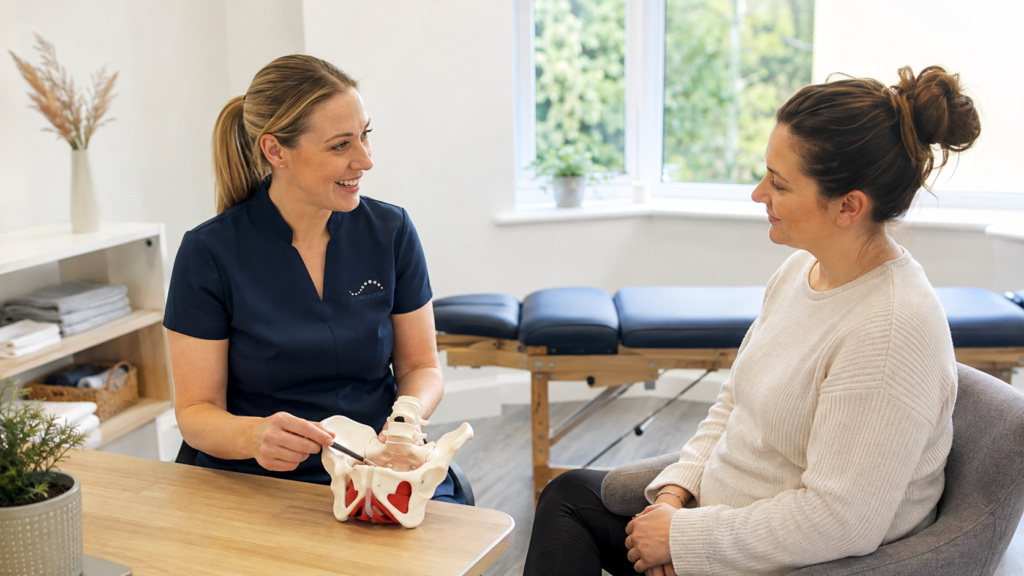
At Sanderstead Osteopaths, assessment starts with understanding when and how your symptoms occur.
We may ask:
- When did the pain begin?
- Is it worse during or after feeding?
- Does carrying aggravate it?
- Is one side worse?
- Does turning your head feel restricted?
- Do you have pain between the shoulder blades?
- Are there symptoms into your arm or hand?
- What positions make the pain better or worse?
- How are you lifting and carrying your baby?
- Have you experienced neck or shoulder problems previously?
This helps us understand whether the problem appears local to the neck or shoulder or forms part of a wider postnatal movement pattern.
Assessing the Neck, Shoulders and Upper Back
Depending on your symptoms, we may assess:
- Neck movement
- Shoulder movement
- Upper-back mobility
- Rib movement
- Muscle tension
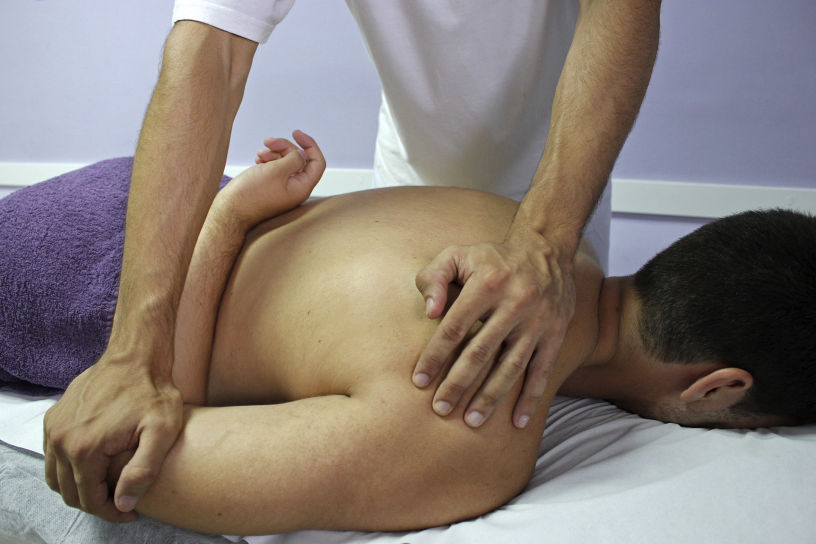
- Joint movement
- Shoulder-blade movement
- Differences between the two sides
The purpose is not simply to identify an area that feels tight.

We want to understand which movements reproduce your symptoms and what may be contributing to them.
Assessing Feeding and Carrying Positions
Where relevant, we can discuss the positions you use while feeding and carrying.
Movements can be discussed or simulated where appropriate.
We may consider whether you repeatedly:
- Elevate one shoulder
- Lean to one side
- Reach forwards
- Rotate in one direction
- Support your baby’s weight predominantly through one arm
- Hold your neck in one position for long periods
The objective is not to police your posture.
It is to identify practical changes that may reduce unnecessary strain while still allowing you to feed and care for your baby normally.
David has been treating my lower back pain. He provides a very professional service, and has a wealth of knowledge. Sanderstead Osteopath is a welcoming, cosy and clean clinic. On bad days when I have hardly been able to walk due to the pain, after David's treatment I feel I can do star jumps! The instant relief is noticeable. Parking is nearby which is very convenient. I highly recommend anyone to come here, you won't be disappointed.
August 28, 2023
What Can Help Neck and Shoulder Pain After Birth?
The most appropriate approach depends on what the assessment finds.
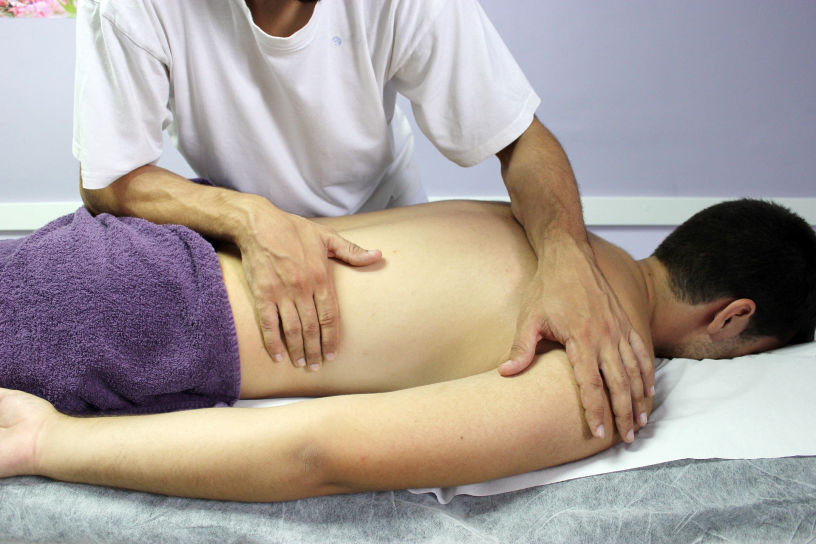
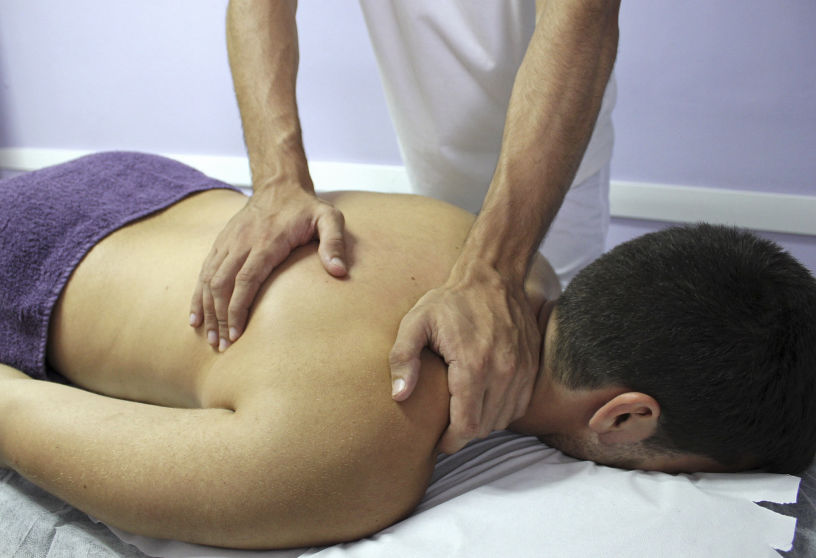
For some patients, treatment may focus on improving movement through an irritated or stiff area.
For others, changing a repeated feeding, lifting or carrying strategy may be just as important.
Management may include:
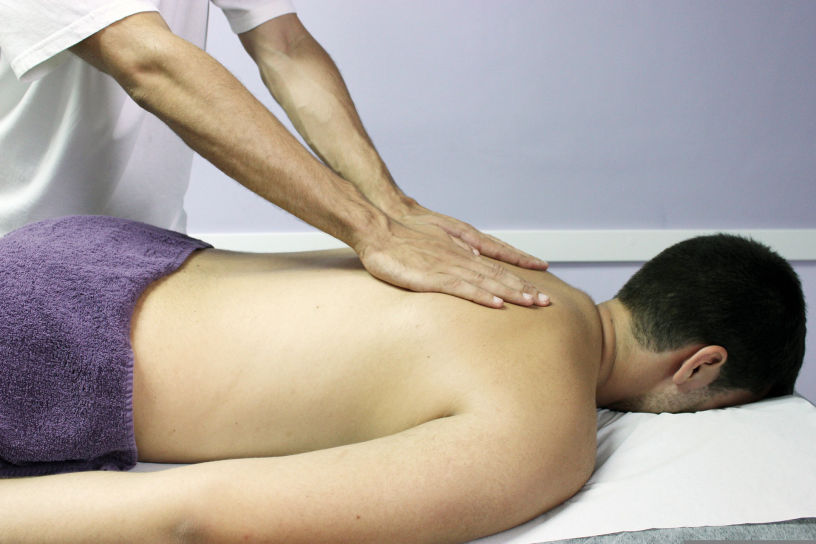
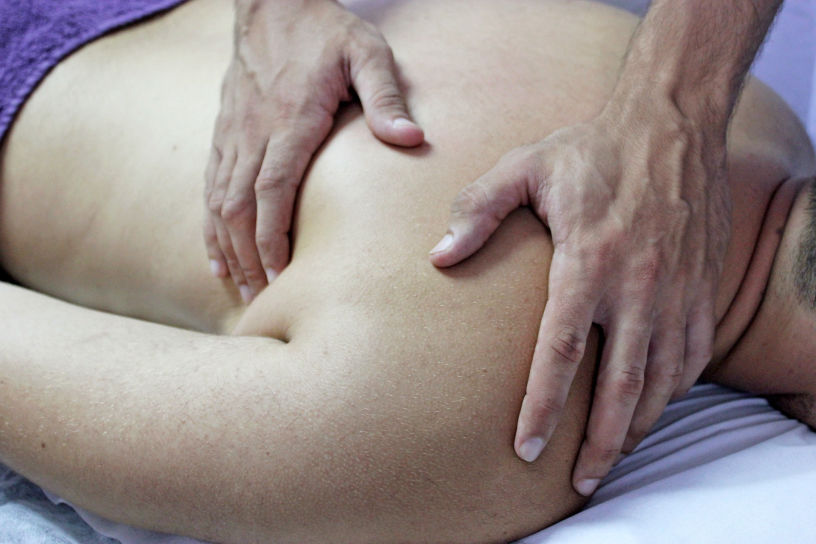
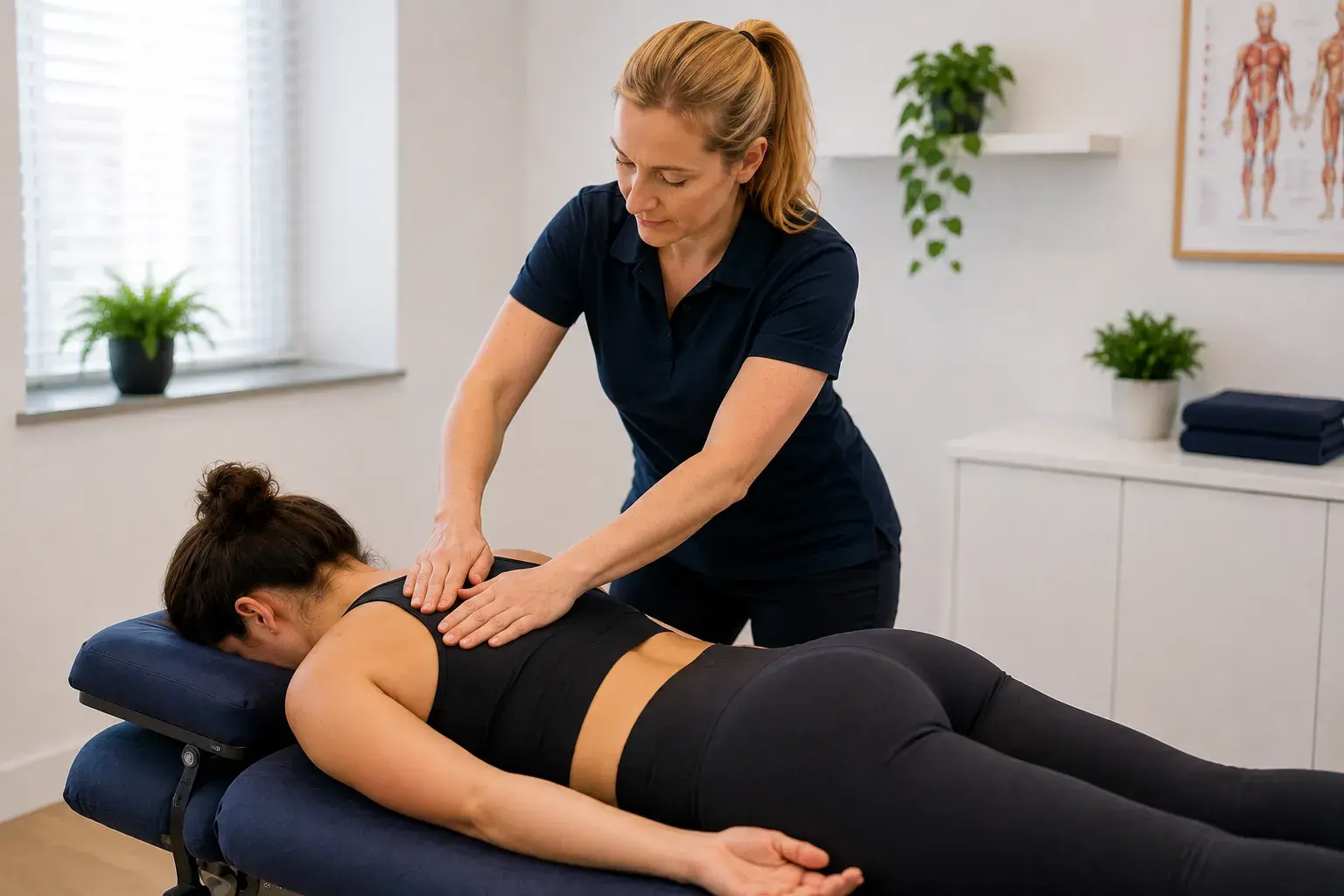
- Hands-on osteopathic treatment where appropriate
- Mobility work
- Movement advice
- Feeding-position adaptations
- Carrying and lifting guidance
- Upper-back mobility exercises
- Shoulder rehabilitation
- Breathing and ribcage work
- Progressive strengthening
Our postnatal neck and shoulder pain service combines individual assessment, treatment and movement guidance rather than applying the same approach to every patient.
Why Treatment Alone May Not Be Enough
Hands-on treatment may help an irritated area move more comfortably.
However, if the same aggravating movement is repeated for several hours each day, symptoms may return.
That is why treatment can need to be combined with practical changes.
The goal is not to remove feeding, lifting or carrying from your life.
The aim is to help your body tolerate these activities more comfortably.
Where progressive strengthening or movement rehabilitation is useful, our osteopathy and Pilates treatment may provide an appropriate pathway.
Thanks to Tom for treating me before and after my Marathon last year – I literally would not have been able to do it without him. He also treated me for a pulled shoulder and neck pain. I'll definitely use Sanderstead Osteopaths again – highly recommend! 👍
August 28, 2023
Feeding Comfort Is About You and Your Baby
If feeding itself is painful or difficult, the issue may not be musculoskeletal alone.
For breastfeeding, difficulties with positioning or attachment may require support from a midwife, health visitor or breastfeeding specialist.
NHS breastfeeding guidance recommends seeking appropriate feeding support where positioning, attachment or persistent nipple pain is a concern.
An osteopathic assessment can look at your neck, shoulders, spine and movement while feeding, but it should not replace appropriate infant-feeding support.
These are complementary issues.
Your baby needs an effective and safe feeding position, while you also need a position that your own body can tolerate repeatedly.
When Should You Get Neck or Shoulder Pain Assessed?
It may be worth arranging an assessment if:
- Pain continues rather than gradually settling
- Symptoms are becoming more frequent
- Feeding repeatedly causes discomfort
- Carrying your baby is becoming difficult
- Neck movement feels restricted
- Pain interrupts sleep
- You repeatedly develop headaches alongside neck tension
- Pain is changing the way you hold or care for your baby
- You are relying on the opposite arm because one side hurts
- Symptoms are preventing you from returning to normal activity
You do not necessarily need to wait for severe pain.
Persistent discomfort that repeatedly appears during the same everyday tasks can be enough reason to understand why it is happening.
I took my newborn daughter to David due to her being very gassy and unsettled. Within the first week of David seeing her she was a lot more settled and was sleeping for a lot longer at night. I would highly recommend the treatment here with David for anyone with newborns with similar issues.
August 28, 2023
When Neck or Shoulder Pain Needs Medical Advice
Many cases of neck and shoulder pain are musculoskeletal, but certain symptoms need medical assessment rather than simply postnatal treatment.
Seek appropriate medical advice if your pain is associated with symptoms such as:
- New or significant weakness
- Persistent numbness or pins and needles
- A cold or unusually weak arm
- Chest pain
- Shortness of breath
- Fever or feeling significantly unwell
- Severe pain following an injury
- A sudden or unusually severe headache
- Other new neurological symptoms
NHS guidance on neck pain advises seeking medical advice when symptoms such as pins and needles or a cold arm occur.
If you are unsure whether your symptoms are appropriate for osteopathic treatment, contact the clinic or speak to an appropriate medical professional first.
Postnatal Neck and Shoulder Pain Treatment in Sanderstead
If feeding, lifting or carrying your baby is leaving you with persistent neck, shoulder or upper-back discomfort, our postnatal neck and shoulder pain treatment in Sanderstead is designed specifically around these postnatal demands.
We assess the painful area while also considering how you feed, carry, lift and move throughout the day.
Where neck or shoulder pain forms part of a wider postnatal recovery picture, we may recommend a Mummy MOT or broader pregnancy and postnatal osteopathy assessment instead.
Sanderstead Osteopaths supports patients from Sanderstead and nearby areas including South Croydon, Purley, Warlingham, Kenley, Selsdon and Coulsdon.
To arrange an assessment, contact Sanderstead Osteopaths or book online.
Thanks to Tom for treating me before and after my Marathon last year – I literally would not have been able to do it without him. He also treated me for a pulled shoulder and neck pain. I'll definitely use Sanderstead Osteopaths again – highly recommend! 👍
August 28, 2023
Frequently Asked Questions About Neck and Shoulder Pain After Having a Baby
Why Does My Neck Hurt When Feeding My Baby?
Feeding can involve prolonged sitting, looking down, supporting your baby’s weight and remaining in one position for a long time.
This can increase the demand on the muscles and joints around the neck, shoulders and upper back.
Supporting your arms, getting comfortable before the feed and changing position can help reduce unnecessary effort.
Can Carrying My Baby Cause Shoulder Pain?
Repeated carrying can contribute to shoulder discomfort, particularly if you regularly carry on the same side or hold one shoulder in a raised position.
Assessment can look at the shoulder itself as well as how the neck, upper back, pelvis and trunk share the load.
Is Breastfeeding Posture Causing My Neck Pain?
It may contribute, but posture alone does not explain every case.
How long you remain in a position, how often you repeat it, whether your arms are supported and how your neck and upper back are moving can all be relevant.
The aim is usually to make feeding more comfortable rather than force you into one rigid posture.
Can Bottle Feeding Cause Neck and Shoulder Pain Too?
Yes.
The physical demands of holding your baby, supporting an arm and looking down can occur during bottle feeding as well as breastfeeding.
The relevant issue is the load and movement placed on your body rather than the method of feeding.
Should I Change Sides When Carrying My Baby?
Where practical, varying carrying positions and sides can reduce the amount of time the same tissues spend taking the load.
However, if one side already hurts or feels significantly weaker, assessment may be more useful than simply forcing yourself to carry on that side.
Can Neck and Shoulder Pain Be Part of Wider Postnatal Recovery?
Yes.
If neck or shoulder pain occurs alongside back pain, weak core control, abdominal doming, pelvic floor symptoms or C-section-related restriction, it may form part of a wider postnatal movement pattern.
In this situation, a Mummy MOT in Sanderstead may provide a more comprehensive assessment.
When Should I Book an Osteopath for Postnatal Neck Pain?
Consider an assessment if discomfort persists, repeatedly returns during feeding or carrying, restricts neck or shoulder movement or begins interfering with everyday baby care.
You do not need to wait for the pain to become severe before having the movement pattern assessed.