
Written by Sanderstead Osteopaths. Clinically reviewed by Judith Tardif, Registered Osteopath.
Leaking after birth is common, but it should not be dismissed as something you simply have to live with.
Many people notice urinary leakage when coughing, sneezing, laughing, lifting, walking quickly, exercising or getting up from a chair. It may happen in the early weeks after birth, or it may become more obvious later when you start doing more.
At Sanderstead Osteopaths, we look at leaking after birth as a sign that the pelvic floor, abdominal wall, breathing and pressure-management system may not be coordinating as well as it should. The issue is not always weakness alone. It may be timing, control, pressure, movement strategy or how the pelvic floor is working with the rest of the body.
At Sanderstead Osteopaths, we support patients from Sanderstead, South Croydon, Purley and the surrounding areas with postnatal pelvic floor concerns.
Clinical note: A postnatal assessment is not a replacement for GP care, midwife advice or urgent medical assessment. Before attending a Mummy MOT, you should have had your postnatal GP check and been advised that it is appropriate to proceed. This is usually from 6 weeks after a vaginal birth and 8 weeks after a C-section.

Why Leaking After Birth Should Not Be Ignored
Leaking after birth is often spoken about as if it is expected. While it is common, that does not mean it should be ignored if it continues, worsens or affects your confidence.
Leaking usually means the body is not controlling pressure effectively in that moment. That may involve the pelvic floor, but it may also involve the abdominal wall, breathing pattern, posture, core control and how your body responds to load.
The important question is not only whether leaking is happening. It is why it is happening.
When Leakage Can Happen After Pregnancy
Leaking after birth often happens during moments where pressure suddenly increases through the abdomen and pelvis.
This may include:
- Coughing
- Sneezing
- Laughing
- Lifting your baby
- Getting out of bed
- Standing from sitting
- Walking quickly
- Running
- Jumping
- Gym training
- Carrying bags, car seats or buggies
These are everyday movements, which is why leaking can become frustrating. You may feel fine at rest, but notice symptoms when the body has to react quickly or manage more load.
That pattern is useful clinically because it tells us the pelvic floor may not be responding at the right time or with enough coordination.
Why Common Does Not Always Mean Fully Recovered
It is common to experience changes in bladder control after pregnancy and childbirth, especially in the early postnatal period.
However, common does not mean fully recovered.
If leaking continues beyond the early recovery stage, returns when you start exercising, or affects what you feel able to do, it is worth assessing properly.
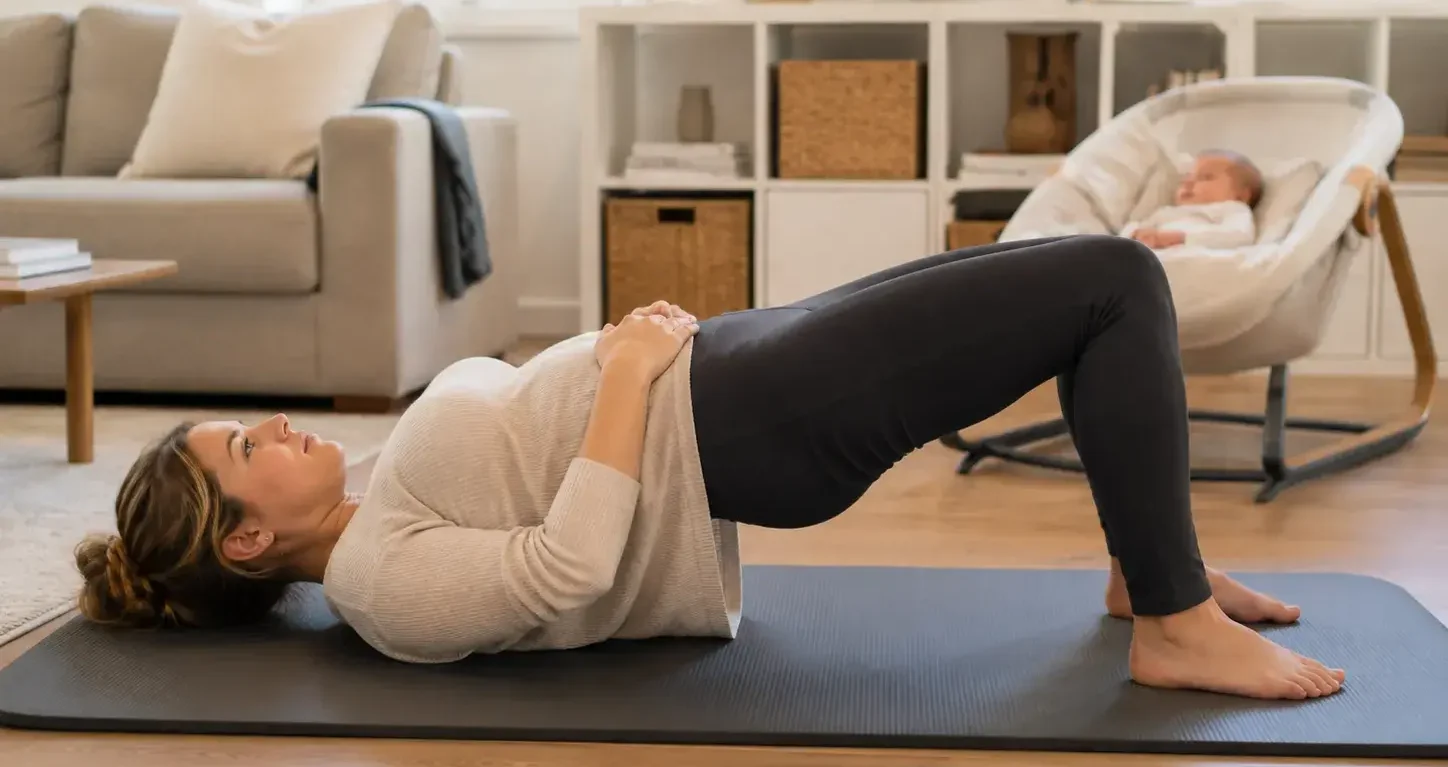
Many patients try to manage the problem by avoiding movement, avoiding exercise or repeatedly doing pelvic floor exercises without knowing whether they are activating correctly. That can sometimes help, but if the issue is timing, coordination or pressure management, strengthening alone may not resolve it.
A structured assessment helps identify what is actually happening.
I’ve been seeing David for 10+ years now and wouldn’t go anywhere else. I’ve recently taken my 15year old son to David as he has had some health issues effecting his muscles and joints, he has experienced immediate improvements. I also recommended my mum who sees another member of the team and again, is really pleased with the treatment and outcome 5⭐️
August 28, 2023
How the Pelvic Floor Responds to Pressure
The pelvic floor sits at the base of the pelvis and helps support the bladder, bowel and uterus. It also works with the diaphragm, abdominal wall, spine and pelvis to help manage pressure and stability during movement.
When pressure increases, the pelvic floor needs to respond at the right time.
If the response is delayed, weak, poorly coordinated or not integrated with the rest of the core system, leaking may occur.
What Happens When You Cough, Laugh or Lift
When you cough, laugh, sneeze or lift, pressure inside the abdomen increases.
For continence and support, the pelvic floor needs to respond quickly enough to help manage that pressure. The abdominal wall, diaphragm and deep stabilising muscles also need to coordinate with it.
If pressure rises before support is established, leakage can happen.
This is why symptoms often appear suddenly. You may not feel weak all the time, but the body may struggle during fast, pressure-based moments.
Why Timing Matters as Much as Strength
Pelvic floor strength matters, but timing matters too.
A pelvic floor may be capable of contracting, but if it contracts too late, too strongly, too weakly, or without coordinating with breathing and the abdominal wall, symptoms may continue.
This is why we do not look at pelvic floor recovery as a simple strength problem.
The aim is to understand whether the pelvic floor can respond appropriately during real movement, not just whether you can perform a contraction in isolation.

How Pressure Management Affects Control
Pressure management is the way your body controls internal pressure during effort.
If you hold your breath when lifting, brace too hard, push down through the abdomen, grip through the upper body or move without good core coordination, pressure may be directed downwards into the pelvic floor.
This can contribute to leaking, heaviness, doming or discomfort.
I’ve visited Tom at Sanderstead Osteopaths since March for postnatal neck and back issues and then subsequent issues with my neck from looking after a baby (and now toddler) and he’s absolutely superb. I’d highly recommend him!
August 28, 2021
Why Pelvic Floor Exercises Alone May Not Be Enough
Pelvic floor exercises are often recommended after pregnancy, and they can be useful. The issue is that they are not always enough on their own.
If the pelvic floor is not coordinating with breathing, core control and movement, repeated exercises may not address the reason leaking is happening.
Some patients are doing exercises regularly but still leaking. Others are unsure whether they are doing them correctly. Some may be over-bracing or struggling to relax between contractions.
That is why assessment matters.
When Strengthening Is Not Solving the Problem
If you have been doing pelvic floor exercises but still leak when coughing, laughing, lifting or exercising, the issue may not be simple weakness.
It may involve:
- Delayed activation
- Poor coordination
- Breath-holding
- Excessive bracing
- Reduced abdominal wall support
- Poor pressure control
- Difficulty relaxing the pelvic floor
- Movement habits that increase downward pressure
In these cases, doing more repetitions may not be the right answer. The system needs to be assessed so the right part of recovery can be targeted.
How Breathing, Core and Pelvic Floor Coordination Work Together
The pelvic floor does not work alone.
It coordinates with breathing, the diaphragm, abdominal wall and spine. When these areas work together, the body can manage pressure and load more effectively.
If breathing is restricted, if the abdominal wall is not supporting well, or if the body braces through the wrong areas, the pelvic floor may have to work harder.
This can make symptoms more noticeable during lifting, carrying, exercise or long periods of standing.
A functional assessment helps us understand how these areas are working together and where support may be needed.
Exercises are only useful if they are being performed in a way that supports recovery.
If you are repeatedly contracting the pelvic floor while holding your breath, gripping through the abdomen or pushing downwards, you may be reinforcing a pattern that does not improve control.
This does not mean you have done anything wrong. It simply means the body may need clearer guidance.
Thanks to Tom for treating me before and after my Marathon last year – I literally would not have been able to do it without him. He also treated me for a pulled shoulder and neck pain. I'll definitely use Sanderstead Osteopaths again – highly recommend! 👍
August 28, 2023
Signs Your Pelvic Floor May Need Support
Leaking is one possible sign that the pelvic floor system may need support, but it is not the only one.
Some patients also notice heaviness, dragging, pressure, reduced confidence, pelvic discomfort, difficulty activating the pelvic floor or symptoms that appear during exercise.
The pattern of symptoms can help guide what needs to be assessed.
Leaking When Coughing, Sneezing or Laughing
Leaking when coughing, sneezing or laughing usually happens because pressure increases quickly.
These moments require a fast, well-timed response from the pelvic floor and core system. If that response is delayed or poorly coordinated, control may be lost.
If this happens occasionally in the early postnatal stage, it may improve as recovery progresses. If it continues, worsens or affects your confidence, it is worth assessing.
Leaking During Exercise or Impact Activity
Leaking during exercise is common after pregnancy, but it is a sign that the body may not yet be managing that level of load.
Running, jumping, gym training and impact exercise create repeated pressure changes. If the pelvic floor, abdominal wall and breathing system are not coordinating well, leaking may occur.
This does not automatically mean you can never return to that activity. It means your body may need a more gradual recovery plan before progressing.
A Mummy MOT or pelvic floor assessment can help identify what needs to improve before returning to higher-impact exercise.
Heaviness, Dragging or Reduced Pelvic Support
Some patients do not leak, but feel heaviness, dragging, pressure or reduced support through the pelvis.
These symptoms may appear after standing for a long time, walking, lifting, exercising or at the end of the day.
Heaviness or dragging should not be ignored, especially if it is persistent or worsening. It may indicate that the pelvic floor and support system need assessment.
Absolutely brilliant. Lexi is a miracle worker, i always come away feeling back on track and realigned. I honestly dont know what i would do without her regular resets! She is lovely and the practice is always, welcoming, warm and quiet.
February 28, 2024
Why Leaking Can Be Linked to Core Recovery
Leaking after birth is often discussed as a pelvic floor issue, but the core is usually involved too.
The abdominal wall, diaphragm, pelvic floor, spine and pelvis work together to manage pressure and support movement. If one part of this system is not functioning well, another area may compensate.
This is why leaking may be linked with symptoms such as weak core control, abdominal doming, lower back discomfort or pelvic instability.
How the Abdominal Wall and Pelvic Floor Work Together
The abdominal wall and pelvic floor need to coordinate during movement.
When you lift, cough, stand, bend or exercise, the abdominal wall helps manage pressure and support the spine. The pelvic floor helps support from below. Breathing helps regulate pressure between them.
If the abdominal wall is not creating useful tension, pressure may not be managed effectively. If the pelvic floor responds too late, control may be reduced.
This is why we assess the system, not just one muscle.
Why Diastasis Recti or Core Weakness May Affect Pressure Control
Diastasis recti, abdominal weakness or poor core control can affect how pressure is managed after pregnancy.
The key issue is not only whether a gap exists. It is whether the abdominal wall can generate tension, support movement and coordinate with the pelvic floor.
If the abdominal wall domes, bulges or feels unstable during effort, pressure may not be controlled effectively.
If diastasis recti is a concern, our page explains this in more detail.
How Compensation Can Lead to Other Symptoms
If the pelvic floor and core system are not coordinating well, the body may compensate elsewhere.
The lower back may take more strain. The hips may feel tight. The pelvis may feel unstable. The neck and shoulders may become tense from bracing or carrying patterns.
This is why postnatal symptoms often overlap.
Great experience with Sanderstead Osteopaths. I began treatment due to a sports injury in my leg which greatly reduced my mobility. In all honesty, I just looked up osteopaths near me and these lads came up. Couldn’t be more happy with their work. My progress to recovery has taken time and obviously money to get to where I am now (back to 95%) but I couldn’t be more pleased. All of my treatment was by Paul Harmes. If you need something to be looked at, consider these guys. C
December 28, 2023
How We Assess Pelvic Floor Function Externally
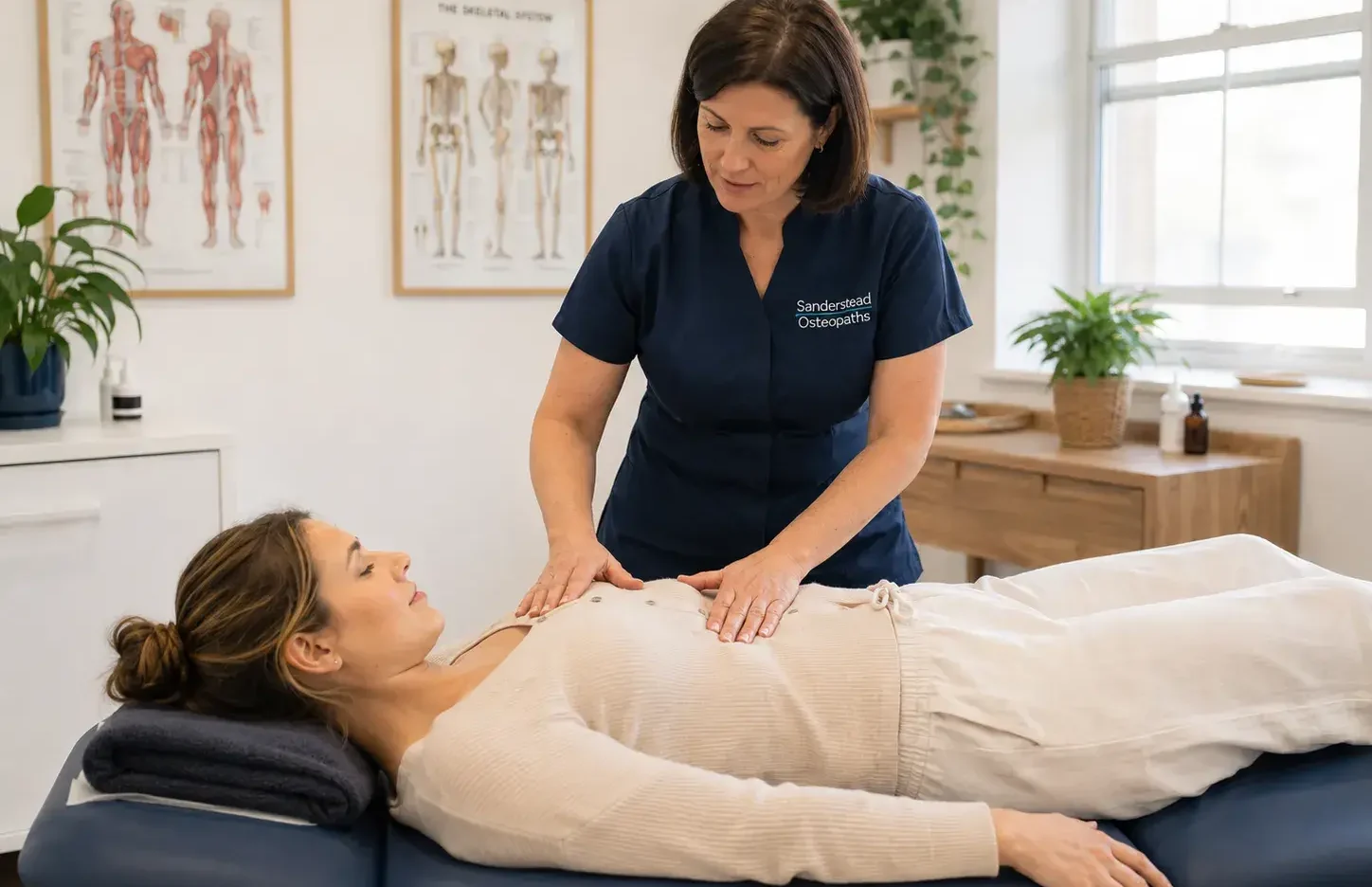
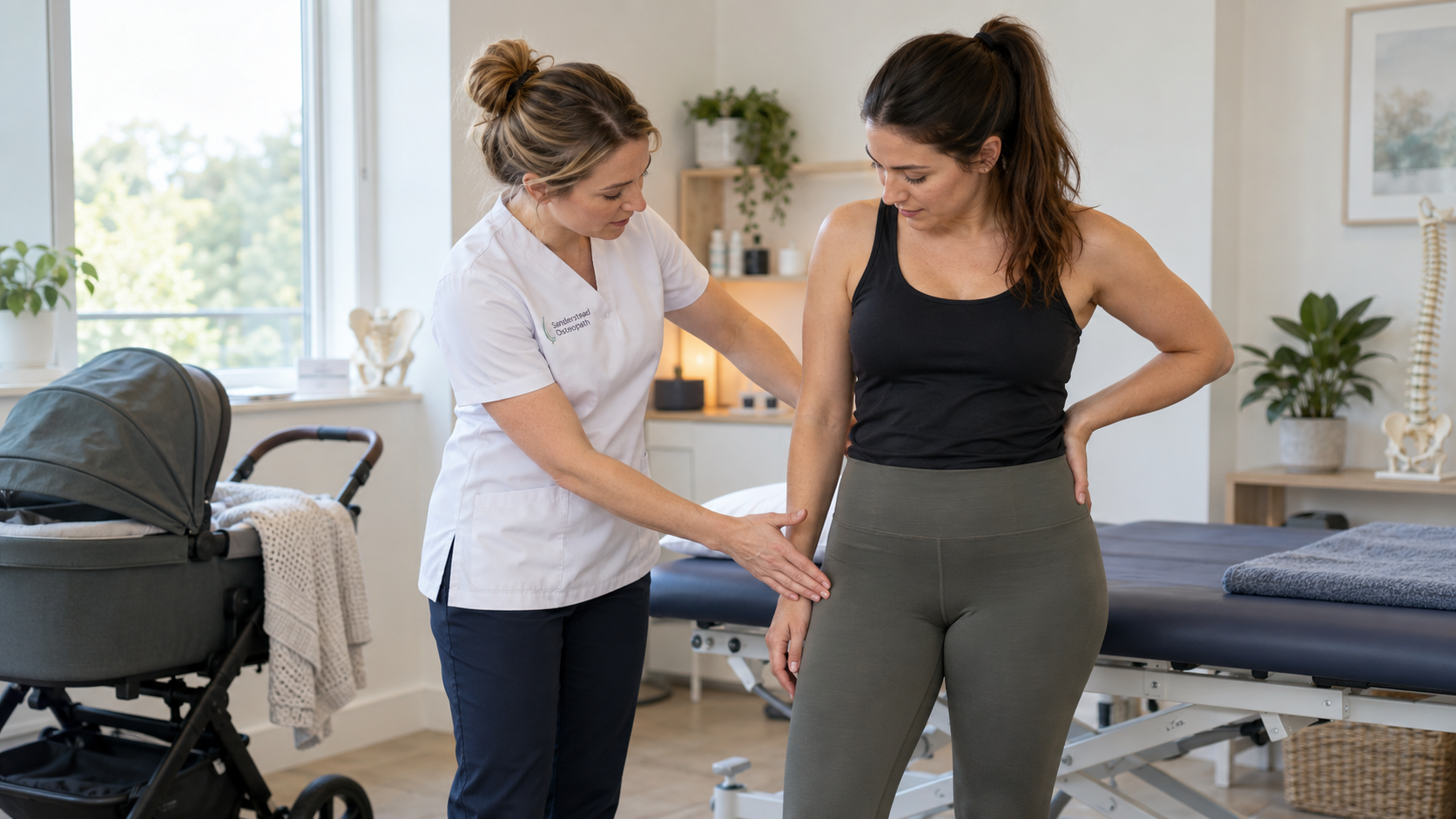
At Sanderstead Osteopaths, pelvic floor function is assessed externally.
We do not need to assess the pelvic floor in isolation to understand whether it may be contributing to symptoms. We look at how your body manages pressure, movement, breathing and load.
This approach is respectful, appropriate for postnatal care and focused on real-life function.
What We Look at During a Functional Assessment
During assessment, we may look at:
- Breathing patterns
- Abdominal movement
- Core engagement
- Pelvic control
- Posture
- Lower back and pelvic movement
- How symptoms appear during movement
- How pressure is managed during effort
We may also discuss when leaking happens, what makes it worse, what you have already tried and what activities you want to return to.
This helps us understand whether symptoms are more likely linked to strength, timing, coordination, pressure management or movement habits.
Why Movement Testing Matters
Leaking often happens during movement, so movement needs to be part of the assessment.
We may look at simple tasks such as standing from sitting, bending, lifting, walking, balancing or engaging the core during effort.
These movements can show whether your body is bracing, holding breath, shifting load into the lower back, doming through the abdomen or struggling to coordinate pressure.
That information helps guide a more useful recovery plan.
How We Identify Whether Timing, Strength or Coordination Is the Issue
The aim of assessment is to identify what part of the system needs support.
For some patients, the issue may be reduced strength. For others, it may be delayed activation, poor pressure control, breath-holding, abdominal wall dysfunction or difficulty integrating the pelvic floor with movement.
Once we understand the likely driver, we can give more specific guidance.
I’ve been attending Sanderstead Osteopaths to see David for a few years. The treatment is effective and the service professional.
August 28, 2023
When to Seek Help for Leaking After Birth
You do not need to wait until leaking becomes severe before asking for help.
If leaking is affecting your confidence, stopping you exercising, making you avoid social situations or not improving over time, it is worth having it assessed.
The earlier you understand what is happening, the easier it is to create a recovery plan that fits your body.
Early Postnatal Symptoms
Some bladder control changes can happen in the early postnatal stage.
However, if leaking is frequent, worsening, associated with heaviness, or not improving as the weeks pass, it is worth discussing with your GP, midwife or an appropriate postnatal health professional.
Before attending a Mummy MOT, you should have had your postnatal GP check and been advised that it is appropriate to proceed.
Symptoms That Continue Months Later
Leaking that continues months after birth usually deserves proper assessment.
This is especially true if symptoms appear when returning to exercise, lifting more, increasing activity, coughing, laughing or standing for long periods.
Time alone does not always restore coordination, strength or pressure control. If the same symptoms keep appearing under load, the underlying system may still need support.
When to Speak to a GP or Seek Medical Advice
You should speak to a GP or appropriate medical professional if you have pain when passing urine, blood in the urine, fever, symptoms of infection, sudden loss of bladder or bowel control, new numbness or weakness, severe pelvic pain, or symptoms that feel sudden, unusual or concerning.
Have used this osteopath for years and always had great service
August 28, 2023
Pelvic Floor Support at Sanderstead Osteopaths
At Sanderstead Osteopaths, we assess leaking after birth by looking at the whole system involved in pressure, movement and support.
We do not treat leaking as a simple weakness problem. We look at how the pelvic floor, abdominal wall, breathing, posture, pelvis and movement patterns are working together.
This allows us to create a more specific and useful recovery plan.
How Our Osteopaths Can Help You Understand What Is Happening
Our osteopaths will listen to your symptoms, discuss your birth and recovery history, and assess how your body is managing movement and pressure.
We may look at how you breathe, engage your core, stand, bend, lift, move through the pelvis and respond to load.
The aim is to help you understand why leaking may be happening and what can be done to support recovery.
Creating a Recovery Plan Based on Your Body
Your recovery plan may include pelvic floor coordination guidance, breathing strategies, core rehabilitation, posture advice, movement retraining, lifting guidance, return-to-exercise support or hands-on osteopathic treatment where appropriate.
The plan will depend on your symptoms, assessment findings, stage of recovery and goals.
The aim is to help you rebuild control, confidence and trust in your body.
When a Mummy MOT May Be Recommended
A Mummy MOT may be recommended if leaking is part of a wider postnatal recovery picture.
For example, you may also have abdominal doming, weak core control, lower back pain, pelvic heaviness, scar-related tightness, neck and shoulder tension or difficulty returning to exercise.
Have used this osteopath for years and always had great service
August 28, 2023
Frequently Asked Questions About Leaking After Birth
Is leaking after birth normal?
Leaking after birth is common, but it should not be accepted as something you simply have to live with. If it continues, worsens or affects your confidence, it is worth having your pelvic floor and pressure-management system assessed.
Will pelvic floor exercises always stop leaking?
Not always. Pelvic floor exercises can be helpful, but leaking may also involve timing, coordination, breathing, core function and pressure management. If exercises are not helping, assessment can identify what may be missing.
Can leaking happen after a C-section?
Yes. Pregnancy itself places demand on the pelvic floor, and pelvic floor function is closely linked with the abdominal wall, breathing and pressure control. This means leaking can still happen after a C-section.
Can leaking during exercise improve?
In many cases, leaking during exercise can improve with the right support. The key is to assess why it is happening, then rebuild strength, control, pressure management and load tolerance gradually.
When should I get pelvic floor symptoms assessed?
You should consider assessment if leaking continues beyond the early postnatal stage, appears during exercise, affects your confidence, is associated with heaviness or pressure, or does not improve despite pelvic floor exercises.
Always really happy with the knowledge and professionalism I receive.
August 28, 2023