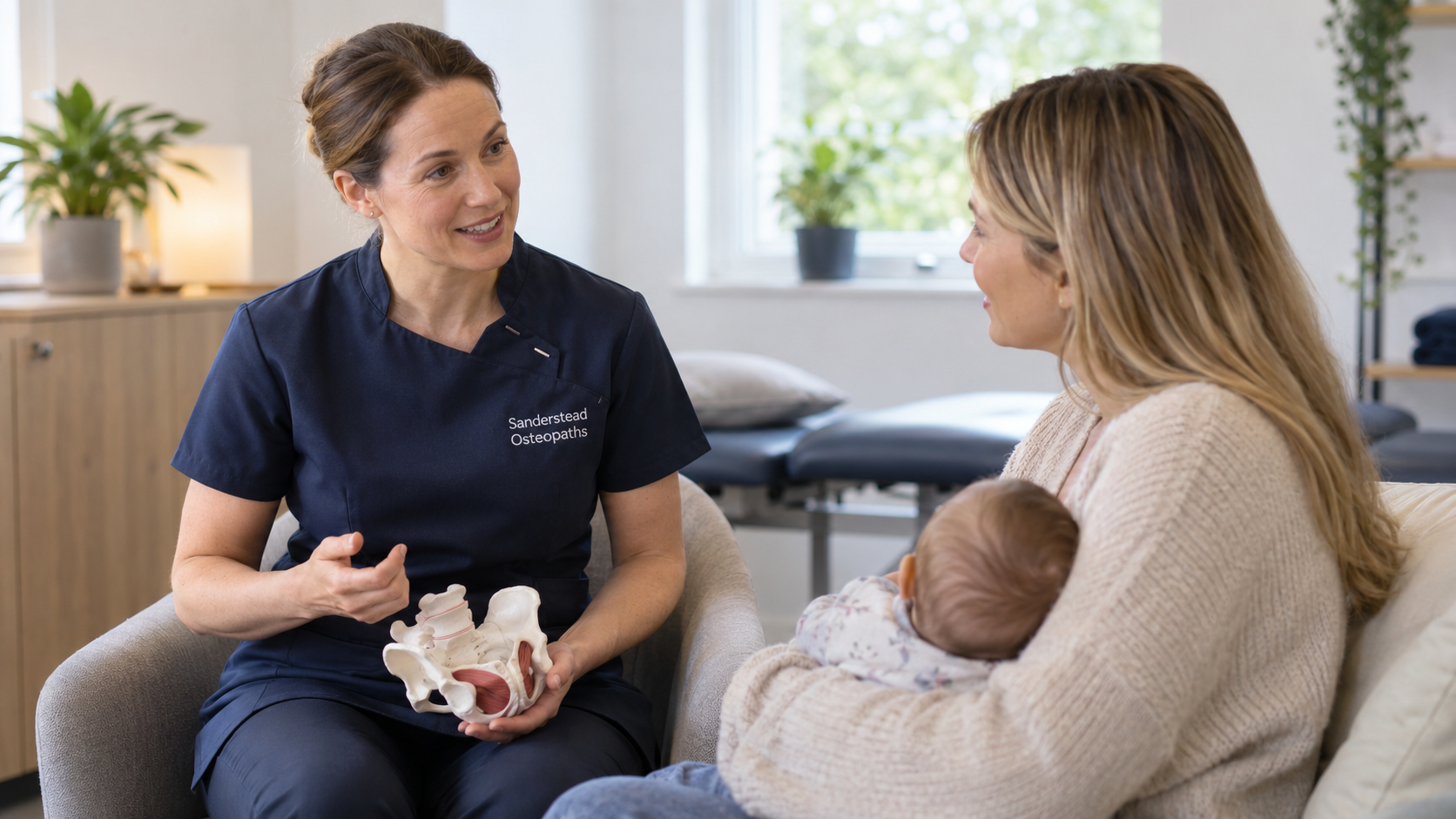
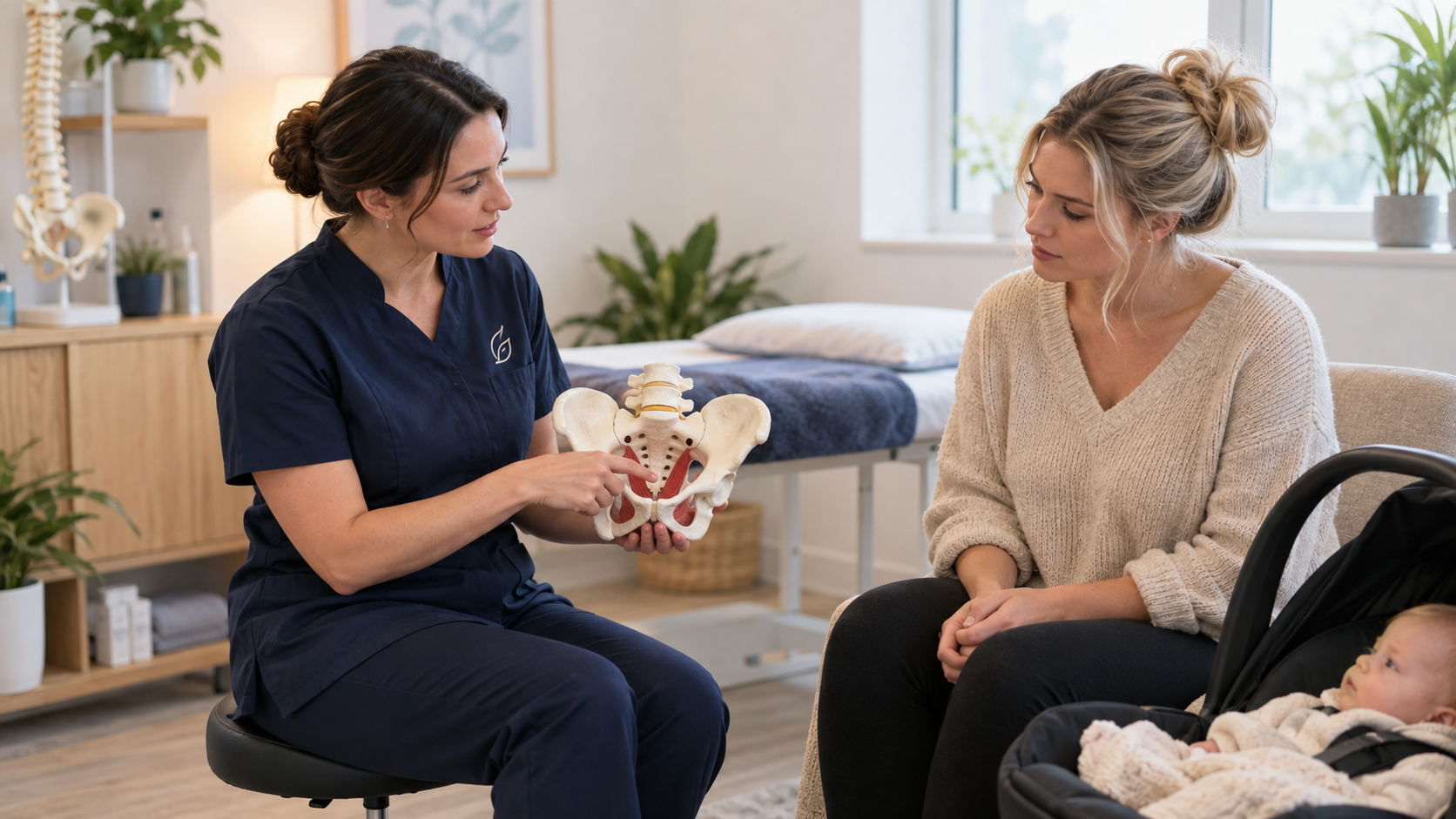
What Can an Osteopath Do for a Baby?

Paediatric osteopaths work with babies by carefully assessing how their body has adapted to pregnancy, birth, and the early stages of development. This includes considering the effects of positioning in the womb, the birth process itself, and how a baby moves, feeds, digests, and settles during the first weeks and months of life.
Using very gentle, age appropriate techniques, osteopaths aim to support comfort and movement rather than force change. Treatment focuses on identifying areas of tension or restriction that may influence how a baby turns their head, coordinates feeding, manages wind, or settles to sleep. Care is always adapted to the baby’s age, size, medical history, and tolerance.
At Sanderstead Osteopaths, our osteopaths regularly see babies and families from Croydon and nearby areas such as South Croydon, Purley, and Coulsdon. Appointments are calm, unrushed, and led by careful observation as much as by hands on assessment.
Is Osteopathy Safe for Babies and Newborns?

Training and Regulation of Paediatric Osteopaths in the UK
Osteopathy is a regulated healthcare profession in the UK. All osteopaths must complete an accredited four to five year degree and be registered with the General Osteopathic Council. This training includes detailed study of anatomy, physiology, pathology, and clinical assessment, as well as supervised experience working with patients of all ages.
Osteopaths who work with babies often undertake additional postgraduate training in paediatric and infant care. This further education focuses on normal infant development, feeding mechanics, safeguarding, and the safe application of gentle techniques for newborns and young babies.
Registration with the General Osteopathic Council means osteopaths are accountable to clear professional standards and are trained to recognise when osteopathic care is appropriate and when referral to a GP, paediatrician, or other healthcare professional is required.
How Osteopathic Techniques Differ for Babies Compared to Adults
Osteopathic treatment for babies is very different from treatment for adults. Techniques used with infants involve extremely light pressure, often no more than the weight of a practitioner’s hands resting gently on the baby. There is no forceful movement, joint manipulation, or cracking.
Assessment relies heavily on observation, including how a baby moves, turns their head, feeds, and responds to handling. Hands on techniques are subtle and are adapted continuously based on the baby’s cues, comfort, and tolerance.
Parents are encouraged to stay fully involved during appointments. Babies are usually treated while being held, fed, or settled, and treatment can be paused at any time if the baby becomes unsettled.
Safety Considerations for Newborns, Infants, and Premature Babies
Safety is central to paediatric osteopathic care. A full case history is taken before any treatment, including details of pregnancy, birth, feeding, growth, and any medical input to date. Osteopaths are trained to identify red flags such as poor weight gain, fever, vomiting, breathing difficulties, or neurological signs, and will not proceed with treatment if medical assessment is needed.
For premature babies or those with known medical conditions, osteopathic care is only considered when appropriate and may involve liaison with other healthcare professionals. Osteopathy does not replace medical care and is used only as a supportive approach within clear clinical boundaries.
If you would like to discuss whether osteopathy is safe and appropriate for your baby, our osteopaths at Sanderstead Osteopaths welcome families from Croydon and surrounding areas and are happy to talk through any concerns before arranging an appointment.
I’ve been attending Sanderstead Osteopaths to see David for a few years. The treatment is effective and the service professional.

 Stuart kennedy
August 28, 2023
What Can an Osteopath Help With in Babies?

Feeding Difficulties, Latching Issues, and Breastfeeding Comfort
Osteopaths commonly assess babies who are experiencing feeding difficulties, including challenges with latching, maintaining a feed, or appearing uncomfortable during or after feeding. These issues can sometimes be influenced by how a baby moves their head, neck, jaw, and tongue, as well as overall body tension.
Paediatric osteopathic assessment looks at feeding mechanics rather than attempting to treat feeding problems in isolation. Gentle techniques may be used to support comfort and movement in areas involved in feeding, while osteopaths also work alongside lactation consultants, midwives, and health visitors when appropriate.
At Sanderstead Osteopaths, we regularly see families from Croydon, Purley, and South Croydon who are seeking supportive care alongside established feeding guidance, not as a replacement for it.
Tension Patterns After Birth Including Assisted or Prolonged Labour
The birth process can place physical strain on a baby, particularly following long labours, assisted deliveries, or births involving interventions such as forceps or ventouse. Some babies may develop areas of tension or restriction as they adapt to these forces.
Osteopaths assess how a baby moves and responds following birth, including head turning preferences, body posture, and ease of settling. Cranial and gentle body techniques may be used to support movement and comfort where appropriate.
It is important to note that not all babies born after assisted or prolonged labour will require osteopathic care. Assessment is individual, and treatment is only offered when it is considered clinically appropriate.
Head Shape Preferences, Postural Asymmetry, and General Comfort
Some babies develop a preference for turning their head to one side or show postural asymmetry when lying, feeding, or being carried. Over time, this can influence comfort and how a baby interacts with their environment.
Osteopaths may assess spinal movement, muscle tone, and overall symmetry to understand why these preferences have developed. Treatment focuses on supporting movement and comfort rather than attempting to reshape a baby’s head or override natural development.
Parents are also given practical advice on positioning, handling, and play to support balanced movement at home. If you have concerns about your baby’s comfort or movement, our osteopaths at Sanderstead Osteopaths welcome families from Croydon, Coulsdon, and surrounding areas for a careful assessment and clear guidance.
Can an Osteopath Help a Gassy Baby?

How the Nervous System and Digestive Function Are Linked
Parents often ask whether an osteopath can help a gassy baby, particularly when wind, discomfort, or unsettled behaviour seems to be affecting feeding or sleep. Digestive function in babies is closely linked to the nervous system, which is still developing and adapting during the early months of life.
When a baby is uncomfortable, stressed, or struggling to settle, this can influence breathing patterns, muscle tone, and gut motility. Osteopathic assessment considers how these systems interact rather than focusing on digestion alone. Gentle techniques may be used to support relaxation and regulation, which can help some babies manage wind more comfortably.
It is important to recognise that wind is common in babies and is often part of normal development rather than a sign of a problem.
Mechanical Factors That May Contribute to Wind and Discomfort
Mechanical factors such as tension through the neck, chest, or abdomen, as well as how a baby positions their body during feeding, may contribute to air intake and discomfort. Osteopaths assess posture, movement, and feeding positions to identify whether these factors could be influencing symptoms.
Treatment, where appropriate, is very gentle and aims to support ease of movement and comfort rather than directly treating the digestive system. Advice on positioning, handling, and settling techniques is often an important part of care.
At Sanderstead Osteopaths, we regularly see families from Croydon, Purley, and Coulsdon who are seeking supportive care alongside advice from midwives, health visitors, and GPs.
Supporting Settling and Comfort Without Medical Overreach
Osteopathy does not diagnose or treat digestive conditions and does not replace medical assessment. Symptoms such as persistent vomiting, poor weight gain, blood in stools, fever, or ongoing distress should always be discussed with a GP or paediatrician.
Osteopathic care for a gassy baby focuses on supporting comfort and settling within clear clinical boundaries. Some babies appear more comfortable following treatment, while others may show little change, and parents are guided honestly about what is and is not appropriate.
If you are unsure whether osteopathy may be helpful for your baby’s wind or discomfort, our osteopaths at Sanderstead Osteopaths can offer a careful assessment and clear advice for families in Croydon and the surrounding areas.
Do Babies Sleep Well After Visiting an Osteopath?

Why Some Babies Appear More Settled After Treatment
Some parents do notice that their baby seems more settled after an osteopathic appointment, and sleep may improve for a short period. The most realistic explanation is not that osteopathy makes babies sleep, but that a baby who feels more comfortable may find it easier to relax, feed, and settle in the usual ways.
In clinic, we often see that comfort and settling are linked to how a baby moves and tolerates everyday handling, such as nappy changes, time in the car seat, or turning the head during feeds. When a baby is holding tension or avoiding certain positions, they can become more easily upset, which can disrupt settling and sleep. Gentle, age appropriate osteopathic techniques may be used to support comfort and reduce reactivity in the body, alongside practical guidance for positioning and soothing.
At Sanderstead Osteopaths, based in Croydon, we regularly support families from South Croydon, Purley and Coulsdon who are looking for calm, evidence informed care that focuses on comfort and function rather than promises about sleep.
Temporary Changes in Sleep Patterns Following Treatment
It is also normal for sleep to change temporarily after treatment, and this can go in either direction. Some babies sleep more deeply for a night or two, while others may be a little more wakeful, unsettled, or clingy for 24 to 48 hours. Babies process change through their nervous system and behaviour, and even gentle hands-on care can be a new experience for them.
What matters clinically is the overall pattern across several days, not one night. We encourage parents to observe whether feeds feel easier, whether the baby seems more comfortable in certain positions, and whether settling becomes more consistent over time. Those functional changes are often more meaningful than expecting a sudden shift in sleep alone.
If a baby becomes unwell, develops a fever, shows persistent inconsolable crying, has vomiting that is forceful or frequent, seems unusually drowsy, feeds poorly, or you are worried for any reason, medical advice should be sought promptly. Osteopathic care is supportive, not a substitute for a GP, 111, or paediatric assessment when symptoms are concerning.
What Parents Should Expect in the Days After an Appointment
A high quality paediatric osteopathy appointment should come with clear expectations. In the days after treatment, parents might notice small changes in how their baby turns their head, how they settle after feeds, how comfortable they look when lying down, or how they tolerate handling. Sometimes the first noticeable change is simply that a baby seems less tense through the body, which can make routine care easier.
A good osteopath will also explain what they assessed, why certain techniques were chosen, and what would count as progress for your baby. They should give practical, age appropriate advice that fits real life, and they should be willing to say when osteopathy is unlikely to help or when another professional is better placed to support you, such as a lactation consultant, health visitor, GP, or paediatrician.
If you would like a careful, regulated assessment for your baby and clear guidance on what is realistic to expect afterwards, you can book an appointment with our paediatric osteopaths at Sanderstead Osteopaths in Croydon.
David Ayres was brilliant with my back issues, as were his 2 colleagues I saw when he wasn't available. Professional and knowledgeable, would recommend 👌
 Jane welch
August 28, 2023
How Often Should a Baby See an Osteopath?

Individualised Care Based on Age, Development, and Presentation
There is no one size fits all answer to how often a baby should see an osteopath because babies change quickly and presentations vary. Frequency should be based on clinical need, the baby’s age and stage of development, and the reason you are attending, such as feeding comfort, head turning preference, postural asymmetry, or settling difficulties.
In practice, we consider how your baby is functioning day to day. That includes how they move and turn their head, how comfortable they are during feeds, how they tolerate handling, and whether parents can implement simple positioning and soothing strategies at home. Babies often respond differently depending on sleep patterns, growth spurts, and changes in feeding, so the plan needs to remain flexible.
At Sanderstead Osteopaths in Croydon, families from Purley, South Croydon, and Coulsdon often tell us they want a clear plan without being pushed into unnecessary appointments. Our approach is to recommend follow up only when there is a sensible clinical reason and a clear aim for the next visit.
Why There Is No Standard Treatment Schedule for Babies
A standard schedule can sound reassuring, but it is not evidence led and it does not reflect how infant care should be delivered. Babies are not small adults, and their nervous system, digestion, and movement patterns can change from week to week. What is appropriate for a newborn may not be appropriate for a three month old, and what helps during a feeding phase may not be needed later.
The goal is not to build a course of treatment, but to assess, support, and review. In some cases, one appointment plus practical guidance is enough. In other cases, a small number of follow ups may be appropriate to monitor change, refine advice, and ensure progress is moving in the right direction.
Parents should be wary of any clinic that recommends a fixed number of sessions up front without assessing the baby and setting measurable, realistic goals.
Reviewing Progress and Deciding If Further Sessions Are Needed
Good paediatric osteopathy involves review and decision making, not routine rebooking. At follow up, we look for specific changes, such as improved head turning, easier latch, reduced distress during feeds, better tolerance of being placed down, or more comfortable positioning. We also check whether parents feel more confident handling and settling their baby, because that often drives the biggest day to day improvements.
If progress is clear, we may suggest spacing appointments out or stopping treatment. If progress is limited, we may change approach, recommend shared care with a lactation consultant or health visitor, or advise a GP review if symptoms suggest an underlying medical issue. Our priority is always what is safest and most appropriate for your baby.
If you would like a clear, honest answer on how often appointments might be appropriate for your baby, our paediatric osteopaths at Sanderstead Osteopaths in Croydon can assess your baby and recommend a sensible plan based on clinical findings and your family’s needs.
How Many Sessions Should a Baby Osteopath Have?

Factors That Influence Treatment Frequency and Duration
There is no standard number of sessions that a baby osteopath should provide. The appropriate number depends on several factors, including the baby’s age, how they move and respond during assessment, the nature of the concern, and how symptoms change over time. A newborn with a mild head turning preference may need very different input from an older baby with ongoing feeding discomfort or marked postural asymmetry.
Other influences include how long the issue has been present, whether there were complications during pregnancy or birth, and how easily parents are able to implement practical advice at home. Importantly, babies continue to develop rapidly, and this natural change is always considered when reviewing progress.
At Sanderstead Osteopaths in Croydon, our focus is on understanding whether osteopathic care is likely to be helpful at all, and if so, what a reasonable and proportionate level of input looks like.
Monitoring Response Rather Than Pre-Booking Multiple Sessions
Ethical paediatric osteopathy does not involve pre booking a block of sessions before progress has been assessed. Instead, response to the first appointment is monitored carefully. This includes observing changes in comfort, movement, feeding, and settling over the days and weeks that follow.
If clear improvement is seen, further treatment may not be necessary. If some improvement is seen but certain issues remain, a limited number of follow up sessions may be suggested with a clear purpose for each visit. Parents should always understand why another appointment is being recommended and what the aim is.
Families from Croydon, South Croydon, Purley, and Coulsdon often tell us they value this measured approach, as it avoids unnecessary treatment while still providing support when it is genuinely helpful.
When Referral or Shared Care May Be Appropriate
Not all concerns are suitable for osteopathic management alone. If a baby is not gaining weight, has persistent vomiting, shows developmental delay, has breathing difficulties, or displays signs of illness, referral to a GP, health visitor, or paediatrician is essential.
Shared care is also common and appropriate. Osteopaths frequently work alongside lactation consultants, tongue tie practitioners, health visitors, and GPs to ensure babies receive the right support from the right professional at the right time.
If you would like an honest assessment and clear guidance on whether osteopathic care is appropriate and how many sessions might be reasonable for your baby, our paediatric osteopaths at Sanderstead Osteopaths in Croydon are happy to talk this through with you.
If you’re uncertain whether your headaches require medical investigation or could benefit from manual therapy, call our experienced team at Sanderstead Osteopaths. We’ll guide you on the best next steps and ensure you receive the right care and referrals for your situation.
Been seeing Paul for a couple of months now for my neck pain, had been using another fairly local osteopaths before and didn’t really seem to be making any progress, but since finding here it’s been much better. I suffer really badly with tension in my neck which leads to real bad headaches, and can highly recommend this place for anyone who suffers the same issue as Paul has helped me massively.
 Dan
DanNovember 28, 2023
Is an Osteopath or Chiropractor Better for a Baby?

Differences in Training and Approach for Infant Care
Parents often ask whether an osteopath or a chiropractor is better for a baby, particularly when they are trying to make a safe, informed choice. In the UK, both osteopaths and chiropractors are regulated healthcare professionals, but their training, clinical emphasis, and typical approach to infant care differ.
Osteopaths undertake a four to five year degree that includes extensive training in anatomy, physiology, pathology, clinical assessment, and hands on care across all age groups, including babies. Many osteopaths who work with infants complete additional postgraduate training in paediatric osteopathy, infant development, feeding mechanics, and safeguarding.
Chiropractic training also involves a regulated degree, but chiropractic care traditionally places greater emphasis on the spine and joint mechanics. While some chiropractors work with babies, the scope, techniques used, and level of paediatric specific training can vary between practitioners. The key point for parents is not the professional label alone, but the individual practitioner’s experience, training, and clinical judgement with infants.
Technique Selection and Safety Considerations
For babies, technique choice matters more than professional title. Infant care should always involve very gentle, age appropriate techniques that respect a baby’s size, developmental stage, and tolerance. There should be no forceful movements, joint manipulation, or attempts to correct the body.
Osteopathic care for babies focuses on observation, subtle hands on assessment, and supporting comfort and movement rather than making adjustments. Safety is supported through detailed history taking, awareness of red flags, and a clear understanding of when manual therapy is not appropriate.
Parents should feel comfortable asking any practitioner how they work with babies, what techniques they use, what additional training they have completed, and how they decide when treatment is or is not suitable.
Choosing the Right Practitioner for Your Baby
Choosing the right practitioner for your baby comes down to regulation, experience, and trust. Look for someone who is registered with their professional regulator, has clear postgraduate training in infant care, and is willing to work collaboratively with health visitors, GPs, lactation consultants, or paediatricians when needed.
A good practitioner should welcome questions, explain their reasoning clearly, and be comfortable advising against treatment if it is not appropriate. They should never guarantee outcomes or recommend a fixed course of sessions without review.
At Sanderstead Osteopaths in Croydon, our paediatric osteopaths regularly support families from South Croydon, Purley, and Coulsdon with careful, evidence informed assessment and clear guidance. If you are unsure which type of practitioner is right for your baby, we are happy to talk this through and help you make a decision that feels safe and appropriate for your family.
I have suffered with various back problems, especially lower back and shoulder tension. David has helped with my symptoms quickly and effectively. He is extremely professional and knowledgeable. I can highly recommend this practice and I will continue to use them in the future.
 Kim Fyfe
August 28, 2023
Frequently Asked Questions About Baby Osteopathy
Is osteopathy safe for newborns?
Yes, osteopathy can be safe for newborns when provided by a registered osteopath with appropriate training in paediatric care. Techniques used with babies are extremely gentle and are adapted to the baby’s age, size, medical history, and tolerance. A full case history is taken, and osteopaths are trained to recognise red flags that require referral to a GP, midwife, health visitor, or paediatrician. Osteopathy is supportive care and does not replace medical assessment.
Can an osteopath help a gassy baby?
Osteopaths do not treat digestive conditions, but they may help support comfort in some gassy babies by assessing factors such as posture, movement, breathing patterns, and overall tension. Gentle techniques and practical advice may help some babies settle more comfortably. There are no guarantees, and symptoms such as poor weight gain, persistent vomiting, or significant distress should always be discussed with a GP.
Do babies sleep after osteopathic treatment?
Some babies appear more settled after treatment and may sleep more easily for a short time, while others show little change or temporary disruption. Osteopathy does not aim to make babies sleep. Any changes in sleep are usually linked to comfort and settling rather than a direct effect on sleep itself. Parents are advised to look at patterns over several days rather than expecting an immediate result.
How often should a baby see an osteopath?
There is no standard schedule. Frequency depends on the baby’s age, presentation, and how they respond after the initial assessment. Some babies need only one appointment and advice, while others may benefit from a small number of follow ups with clear goals. Ethical care involves reviewing progress and stopping treatment when it is no longer appropriate.
How many sessions does a baby osteopath usually recommend?
There is no set number. Sessions are recommended based on response rather than pre booked in advance. If improvement is clear, no further treatment may be needed. If progress is limited or symptoms suggest another cause, referral or shared care is advised. At Sanderstead Osteopaths in Croydon, we prioritise honest guidance and proportionate care for babies and their families.